The side chair, designed in 1897 by the artist, architect, and designer Charles Rennie Mackintosh, was inspired by the Arts and Crafts movement, which emphasized natural, organic forms. A side chair is armless and is often used at a dining table. Mackintosh designed this chair for one of his patrons, Catherine Cranston, whose family sold tea. From 1900 to 1912 she commissioned Mackintosh to design the layout and furniture for her tearooms. The Side Chair was intended to be one of several chairs placed around a table in the center of the room. By creating a high-backed chair, Mackintosh hoped to create a smaller, intimate environment for those seated at the table.
A Visit to Miss Cranston's Tearooms, 1897
Miss Cranston's Glasgow tearooms were a must for visitors. In a letter to his wife, the English architect Edwin Lutyens recounted how the artist James Guthrie had taken him "to a Miss Somebody's who is really a Mrs. Somebody else. She has started a large Restaurant, all very elaborately simple on very new school High Art Lines. The result is gorgeous! And a wee bit vulgar! . . . It is all quite good, all just a little outré." The Miss Somebody was Kate Cranston, an imaginative and generous patron of emerging designers, several of them women, who gave ordinary citizens public access to chic, progressive design.
This elongated chair was designed for one of Miss Cranston’s Tearooms in Glasgow. Grouped around dining tables, the chairs created an intimate conversational space and the dark oval headrests served to frame the broad fashionable hats of female tea drinkers. In 1900 the chair was one of several tearoom designs that Mackintosh and Margaret Macdonald incorporated in their first home as a married couple and was also exhibited in their installation at the Vienna Secession. These contexts challenged the conventional separation of public and private and of masculine and feminine spheres of influence.
Designing Modern Women 1890–1990, October 5, 2013–October 1, 2014.
Gallery label from Shaping Modernity: Design 1880-1980 , December 23, 2009–July 25, 2010 .
In a 1902 rant against "Scotto-Continental 'New Art'" largely directed at Mackintosh, the critic H. F. Jennings talked of “extravagance bordering on insanity," "lunatical topsy turvydom," and the pursuit of novelty at the expense of comfort and utility. Although the materials and construction methods used by this architect and designer were not technologically innovative, on a more abstract level the dark, sleek form of this chair can be read as a poetic response to the industrial culture of Glasgow, once called "the Workshop of the World," and as an attempt to give physical form to the sense of risk and drama implicit in the city's boom/bust economy. The chair was designed for one of the famous Glasgow tearooms commissioned by local businesswoman and temperance supporter Kate Cranston. It also appeared in the 1900 Vienna Secession exhibition and in the home of Mackintosh and his artist wife, Margaret Macdonald.
Shaping Modernity: Design 1880-1980, December 23, 2009–July 25, 2010 .
Explore more
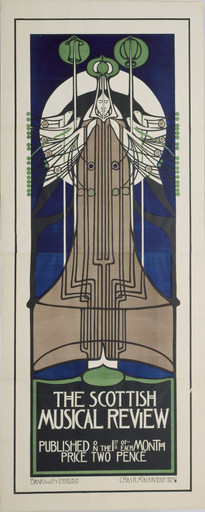
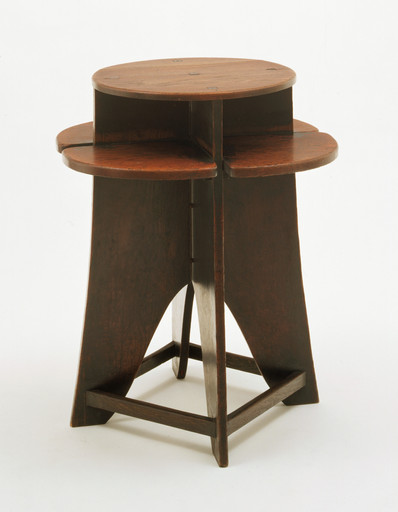
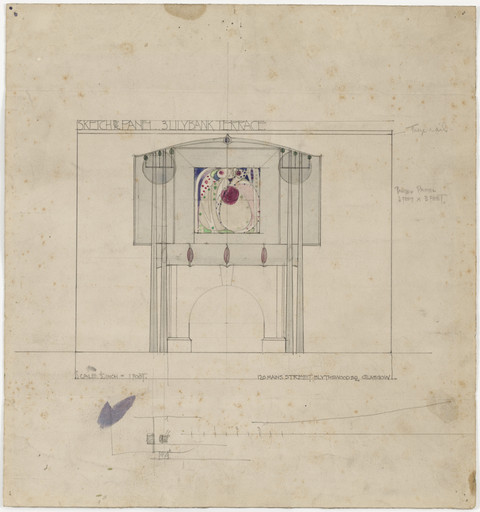
Arts and Crafts movement
Founded in England in the 1860s in response to mass industrialization , this design and architecture movement was focused on changing workers’ relationship with machines and the objects they created.
Learn more →




From MoMA Design Store


Installation views
We have identified this work in the following photos from our exhibition history.
Licensing
Artwork or archival images
If you would like to reproduce an image of a work of art in MoMA's collection, or an image of a MoMA publication or archival material (including installation views, checklists, and press releases), please contact Art Resource (publication in North America) or Scala Archives (publication in all other geographic locations).
Audio and film clips
MoMA licenses archival audio and select out of copyright film clips from our film collection. At this time, MoMA produced video cannot be licensed by MoMA/Scala. All requests to license archival audio or out of copyright film clips should be addressed to Scala Archives at [email protected]. Motion picture film stills cannot be licensed by MoMA/Scala. For access to motion picture film stills for research purposes, please contact the Film Study Center at [email protected]. For more information about film loans and our Circulating Film and Video Library, please visit Circulating Film and Video Library.
Text from a publication or the archives
If you would like to reproduce text from a MoMA publication, please email [email protected]. If you would like to publish text from MoMA's archival materials, please fill out this permission form and send to [email protected].
Feedback
This record is a work in progress. If you have additional information or spotted an error, please fill out this feedback form.