Not on view
Rainforest V (Variation 1) is an ecosystem of objects that envelops viewers in sound. Chirping, croaking, clicking, or ringing, each sculpture speaks in its own voice, which resonates through the gallery to become part of a collective cacophony. According to Tudor, who first conceived the piece in the 1960s, the concept grew out of the “dream-vision of an orchestra of loudspeakers, each speaker being as unique as any musical instrument.” To this end, the work employs found materials—including, among other objects, a metal barrel, a vintage computer hard disc, and plastic tubing. They are suspended in space, and visitors can walk among them to experience the installation both visually and sonically from different positions.
The genesis of this work is the score Tudor created for Rainforest (1968), a dance by the American choreographer Merce Cunningham. While Tudor made a number of different Rainforest compositions, the breakthrough occurred in 1973 with Rainforest IV, when he expanded the score from a sonic composition to an installation created in collaboration with a group of young artists and musicians later known as Composers Inside Electronics. Over time the number of objects in the installation grew from eight to twenty to forty. Described as an “evolution” rather than a reconstruction of this historical work, Rainforest V (Variation 1) encapsulates different generations of the piece, transforming a work that was once activated by performers into a self-sustaining installation that “performs” itself.
MoMA Highlights: 375 Works from The Museum of Modern Art, New York (New York: The Museum of Modern Art, 2019)
Explore more







Articles and videos
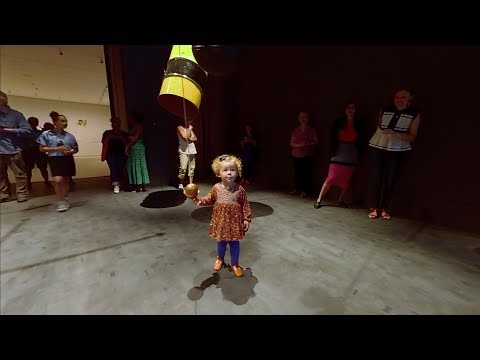
Tips for watching:
When viewing on a desktop computer, click and drag to look around. But for the best experience we recommend watching on your phone—move it to explore the space around you.
Step 1: Download the YouTube app (if you don’t have it already)
Step 2: Open the YouTube link in the YouTube app (mobile browsers do not support 360 video playback yet)
Step 3: Sit in a spinning chair (if you have one)
Step 4: Explore the space around you
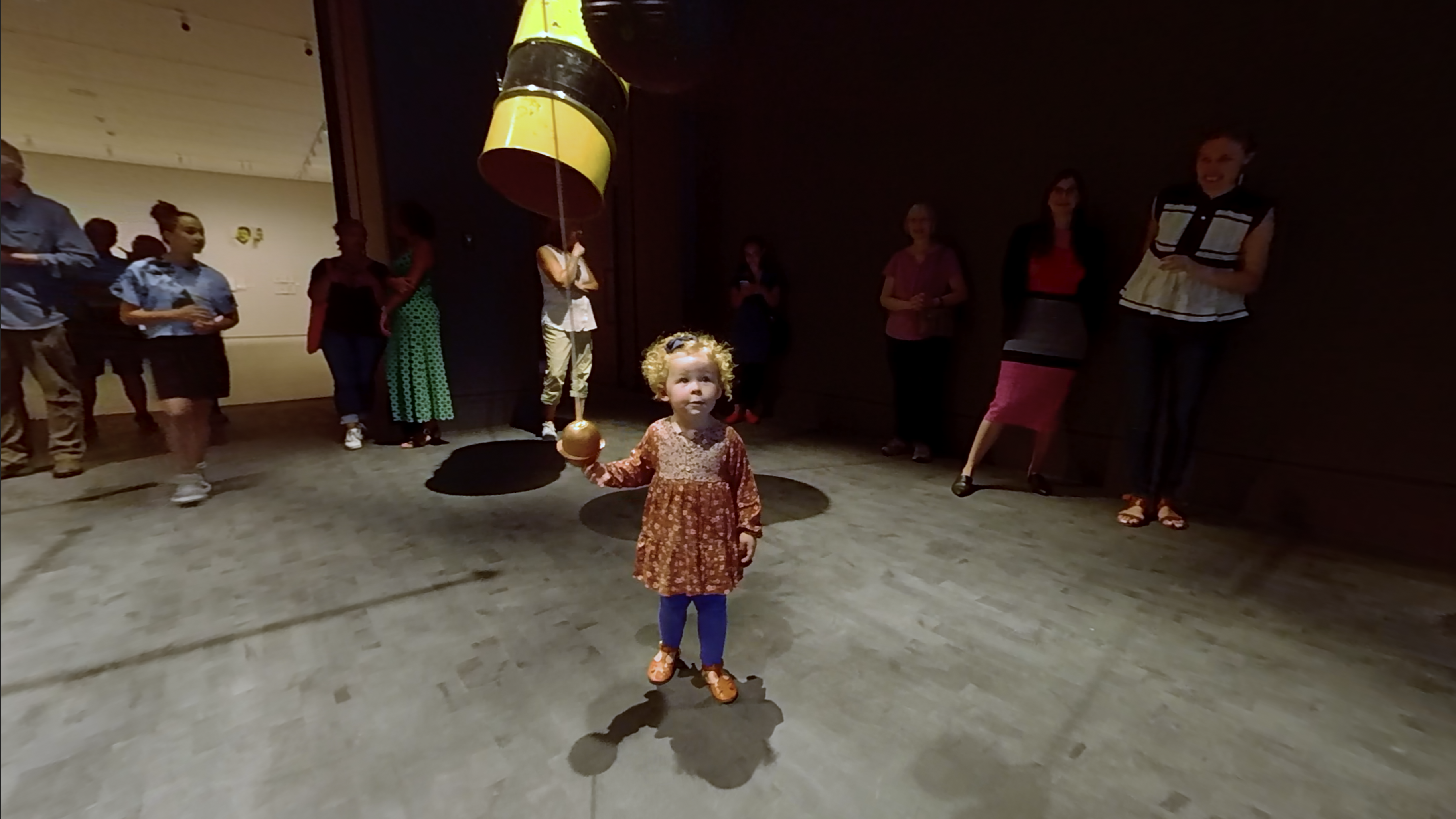
David Tudor’s Rainforest V (variation 1) in 360
Experience a three-dimensional view of the work through the eyes of children.
From MoMA Design Store


Licensing
Artwork or archival images
If you would like to reproduce an image of a work of art in MoMA's collection, or an image of a MoMA publication or archival material (including installation views, checklists, and press releases), please contact Art Resource (publication in North America) or Scala Archives (publication in all other geographic locations).
Audio and film clips
MoMA licenses archival audio and select out of copyright film clips from our film collection. At this time, MoMA produced video cannot be licensed by MoMA/Scala. All requests to license archival audio or out of copyright film clips should be addressed to Scala Archives at [email protected]. Motion picture film stills cannot be licensed by MoMA/Scala. For access to motion picture film stills for research purposes, please contact the Film Study Center at [email protected]. For more information about film loans and our Circulating Film and Video Library, please visit Circulating Film and Video Library.
Text from a publication or the archives
If you would like to reproduce text from a MoMA publication, please email [email protected]. If you would like to publish text from MoMA's archival materials, please fill out this permission form and send to [email protected].
Feedback
This record is a work in progress. If you have additional information or spotted an error, please fill out this feedback form.