Gelatin silver prints mounted to board
Not on view
Albers achieved maximal effect with minimal means in every medium he chose to work in: painting, typography, furniture design, and photography. As he explained in 1938, “One and one is two—that’s business. One and one is four—that’s art—or if you like it better, is life.” Albers is best known for his series Homage to the Square, an expansive suite of paintings and prints that he began in 1950. Each work adheres to a fixed set of formal parameters (a square within three or four concentric but unequal margins), and all explore the nuances of color and tonal relationships and the relative nature of perception.
Less well known are the collages Albers made with his own photographs during the waning days of the Bauhaus, the influential German school of modern art, architecture, and design at which he studied and then taught from 1920 to 1933. Within a determinedly limited format—black-and-white photographs, never overlapping, never askew, adhered to rectangular boards—Albers produced a series of astoundingly inventive photocollages. This particular example, one of the most complex of these works, features six photographs of a bullfight in San Sebastián, Spain, in the summer of 1929. The carefully choreographed disjunction among the images—made in and around the arena—reads like cuts in a film, simultaneously collapsing and expanding the viewer’s experience of the scene.
MoMA Highlights: 375 Works from The Museum of Modern Art, New York (New York: The Museum of Modern Art, 2019)
Explore more
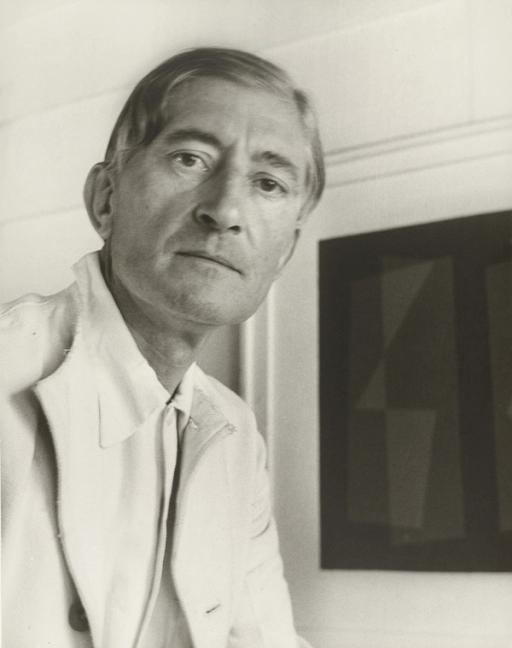
Josef Albers
American, born Germany. 1888–1976 243 works onlineJosef Albers always went back to basics. As a child, he gained skills in carpentry and commercial painting by helping his father with work.
Learn more →


From MoMA Design Store


Installation views
We have identified this work in the following photos from our exhibition history.
Licensing
Artwork or archival images
If you would like to reproduce an image of a work of art in MoMA's collection, or an image of a MoMA publication or archival material (including installation views, checklists, and press releases), please contact Art Resource (publication in North America) or Scala Archives (publication in all other geographic locations).
Audio and film clips
MoMA licenses archival audio and select out of copyright film clips from our film collection. At this time, MoMA produced video cannot be licensed by MoMA/Scala. All requests to license archival audio or out of copyright film clips should be addressed to Scala Archives at [email protected]. Motion picture film stills cannot be licensed by MoMA/Scala. For access to motion picture film stills for research purposes, please contact the Film Study Center at [email protected]. For more information about film loans and our Circulating Film and Video Library, please visit Circulating Film and Video Library.
Text from a publication or the archives
If you would like to reproduce text from a MoMA publication, please email [email protected]. If you would like to publish text from MoMA's archival materials, please fill out this permission form and send to [email protected].
Feedback
This record is a work in progress. If you have additional information or spotted an error, please fill out this feedback form.