Digital image
Not on view
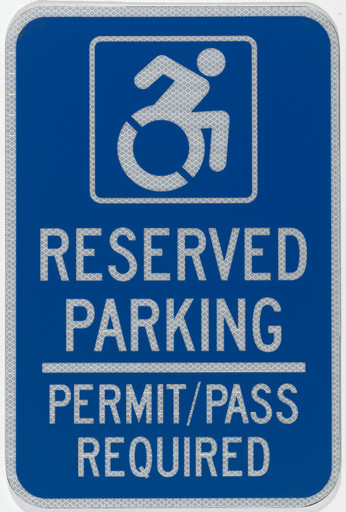
The Boston-based Accessible Icon Project overhauled the International Symbol of Access, which was designed by Danish design student Susanne Koefoed in 1968. In the previous version, the icon featured a stationary wheelchair user, seemingly resigned to being pushed to a destination. The new version shows a person in forward motion—a driver in charge of their own fate. The designers introduced the new symbol in a street art campaign, layering transparent stickers on existing accessibility signs. As the icon spread, the project evolved from guerilla activism to social design initiative. Today, the icon is used by hundreds of institutions and cities worldwide, including New York.
Pirouette: Turning Points in Design, January 26, 2025–November 15, 2025
Gallery label from This Is for Everyone: Design Experiments for the Common Good , February 14, 2015–January 31, 2016
The Accessible Icon Project redesigns the decades- old International Symbol of Access. Unlike the previous icon, in which the wheelchair user looks passive and ready to be pushed to a destination, (the new one shows a person in forward motion—(a “driver” in charge of his or her own fate. The designers introduced their version in a street-art campaign, printing it on stickers and pasting it( over older accessibility signs in the Boston area. The redesign has now been officially adopted by some businesses and institutions, and even by such cities as Maiden and Burlington, Massachusetts, and El Paso and Austin, Texas. New York City uses a modified version, with the figure hailing a cab, to denote its accessible taxis.
This Is for Everyone: Design Experiments for the Common Good, February 14, 2015–January 31, 2016
Explore more
Graphic design
Visual communication through the use of type, space, image, and color. Examples include printed materials like posters, books, and album covers, as well as film title sequences and digital works such as websites and interactive software.
Learn more →






Audio
Audio from the playlist Pirouette: Turning Points in Design
From MoMA Design Store


Installation views
We have identified this work in the following photos from our exhibition history.
Licensing
Artwork or archival images
If you would like to reproduce an image of a work of art in MoMA's collection, or an image of a MoMA publication or archival material (including installation views, checklists, and press releases), please contact Art Resource (publication in North America) or Scala Archives (publication in all other geographic locations).
Audio and film clips
MoMA licenses archival audio and select out of copyright film clips from our film collection. At this time, MoMA produced video cannot be licensed by MoMA/Scala. All requests to license archival audio or out of copyright film clips should be addressed to Scala Archives at [email protected]. Motion picture film stills cannot be licensed by MoMA/Scala. For access to motion picture film stills for research purposes, please contact the Film Study Center at [email protected]. For more information about film loans and our Circulating Film and Video Library, please visit Circulating Film and Video Library.
Text from a publication or the archives
If you would like to reproduce text from a MoMA publication, please email [email protected]. If you would like to publish text from MoMA's archival materials, please fill out this permission form and send to [email protected].
Feedback
This record is a work in progress. If you have additional information or spotted an error, please fill out this feedback form.