Recto: oil transfer drawing; verso: graphite and colored pencil
Not on view
During his experimental forays into printmaking, Gauguin exploited the mysterious obfuscations that can occur when an image on one surface is transferred to another. In Tahitian Woman with Evil Spirit, for example, he transformed a detailed pencil drawing on one side of the paper into a strangely atmospheric print (or transfer drawing) on the other. He did this by covering a separate sheet with stiff oil paint, laying clean paper over it, and drawing on top with pencil; the pressure of the pencil caused paint from below to adhere to the back of the paper, effecting the transfer when the two sheets were peeled apart. The blurry, accidental markings that resulted impart a dreamlike quality befitting the subject of a woman haunted by a spirit.
As he so often did in the paintings and works on paper he made in the 1890s, when he lived in Tahiti, Gauguin combined a motif from an earlier work (a horned male sculpture) with a detail from a photograph of an “exotic” locale, unfamiliar to Europeans of that era (in this case, a postcard featuring a spiky-haired Tongan girl wearing a beaded snake necklace). By manipulating such images, Gauguin supplanted the reality of contemporary Tahiti, whose culture had been desecrated by decades of French colonial rule, with a vision suggesting the primordial world he had longed to encounter there.
MoMA Highlights: 375 Works from The Museum of Modern Art, New York (New York: The Museum of Modern Art, 2019)
Explore more
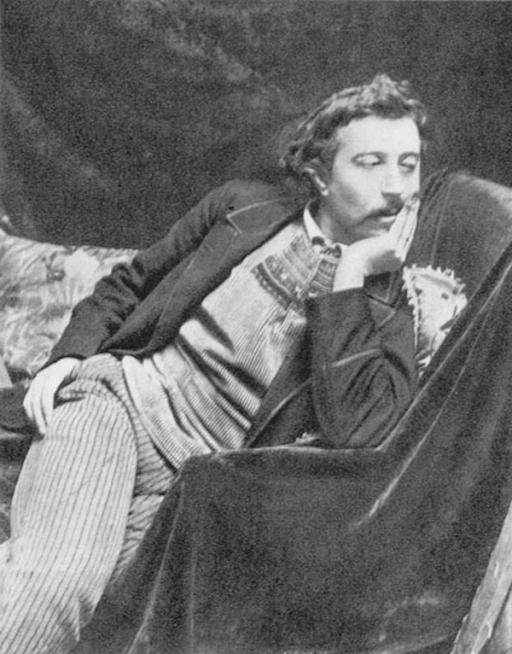
Paul Gauguin
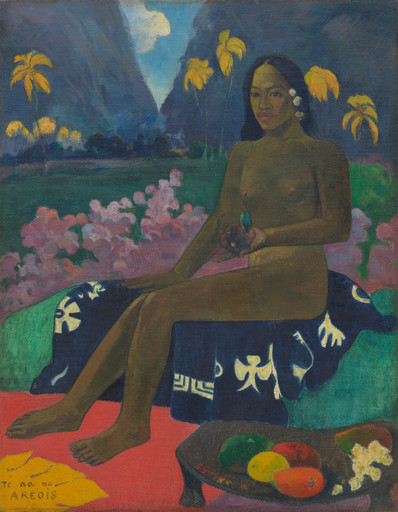
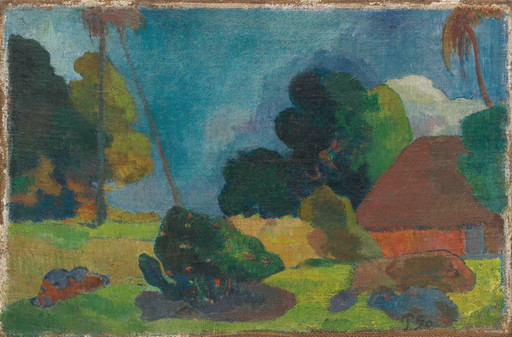
French, 1848–1903 35 works onlineAlong with his contemporaries Vincent van Gogh and Paul Cézanne , Paul Gauguin was a pioneer of modernist art. His use of expressive colors, flat planes, and simplified, distorted forms in paintings, as well as a rough, semi-abstract aesthetic in sculptures and woodcuts , exerted a profound influence on avant-garde artists in the early 20th century, from Henri Matisse and Pablo Picasso to the German Expressionists .
Learn more →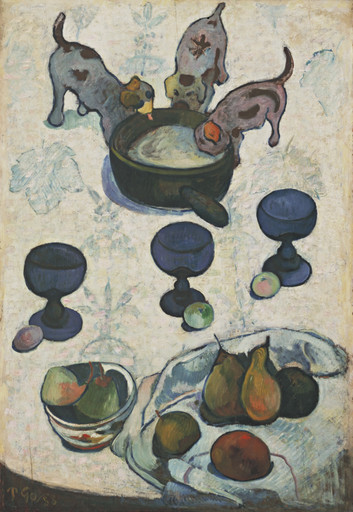
From MoMA Design Store


Installation views
We have identified this work in the following photos from our exhibition history.
Licensing
Artwork or archival images
If you would like to reproduce an image of a work of art in MoMA's collection, or an image of a MoMA publication or archival material (including installation views, checklists, and press releases), please contact Art Resource (publication in North America) or Scala Archives (publication in all other geographic locations).
Audio and film clips
MoMA licenses archival audio and select out of copyright film clips from our film collection. At this time, MoMA produced video cannot be licensed by MoMA/Scala. All requests to license archival audio or out of copyright film clips should be addressed to Scala Archives at [email protected]. Motion picture film stills cannot be licensed by MoMA/Scala. For access to motion picture film stills for research purposes, please contact the Film Study Center at [email protected]. For more information about film loans and our Circulating Film and Video Library, please visit Circulating Film and Video Library.
Text from a publication or the archives
If you would like to reproduce text from a MoMA publication, please email [email protected]. If you would like to publish text from MoMA's archival materials, please fill out this permission form and send to [email protected].
Feedback
This record is a work in progress. If you have additional information or spotted an error, please fill out this feedback form.