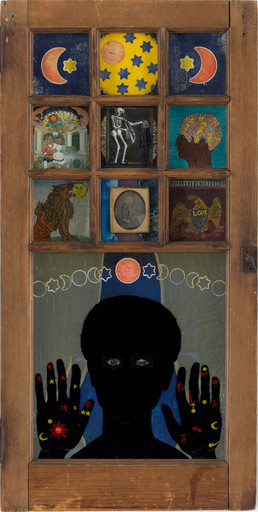
Wooden window frame with paint, cut-and-pasted printed and painted papers, daguerreotype, lenticular print, and plastic figurine
Black Girl’s Window is a pivotal work from the first decade of Saar’s career, marking the moment when her practice shifted from primarily printmaking to collage and assemblage. The work weaves together references to the private, the public, and the mystical. A salvaged weathered wooden window frame isolates and surrounds a series of nine small vignettes in the upper half of the composition. Under depictions of stars and phases of the moon are a phrenological chart, a representation of Leo (Saar’s astrological sign), a daguerreotype, and, in the center, a pair of skeletons. Below and separate from this collection of symbols is a large silhouetted figure painted on the verso of a pane of glass. Flat against a blue background and a set of sheer curtains, this figure presses up against a transparent yet rigid and unyielding surface. Its facial features are hidden in shadow, with the exception of two eyes cut from a lenslike material that creates the illusion that they open and close as the viewer moves around them.
Saar has acknowledged the self-referential nature of the assemblage: “Even at the time, I knew it was autobiographical,” she has said. “We’d had the Watts Riots and the Black revolution. Also that was the year of my divorce. So in addition to the occult subject matter there was political and also personal content.”
MoMA Highlights: 375 Works from The Museum of Modern Art, New York (New York: The Museum of Modern Art, 2019)
Explore more
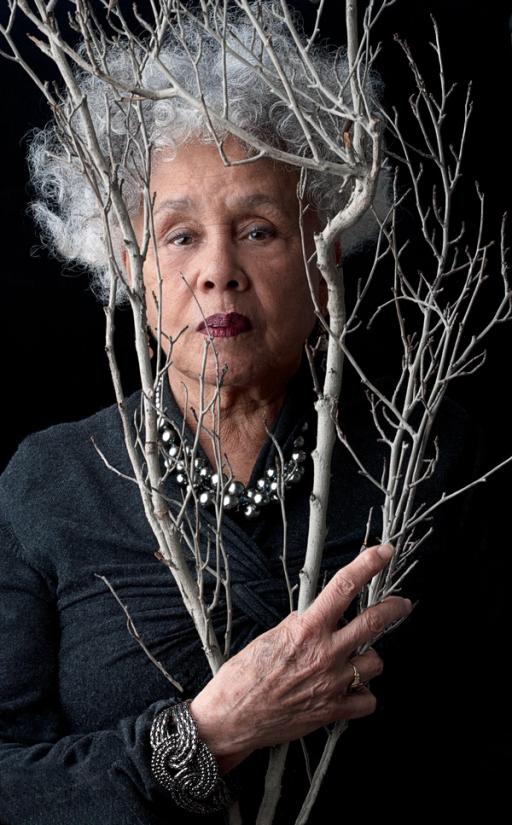
Betye Saar
American, 1926–2026 49 works onlineIn Betye Saar’s work, time is cyclical. History and experiences, emotion and knowledge travel across time and back again, linking the artist and viewers of her work with generations of people who came before them.
Learn more →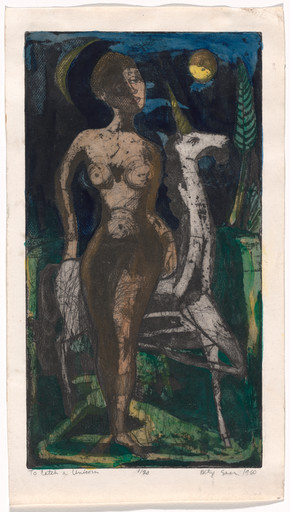
The Art of Assemblage
Gallery 408Everyday objects, popular consumer products, and other nontraditional materials had become, Seitz wrote, “the language for impatient, hypercritical, and anarchistic young artists,” who sought to create an art that—in its subject matter, materials, and making—was closely intertwined with life.
Learn more →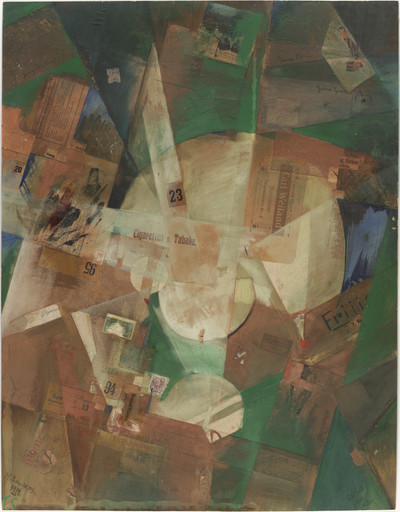
Audio
Audio from the playlist Audio Descriptions
Audio from the playlist Kids
Audio from the playlist 1950–1980: Works from the Collection
Audio from the playlist Betye Saar: The Legends of Black Girl's Window
Audio from the playlist Artful Practices for Well-Being
From MoMA Design Store


Installation views
We have identified this work in the following photos from our exhibition history.
Licensing
Artwork or archival images
If you would like to reproduce an image of a work of art in MoMA's collection, or an image of a MoMA publication or archival material (including installation views, checklists, and press releases), please contact Art Resource (publication in North America) or Scala Archives (publication in all other geographic locations).
Audio and film clips
MoMA licenses archival audio and select out of copyright film clips from our film collection. At this time, MoMA produced video cannot be licensed by MoMA/Scala. All requests to license archival audio or out of copyright film clips should be addressed to Scala Archives at [email protected]. Motion picture film stills cannot be licensed by MoMA/Scala. For access to motion picture film stills for research purposes, please contact the Film Study Center at [email protected]. For more information about film loans and our Circulating Film and Video Library, please visit Circulating Film and Video Library.
Text from a publication or the archives
If you would like to reproduce text from a MoMA publication, please email [email protected]. If you would like to publish text from MoMA's archival materials, please fill out this permission form and send to [email protected].
Feedback
This record is a work in progress. If you have additional information or spotted an error, please fill out this feedback form.