In Autocar–Tangier, Figs. 1–4, Barrada focused her lens on the corporate logos on the buses that shuttle between Morocco and destinations in Europe. For the illiterate in Tangier wishing to cross the border illegally, the colorful modernist logos serve as directional tools, identifying the different bus lines and destinations and allowing the migrants to plan their routes of escape. These abstract pictures function as powerful visual metonyms of the global phenomenon of migration and the lingering reverberations of colonialism in Africa.
Testimonials by bus riders
Fig. 1: “Portugal bus goes direct, no stop. Nazarenes, old and young. Parked in front of the shrimp factory. One guard, but since he’s in charge of the whole area, he can’t check everything all the time. Climb in the middle of the planchas. Those who have papers go inside the bus.”
Fig. 2: “French with Moroccan plates. Migrants from Italy, Spain, France. Parked in front of the port near the ticket booth. 4 AM arrival in Tangier, 6 PM departure. Bring biscuits and dates, and plastic bag for shoes. They notice in Spain right away if your shoes are not clean. Bus goes onto Bismillah ferry, room for three small people under the bus.”
Fig. 3: “To Barcelona. Sometimes Egyptians are on the bus, not only Nazarenes. It only comes in summer. The guards are paid well and they change three times: one in the morning, one afternoon and one all night. They are always old. They have a television set. Room for two hiding places, one in front and one in the back.”
XL: 19 New Acquisitions in Photography, May 10, 2013–January 6, 2014.
Explore more
Yto Barrada
Moroccan and French, born 1971 12 works onlineHow does one acquire and transmit political courage?” Barrada’s work continually explores this question—whether addressing her hometown of Tangier, fossils, modernist histories, or the geopolitics of migration.
Learn more →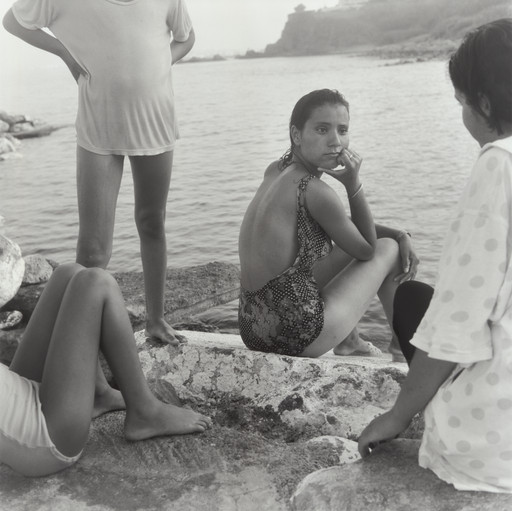
Migration and movement
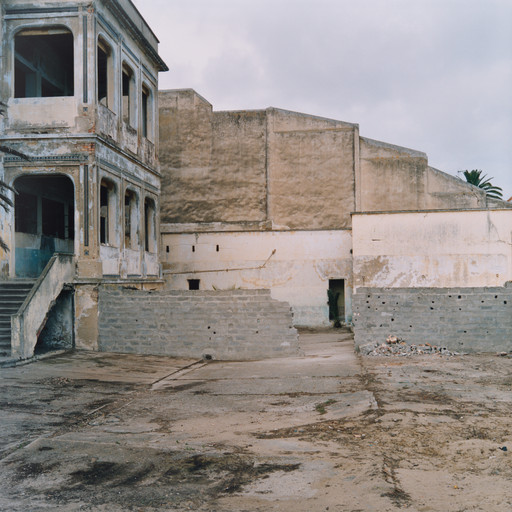
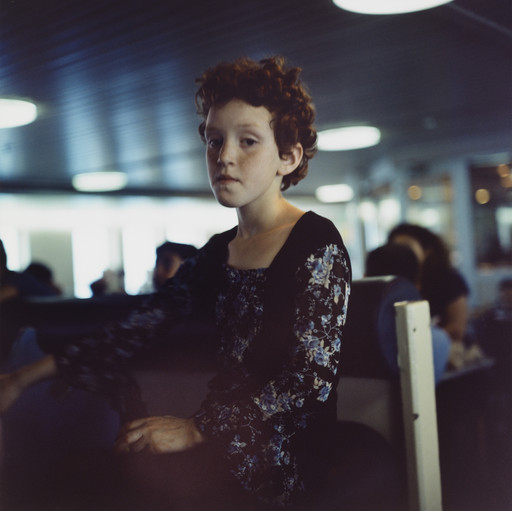
People have always moved around the world. Early humans were nomadic, traveling in search of food, shelter, and safety. Today, people move for many different reasons, including economic, political, cultural, religious, and environmental.
Learn more →
Photography
For much of the history of the medium, a photograph was defined as a chemical image rendered visible by the action of light on photosensitive compounds.
Learn more →


From MoMA Design Store


Installation views
We have identified this work in the following photos from our exhibition history.
Licensing
Artwork or archival images
If you would like to reproduce an image of a work of art in MoMA's collection, or an image of a MoMA publication or archival material (including installation views, checklists, and press releases), please contact Art Resource (publication in North America) or Scala Archives (publication in all other geographic locations).
Audio and film clips
MoMA licenses archival audio and select out of copyright film clips from our film collection. At this time, MoMA produced video cannot be licensed by MoMA/Scala. All requests to license archival audio or out of copyright film clips should be addressed to Scala Archives at [email protected]. Motion picture film stills cannot be licensed by MoMA/Scala. For access to motion picture film stills for research purposes, please contact the Film Study Center at [email protected]. For more information about film loans and our Circulating Film and Video Library, please visit Circulating Film and Video Library.
Text from a publication or the archives
If you would like to reproduce text from a MoMA publication, please email [email protected]. If you would like to publish text from MoMA's archival materials, please fill out this permission form and send to [email protected].
Feedback
This record is a work in progress. If you have additional information or spotted an error, please fill out this feedback form.