Oil, pencil, paper, metal, photograph, fabric, wood, canvas, buttons, mirror, taxidermied eagle, cardboard, pillow, paint tube and other materials
Canyon is one of Rauschenberg’s Combines, the hybrid works incorporating painting, collage, and found objects that he began making in 1954. Rauschenberg often kept an eye out for curious items while walking the streets in downtown Manhattan, later taking “whatever the day would lay out” and using it toward artistic ends.
In 1959 he received a phone call from a friend, the artist Sari Dienes, who offered him a taxidermy eagle she had found among objects destined for the trash. Back in his studio, Rauschenberg set to work incorporating the bird into a canvas along with other nontraditional materials—the cuff of a men’s shirtsleeve, an industrial metal canister, a photograph of his young son, a pillow—all collaged among fabric and printed matter and covered with various kinds of paint.
“A pair of socks,” Rauschenberg declared of his Combines, “is no less suitable to make a painting with than wood, nails, turpentine, oil, and fabric.” By incorporating the stuff of the everyday world into painting, Rauschenberg challenged the heroic gestural painting of the Abstract Expressionist artists who had preceded him and asserted an openness to ordinary objects that would be widespread among later generations of artists.
MoMA Highlights: 375 Works from The Museum of Modern Art, New York (New York: The Museum of Modern Art, 2019)
Kids label from 2025
Trash or treasure?
Robert Rauschenberg collected objects from New York City’s streets. He would take “whatever the day would lay out.” To make this work, he combined painting, collage, and objects. He even added a stuffed eagle that his friend, the artist Sari Dienes, found in the trash.
What other images and objects in this artwork stand out to you?
2025
Explore more
Robert Rauschenberg
American, 1925–2008 380 works onlineRobert Rauschenberg worked in a wide range of mediums including painting, sculpture, prints, photography, and performance, over the span of six decades.
Learn more →
Combine
Term coined by Jasper Johns to describe a body of work by Robert Rauschenberg consisting of three-dimensional objects integrated into paintings.
Learn more →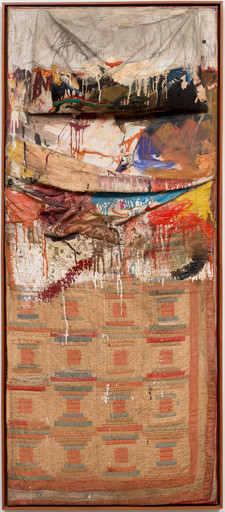
The Art of Assemblage
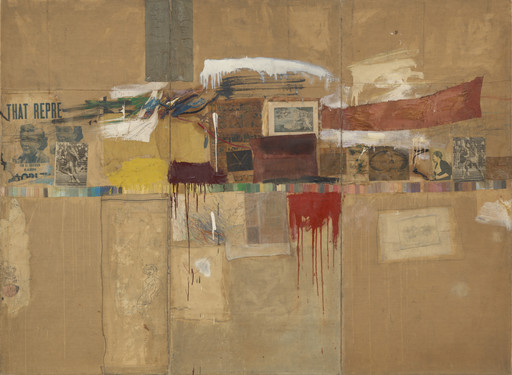
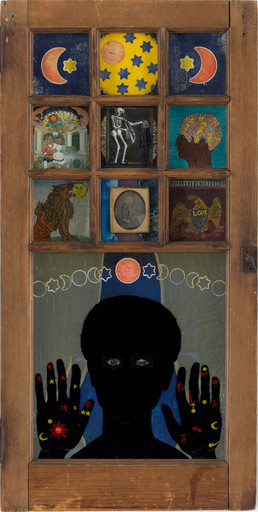
Gallery 408Everyday objects, popular consumer products, and other nontraditional materials had become, Seitz wrote, “the language for impatient, hypercritical, and anarchistic young artists,” who sought to create an art that—in its subject matter, materials, and making—was closely intertwined with life.
Learn more →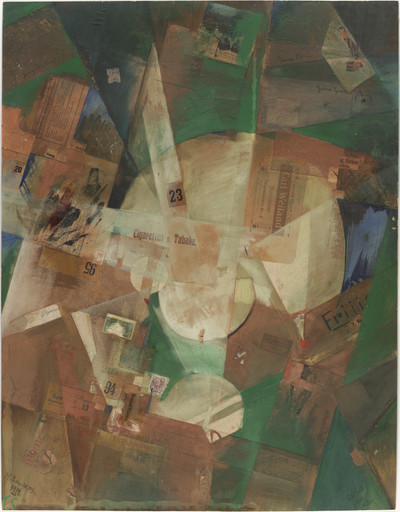

Audio
Audio from the playlist Collection 1950s–1970s
From MoMA Design Store


Installation views
We have identified this work in the following photos from our exhibition history.
Licensing
Artwork or archival images
If you would like to reproduce an image of a work of art in MoMA's collection, or an image of a MoMA publication or archival material (including installation views, checklists, and press releases), please contact Art Resource (publication in North America) or Scala Archives (publication in all other geographic locations).
Audio and film clips
MoMA licenses archival audio and select out of copyright film clips from our film collection. At this time, MoMA produced video cannot be licensed by MoMA/Scala. All requests to license archival audio or out of copyright film clips should be addressed to Scala Archives at [email protected]. Motion picture film stills cannot be licensed by MoMA/Scala. For access to motion picture film stills for research purposes, please contact the Film Study Center at [email protected]. For more information about film loans and our Circulating Film and Video Library, please visit Circulating Film and Video Library.
Text from a publication or the archives
If you would like to reproduce text from a MoMA publication, please email [email protected]. If you would like to publish text from MoMA's archival materials, please fill out this permission form and send to [email protected].
Feedback
This record is a work in progress. If you have additional information or spotted an error, please fill out this feedback form.