“There has never been any division between my life and my work,” Merz once said. She was the only woman in the Italian Arte Povera movement, which was known for its members’ use of unconventional or commonplace materials, such as rocks, concrete, or, in this case, hemp. Here, Merz invokes the human body, not only in the sculpture’s bodily scale but also in the hairlike fibers threaded through the metal grid. Merz and other Arte Povera artists renounced the separation between art and life, aiming to expand or dissolve the traditional limits of painting and sculpture.
2025
Gallery label from "Collection: 1940s—1970s", 2019
“There has never been any division between my life and my work,” Merz once claimed. She is the only female member of the Italian movement Arte Povera, which was known for the use of unconventional or commonplace materials such as rocks, concrete, or, in this case, hemp. Though the body itself is absent in the work, it is repeatedly invoked, not only in the sculpture’s human scale but also in the hair-like hanks of fiber threaded through the metal grid. A cage, a column, a container, something directed inward—the open-ended title invites innumerable references and associations to be projected onto this ambiguous object.
"Collection: 1940s—1970s", 2019
Explore more

Arte Povera
A movement of young Italian artists who attempted to create a new sculptural language through the use of humble, everyday materials.
Learn more →
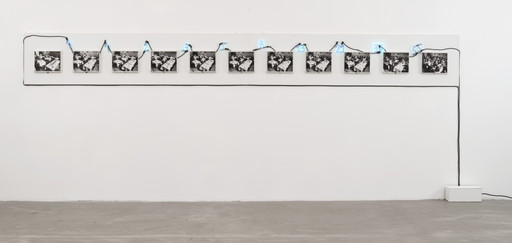
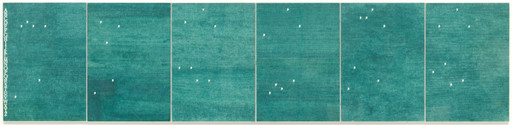
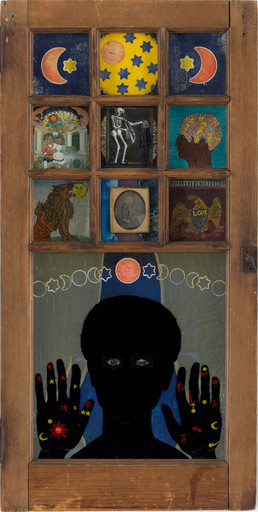
The Art of Assemblage
Gallery 408Everyday objects, popular consumer products, and other nontraditional materials had become, Seitz wrote, “the language for impatient, hypercritical, and anarchistic young artists,” who sought to create an art that—in its subject matter, materials, and making—was closely intertwined with life.
Learn more →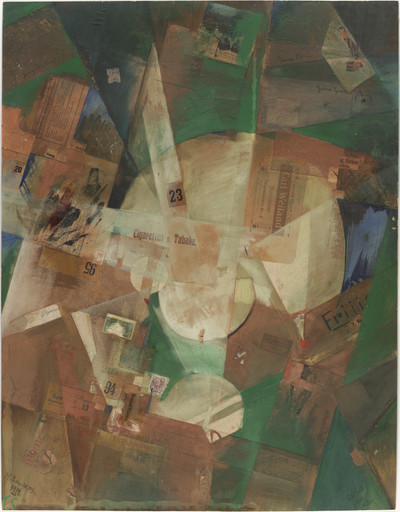
Audio
Audio from the playlist Collection 1950s–1970s
From MoMA Design Store


Installation views
We have identified this work in the following photos from our exhibition history.
Licensing
Artwork or archival images
If you would like to reproduce an image of a work of art in MoMA's collection, or an image of a MoMA publication or archival material (including installation views, checklists, and press releases), please contact Art Resource (publication in North America) or Scala Archives (publication in all other geographic locations).
Audio and film clips
MoMA licenses archival audio and select out of copyright film clips from our film collection. At this time, MoMA produced video cannot be licensed by MoMA/Scala. All requests to license archival audio or out of copyright film clips should be addressed to Scala Archives at [email protected]. Motion picture film stills cannot be licensed by MoMA/Scala. For access to motion picture film stills for research purposes, please contact the Film Study Center at [email protected]. For more information about film loans and our Circulating Film and Video Library, please visit Circulating Film and Video Library.
Text from a publication or the archives
If you would like to reproduce text from a MoMA publication, please email [email protected]. If you would like to publish text from MoMA's archival materials, please fill out this permission form and send to [email protected].
Feedback
This record is a work in progress. If you have additional information or spotted an error, please fill out this feedback form.