Andrea Fraser
Soldadera (Scenes from Un Banquete en Tetlapayac, a film by Olivier Debroise)
1998/2001
Two-channel video (color, sound; 5 min.), five page facsimile letter from Frances Flynn Paine to Mrs. Abby Aldrich Rockefeller
Not on view
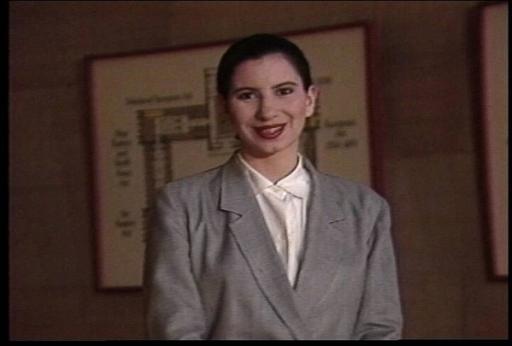
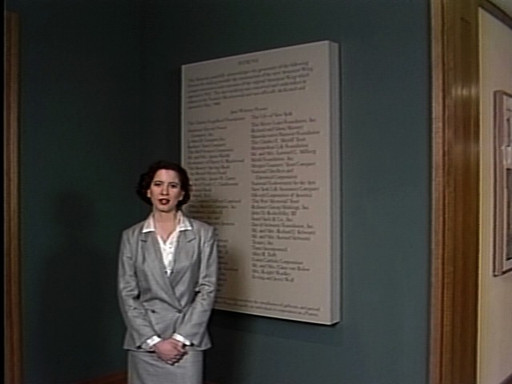
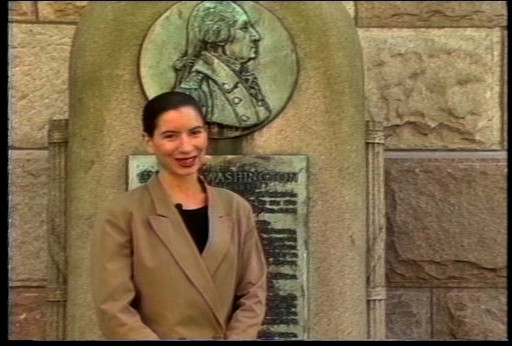
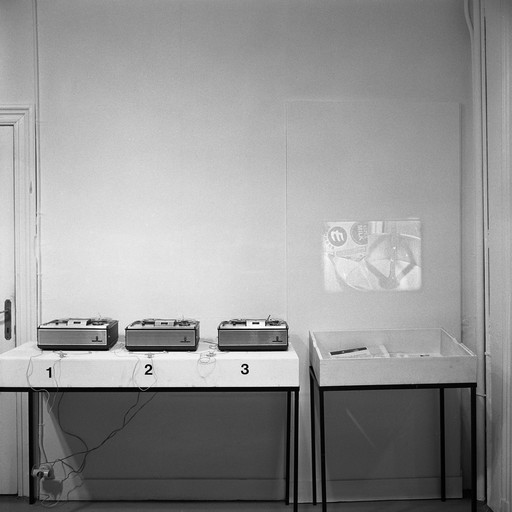
This two-channel video installation incorporates footage produced for an experimental 2000 documentary by Olivier Debroise about the unfinished 1930 film now known as ¡Que viva México!, by Sergei Eisenstein (inventor of the film montage). Eisenstein shot his film with the financial backing of the American socialist writer Upton Sinclair; Sinclair eventually withdrew his support and exercised his right as producer to have the film edited without Eisenstein’s approval. In iconography inspired by Eisenstein’s film and the murals of Mexican painter Diego Rivera, Fraser appears as a revolutionary peasant during a failed uprising at a hacienda. On the other screen, scenes representing the audience appear periodically, with Fraser performing as Frances Flynn Paine, president of the Paine Mexican Arts Corporation, an entity (funded by the Rockefeller family) that promoted Mexican arts and crafts in the United States in the 1930s. Paine was also the curator of Diego Rivera’s 1931 retrospective at The Museum of Modern Art, of which Abby Aldrich Rockefeller was a founder. While Paine was passionate about Mexican culture, she found it necessary to couch her interest in ideological terms, suggesting that American support for the Mexican avant-garde would subdue the leftist politics of the leading Mexican artists. (A letter from Paine to Rockefeller is included in the installation.)
The video installation’s split-screen format is both a familiar convention of video art and a representation of the double role performed by the artist. It provides a framework for Fraser’s examination of the fate of certain radical utopian and revolutionary impulses in twentieth-century art. Contrary to the common narrative of the failure of artists’ radical aspirations, Fraser points to contradictions that recast those aspirations within a structure of conflicts internal to the artist rather than one of failure to resist external interference.
Performing Histories: Live Artworks Examining the Past, September 12, 2012–March 8, 2013.
Explore more
Andrea Fraser
American, born 1965 17 works onlineOften credited with coining the term “ institutional critique ,” Andrea Fraser has probed our social and psychological investments in art institutions over the past four decades.
Learn more →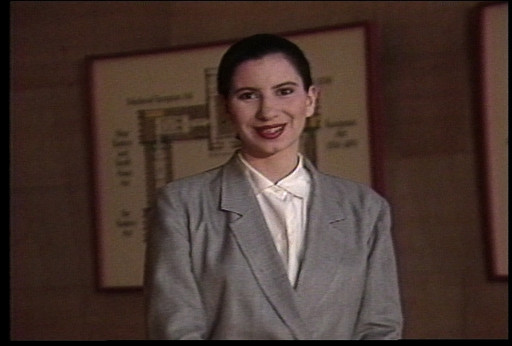


From MoMA Design Store


Installation views
We have identified this work in the following photos from our exhibition history.
Licensing
Artwork or archival images
If you would like to reproduce an image of a work of art in MoMA's collection, or an image of a MoMA publication or archival material (including installation views, checklists, and press releases), please contact Art Resource (publication in North America) or Scala Archives (publication in all other geographic locations).
Audio and film clips
MoMA licenses archival audio and select out of copyright film clips from our film collection. At this time, MoMA produced video cannot be licensed by MoMA/Scala. All requests to license archival audio or out of copyright film clips should be addressed to Scala Archives at [email protected]. Motion picture film stills cannot be licensed by MoMA/Scala. For access to motion picture film stills for research purposes, please contact the Film Study Center at [email protected]. For more information about film loans and our Circulating Film and Video Library, please visit Circulating Film and Video Library.
Text from a publication or the archives
If you would like to reproduce text from a MoMA publication, please email [email protected]. If you would like to publish text from MoMA's archival materials, please fill out this permission form and send to [email protected].
Feedback
This record is a work in progress. If you have additional information or spotted an error, please fill out this feedback form.