16mm film transferred to video (black and white, silent)
Not on view
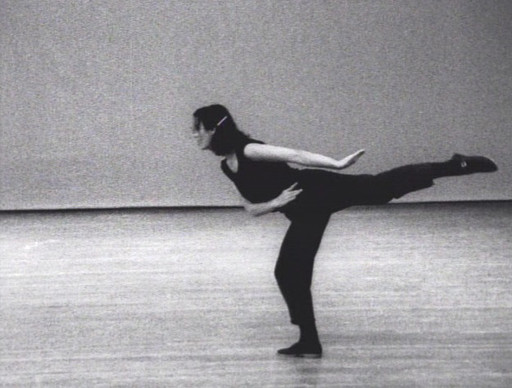
In his black-and-white film, Walking in an Exaggerated Manner Around the Perimeter of a Square, Bruce Nauman does just that. Placing one foot in front of the other, he walks forwards and backwards, with a pronounced swinging of his hips, around the edge of a square of masking tape affixed to his studio’s concrete floor. The silence of his studio is broken only by the rapid clicking sound made by the rolling film, which calls attention to the camera itself. Rather than ensuring that it follows his movements, the artist leaves the camera fixed in one place. As a result, he sometimes disappears off-screen as he treads the parts of the perimeter outside of the camera’s frame.
Nauman made Walking early in his career and at a time when the notion of turning the camera exclusively onto oneself was still relatively new. During this period, he and many other artists were increasingly broadening the definition of art by incorporating themselves and the activities and materials of daily life into their work. While the film may seem simple on its surface, with it, Nauman broke with the conventions of film, television, and art making itself. It offers little narrative or illusion; what’s more, it takes viewers into a space they would not typically see: the private realm of the artist’s studio. Walking is based on a premise Nauman developed shortly after completing his MFA, in 1966, which underscores all of his work: “If I was an artist and I was in the studio, then whatever I was doing in the studio must be art. At this point art became more of an activity and less of a product.”
Explore more
Bruce Nauman
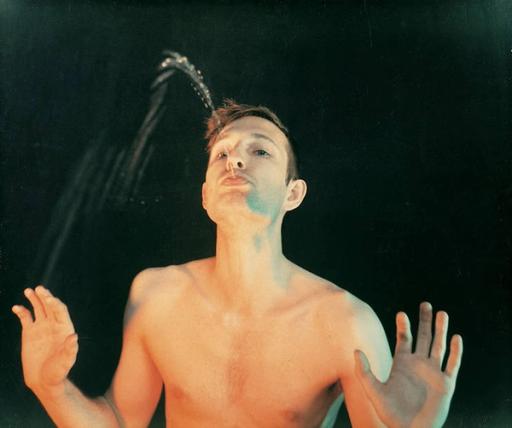
American, born 1941 92 works onlineFor more than 50 years, he has worked in every conceivable artistic medium, dissolving established genres and inventing new ones in the process.
Learn more →


From MoMA Design Store


Installation views
We have identified this work in the following photos from our exhibition history.
Licensing
Artwork or archival images
If you would like to reproduce an image of a work of art in MoMA's collection, or an image of a MoMA publication or archival material (including installation views, checklists, and press releases), please contact Art Resource (publication in North America) or Scala Archives (publication in all other geographic locations).
Audio and film clips
MoMA licenses archival audio and select out of copyright film clips from our film collection. At this time, MoMA produced video cannot be licensed by MoMA/Scala. All requests to license archival audio or out of copyright film clips should be addressed to Scala Archives at [email protected]. Motion picture film stills cannot be licensed by MoMA/Scala. For access to motion picture film stills for research purposes, please contact the Film Study Center at [email protected]. For more information about film loans and our Circulating Film and Video Library, please visit Circulating Film and Video Library.
Text from a publication or the archives
If you would like to reproduce text from a MoMA publication, please email [email protected]. If you would like to publish text from MoMA's archival materials, please fill out this permission form and send to [email protected].
Feedback
This record is a work in progress. If you have additional information or spotted an error, please fill out this feedback form.