Käthe Kollwitz
Death Seizes the Children (Tod greift in Kinderschar), plate 3 from the series Death (Tod)
1934
Lithograph
Not on view
Kollwitz’s final print portfolio, Death, is a summation of a lifelong preoccupation, stoked both by her personal experiences of loss and war and by her compassion for the precarities of working-class life. Completed in the year the artist turned seventy, as the Nazi party cemented its grip on Germany, it was also a warning and, perhaps, a premonition. Alongside images of a spectral figure visiting society’s most vulnerable—especially women and children—the last print in the series shows the hand of Death coming for Kollwitz herself.
Käthe Kollwitz, March 31–July 20, 2024
Publication excerpt from Heather Hess, German Expressionist Digital Archive Project , German Expressionism: Works from the Collection. 2011
Death was one of the most persistent themes in Käthe Kollwitz's work. It continued to exert an inexorable pull on the artist near the end of her life and served as the subject of this, her final print cycle. Ten years before completing the portfolio, Kollwitz had noted in her diary, "I must do the prints on Death. Must, must, must!" She chose lithography, her preferred technique for creating emotionally powerful images with universal resonance, as the medium, but struggled to shape her ideas, only executing the first five prints in 1934. She added three more lithographs to the series in 1937.
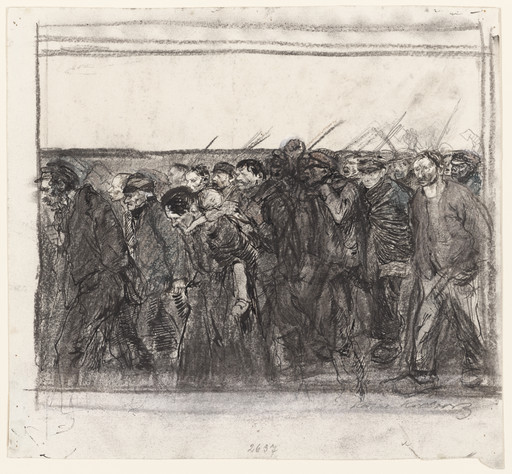
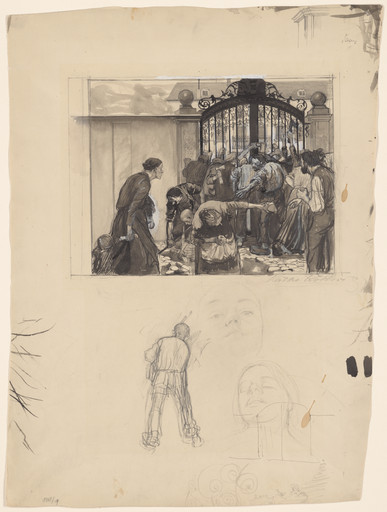
These eight images (five of which are in the Museum's collection) show Death visiting the most vulnerable members of society, the impoverished women and children whose plight Kollwitz had repeatedly chronicled in her long career of socially engaged printmaking. Set against a blank background free of any markers of time or place, Death comes, sometimes violently—as in Tod greift in eine Kinderschar (Death grabbing at a group of children)—and sometimes as a welcome friend. In the final print, Ruf des Todes (Call of Death), the artist herself finally yields to the temptations that had lured so many before her. Here, as in the opening print of a mother who has lost all hope, Death need only extend its hand.
Heather Hess, German Expressionist Digital Archive Project, German Expressionism: Works from the Collection. 2011
Explore more
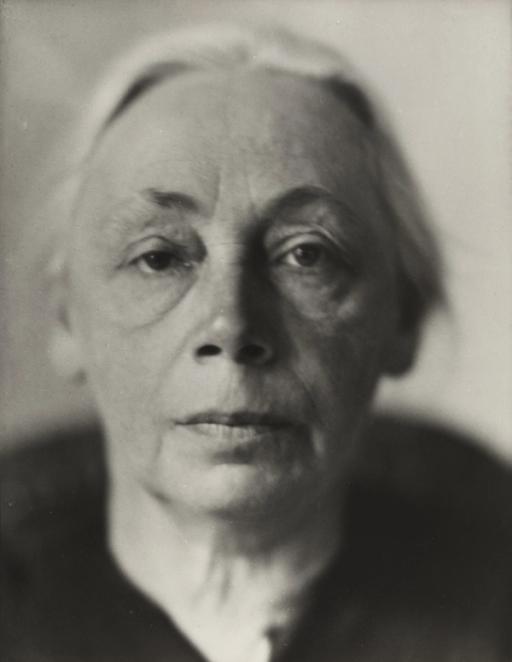
Käthe Kollwitz
German, 1867–1945 49 works onlineBorn in the Prussian city of Königsberg (now Kaliningrad, Russia) in 1867, Käthe Kollwitz established herself in an art world dominated by men by developing an aesthetic vision centered on women and the working class.
Learn more →
From MoMA Design Store


Installation views
We have identified this work in the following photos from our exhibition history.
Licensing
Artwork or archival images
If you would like to reproduce an image of a work of art in MoMA's collection, or an image of a MoMA publication or archival material (including installation views, checklists, and press releases), please contact Art Resource (publication in North America) or Scala Archives (publication in all other geographic locations).
Audio and film clips
MoMA licenses archival audio and select out of copyright film clips from our film collection. At this time, MoMA produced video cannot be licensed by MoMA/Scala. All requests to license archival audio or out of copyright film clips should be addressed to Scala Archives at [email protected]. Motion picture film stills cannot be licensed by MoMA/Scala. For access to motion picture film stills for research purposes, please contact the Film Study Center at [email protected]. For more information about film loans and our Circulating Film and Video Library, please visit Circulating Film and Video Library.
Text from a publication or the archives
If you would like to reproduce text from a MoMA publication, please email [email protected]. If you would like to publish text from MoMA's archival materials, please fill out this permission form and send to [email protected].
Feedback
This record is a work in progress. If you have additional information or spotted an error, please fill out this feedback form.