Linoleum cut with watercolor, gouache, and oil additions from a portfolio of seven linoleum cuts (including title page), all with watercolor and gouache, and one with oil additions
Not on view
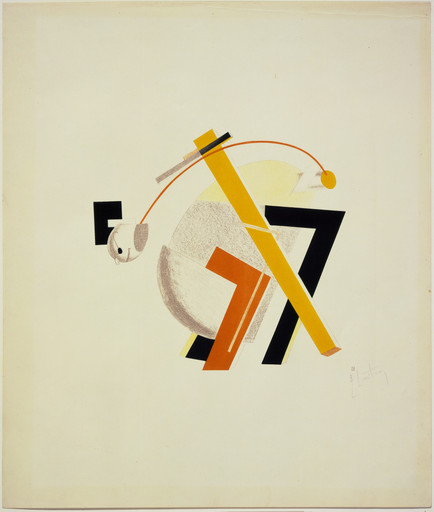
Popova was an avant-garde pioneer in Russia in the 1910s and 1920s. Her style combines floating abstract forms inspired in part by Cubist collage (which she encountered on a trip to Paris in 1912–13) and Suprematism, an abstract style developed by her friend and compatriot Kazimir Malevich, together with an assertive color palette derived in part from Russian folk art.
This rare series is an example of what Popova called "painterly architectonics." Her aim was to depict physical and spatial dynamism by layering her shapes so they would seem to be continually shifting and rotating. The portfolio format enhances this effect, as the energy of each sheet seems to influence the push and pull in the others.
Geo/Metric: Prints and Drawings from the Collection, June 11–August 18, 2008.
Explore more
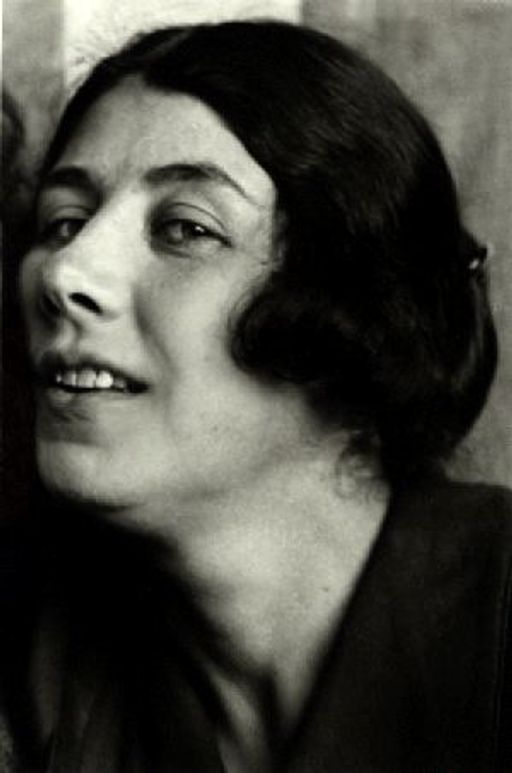
Liubov Popova
Russian, 1889–1924 27 works onlineWidely known for her abstract paintings, Popova was also an influential theoretician and educator who declared painting obsolete and committed herself to the applied arts, which became fundamental to the building of a new Soviet society after the October Revolution.
Learn more →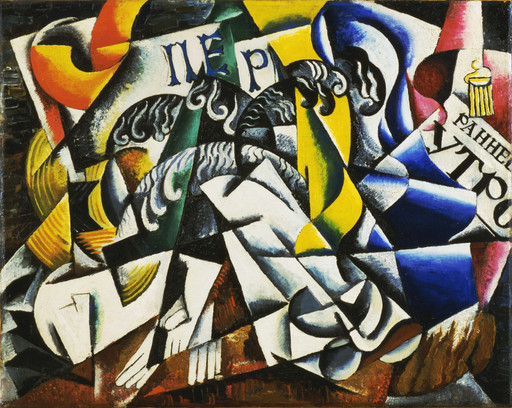



From MoMA Design Store


Installation views
We have identified this work in the following photos from our exhibition history.
Licensing
Artwork or archival images
If you would like to reproduce an image of a work of art in MoMA's collection, or an image of a MoMA publication or archival material (including installation views, checklists, and press releases), please contact Art Resource (publication in North America) or Scala Archives (publication in all other geographic locations).
Audio and film clips
MoMA licenses archival audio and select out of copyright film clips from our film collection. At this time, MoMA produced video cannot be licensed by MoMA/Scala. All requests to license archival audio or out of copyright film clips should be addressed to Scala Archives at [email protected]. Motion picture film stills cannot be licensed by MoMA/Scala. For access to motion picture film stills for research purposes, please contact the Film Study Center at [email protected]. For more information about film loans and our Circulating Film and Video Library, please visit Circulating Film and Video Library.
Text from a publication or the archives
If you would like to reproduce text from a MoMA publication, please email [email protected]. If you would like to publish text from MoMA's archival materials, please fill out this permission form and send to [email protected].
Feedback
This record is a work in progress. If you have additional information or spotted an error, please fill out this feedback form.