Vito Acconci’s face appears at the right side of the screen, close against the lens of the video camera he has focused on himself. Lying on the floor, he lights a cigarette, looks straight into the camera, pushes the play button on a cassette player just out of sight, and says, “I have no idea what your face looks like. I mean you could be anybody out there. Ah, but I know there’s gotta be somebody…watching me. Somebody who wants to come in close to me.”
So begins Theme Song, a video Acconci made in the 1970s, during a period in his long and varied career—which also encompasses writing, performance, installation, sculpture, and architecture—when he experimented with film, sound recordings, and the recently invented medium of video, which allowed for immediate playback. He began producing visual art in 1969, and became known for works centered upon his subversive behaviors, through which he would disrupt and question perceived societal norms. In Theme Song, he confronts viewers with a sexually charged monologue. Riffing off of the lyrics of the songs about love, loneliness, and desire playing in the background, he behaves as if there is no screen between him and the audience. “Come on, look, I’m all alone,” he implores. “I just need your body next to mine.”
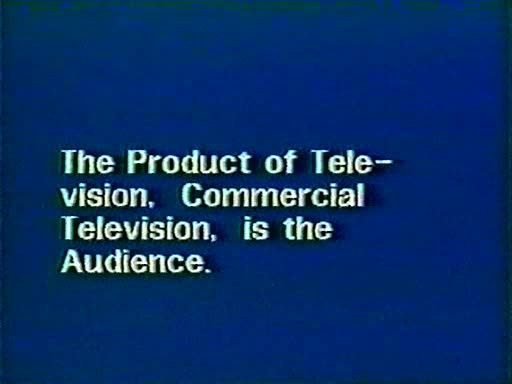
Through such statements, Acconci aimed to address viewers as directly as possible, and to make people more critically aware of the way they consume and are manipulated by televised images and their underlying messages. His monologue in Theme Song is peppered with subtle criticism of televised media and our relationship to it. Through it, he suggests that television may be used to distract us from our own discontent and loneliness and to take the place of real-life human connections.
Explore more


From MoMA Design Store


Licensing
Artwork or archival images
If you would like to reproduce an image of a work of art in MoMA's collection, or an image of a MoMA publication or archival material (including installation views, checklists, and press releases), please contact Art Resource (publication in North America) or Scala Archives (publication in all other geographic locations).
Audio and film clips
MoMA licenses archival audio and select out of copyright film clips from our film collection. At this time, MoMA produced video cannot be licensed by MoMA/Scala. All requests to license archival audio or out of copyright film clips should be addressed to Scala Archives at [email protected]. Motion picture film stills cannot be licensed by MoMA/Scala. For access to motion picture film stills for research purposes, please contact the Film Study Center at [email protected]. For more information about film loans and our Circulating Film and Video Library, please visit Circulating Film and Video Library.
Text from a publication or the archives
If you would like to reproduce text from a MoMA publication, please email [email protected]. If you would like to publish text from MoMA's archival materials, please fill out this permission form and send to [email protected].
Feedback
This record is a work in progress. If you have additional information or spotted an error, please fill out this feedback form.