“The new work of art is not stagnant. This new object placed within the sensible world [becomes] an active object.” This description of Willys de Castro’s Active Object series appeared in the Brazilian magazine Habitat in 1960. At the time, the artist was working on a group of sculptures and painted wall reliefs in which he often wrapped a wooden plank or pole with painted canvas. The rhythmic color-block patterns of these works call attention to their edges and invite the viewer to circle them, “activating” the space between object and audience, a central ambition of the Neo-Concrete artists.
Sur moderno: Journeys of Abstraction—The Patricia Phelps de Cisneros Gift, October 21, 2019–March 14, 2020
Gallery label from New Perspectives in Latin American Art, 1930–2006: Selections from a Decade of Acquisitions , November 21, 2007–February 25, 2008.
Active Object is a painting on canvas wrapped precisely around a long, rectangular piece of wood. Installed perpendicular to the wall, the work is meant to be seen on both sides by the viewer. Because of the active connection it creates between the duration of the gaze and the movement of the body, Active Object is a landmark in the connection of art to phenomenology—the study of objective reality as experienced by the individual. The artist explored the tension between formal stability and instability, conceiving it to be an agent of perceptual activation of the borders and volumes of the visual field. As such, the Active Objects series is not only a milestone in the history of hard–edge abstraction, but also a striking precedent to Minimalism.
New Perspectives in Latin American Art, 1930–2006: Selections from a Decade of Acquisitions, November 21, 2007–February 25, 2008.
Explore more
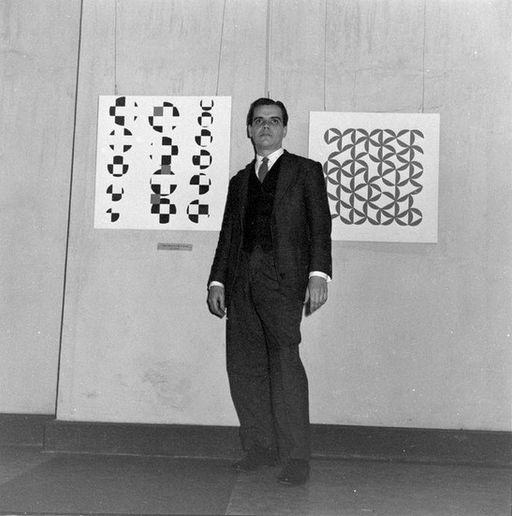
Willys de Castro
Brazilian, 1926–1988 20 works onlineArtist Willys de Castro also worked as a graphic and industrial designer , composer, poet, and technical draftsman. Whether figuring out a problem or rehearsing a theme, his geometric compositions often seem like exercises or prototypes .
Learn more →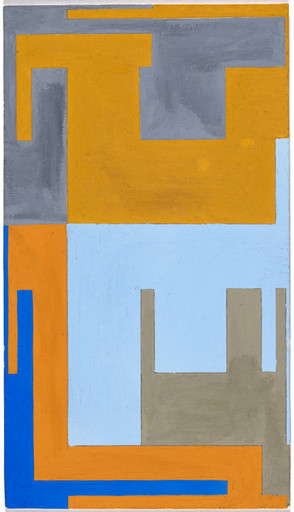

From MoMA Design Store


Installation views
We have identified this work in the following photos from our exhibition history.
Provenance
The artist.
? - 1998, Sylvio Nery da Fonseca, Escritório de Arte, São Paulo.
1998 - 2007, Colección Patricia Phelps de Cisneros, New York, and Caracas, purchased through Sylvio Nery da Fonseca, Escritório de Arte.
2007, The Museum of Modern Art, New York, acquired as gift from Patricia Phelps de Cisneros.
Exhibition history
MoMA Exh. #2022: "New Perspectives in Latin American Art, 1930-2006: Selections from a Decade of Acquisitions", 3rd Floor, November 21, 2007 - February 25, 2008
Albany, New York State Museum, "Latin American and Caribbean Art: Selected Highlights from the Collection of The Museum of Modern Art", May 17 - October 13, 2008
MoMA Exh. #2138: "Painting and Sculpture Changes 2011", 5th Floor, gallery 10, added January 5, 2011 - November 27, 2012
Madrid, Museo Nacional Centro de Arte Reina Sofía, "La invención concreta. Collección Patricia Phelps de Cisneros", January 22 - September 16, 2013
MoMA Exh. #2335: "Transmissions: Art in Eastern Europe and Latin America, 1960–1980", 6th Floor, The Joan and Preston Robert Tisch Gallery, September 5, 2015 - January 3, 2016
MoMA Exh. #2424: "Sur moderno: Journeys of Abstraction—The Patricia Phelps de Cisneros Gift", 3rd Floor, 3 East, October 21, 2019 - September 12, 2020
Licensing
Artwork or archival images
If you would like to reproduce an image of a work of art in MoMA's collection, or an image of a MoMA publication or archival material (including installation views, checklists, and press releases), please contact Art Resource (publication in North America) or Scala Archives (publication in all other geographic locations).
Audio and film clips
MoMA licenses archival audio and select out of copyright film clips from our film collection. At this time, MoMA produced video cannot be licensed by MoMA/Scala. All requests to license archival audio or out of copyright film clips should be addressed to Scala Archives at [email protected]. Motion picture film stills cannot be licensed by MoMA/Scala. For access to motion picture film stills for research purposes, please contact the Film Study Center at [email protected]. For more information about film loans and our Circulating Film and Video Library, please visit Circulating Film and Video Library.
Text from a publication or the archives
If you would like to reproduce text from a MoMA publication, please email [email protected]. If you would like to publish text from MoMA's archival materials, please fill out this permission form and send to [email protected].
Feedback
This record is a work in progress. If you have additional information or spotted an error, please fill out this feedback form.