Marcel Duchamp
In Advance of the Broken Arm
August 1964 (fourth version, after lost original of November 1915)
Wood and galvanized-iron snow shovel
To make In Advance of the Broken Arm, Marcel Duchamp selected a snow shovel, hung it from the ceiling of his studio, and called it art. His Readymades—mass-produced, functional objects he designated as art—challenged many accepted assumptions and traditions, namely that art should reflect an artist’s skills, or even be handcrafted by the artist. Duchamp asserted that an artist could create simply by making choices. His Readymades also aimed at shifting viewers’ engagement with works of art from what Duchamp called the “retinal” (pleasing to the eye) to the “intellectual” (in “the service of the mind”), subverting the traditional notion that beauty is a defining characteristic of art.
Duchamp frequently assigned humorous titles to his Readymades. In Advance of the Broken Arm refers playfully to the function of a snow shovel: to remove snow from the ground. It assumes that without the shovel to remove the snow, one might slip and fall and even break an arm.
Gallery label from 2016
Beginning in 1913 Duchamp challenged accepted artistic standards by selecting mass-produced, functional objects from everyday life and designating them as works of art. These sculptures, which he called "readymades," were aimed at subverting traditional notions of skill, uniqueness, and beauty, boldly declaring that an artist could create simply by making choices. Duchamp purchased the first version of this work in a hardware store in 1915, signed and dated the shovel, and hung it on display from his studio ceiling. Its title, In Advance of the Broken Arm, playfully alludes to the object’s intended purpose.
2016
Kids label from 2025
Where’s the snow?
Marcel Duchamp had never seen a snow shovel like this one before moving to New York City from France. He bought it at a store on the Upper West Side of Manhattan, signed it, and hung it from the ceiling of his art studio. He wanted to show people that any everyday object can become art.
What object from your everyday life would you call a work of art?
2025
Explore more
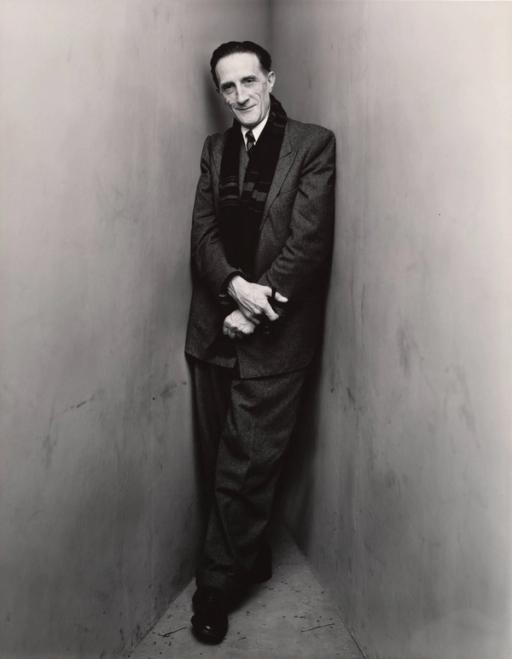
Marcel Duchamp
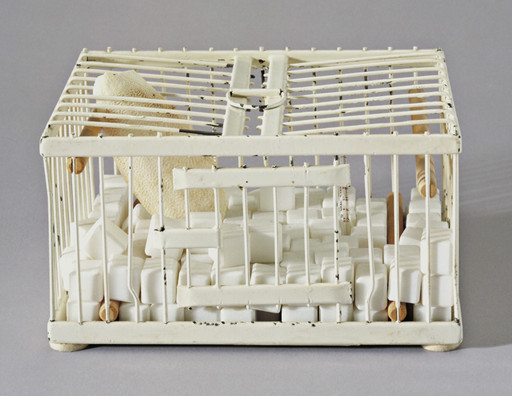
American, born France. 1887–1968 190 works onlineWhen Marcel Duchamp created his most famous work—the industrially produced urinal Fountain —it was largely ignored. Fountain was the high point of Duchamp’s campaign to dismantle and expand the boundaries of what constitutes a work of art; it had begun four years earlier, when he asked, “Can one make works that are not ‘of art’?
Learn more →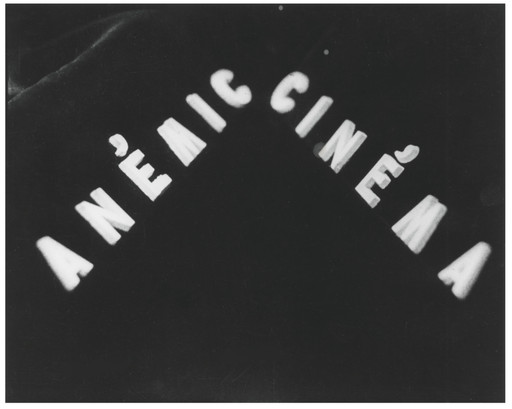
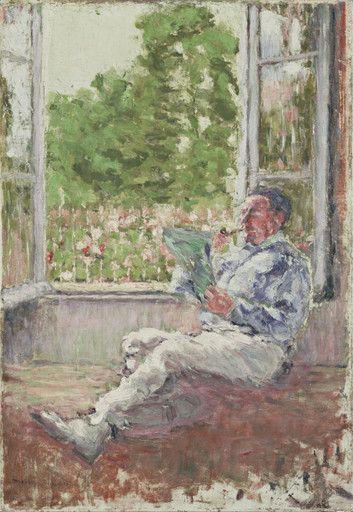
Institutional critique
A form of conceptual art, which emerged in the late 1960s, centered on the critique of museums, galleries, private collections, and other art institutions.
Learn more →![Marcel Broodthaers. At your supplier (Vinegar of Eagles) ( Chez votre fournisseur [Le Vinaigre des Aigles] )](https://www.moma.org/media/W1siZiIsIjMyNDI0NSJdLFsicCIsImNvbnZlcnQiLCItcXVhbGl0eSA5MCAtcmVzaXplIDUxMng1MTJcdTAwM2UiXV0.jpg?sha=3d3e6638b1662764)


Readymade
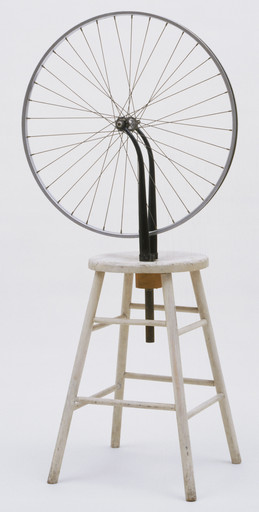
A term coined by Marcel Duchamp in 1916 to describe prefabricated, often mass-produced objects isolated from their intended use and elevated to the status of art by the artist choosing and designating them as such.
Learn more →
Living in the Age of the Machine
Gallery 505Artists across Europe, Russia, and the United States responded in various ways to this period’s increasing mechanization, industrialization, and public awareness of the machine’s destructive potential.
Learn more →
Audio
Audio from the playlist Kids
Audio from the playlist Marcel Duchamp
Articles and videos
From MoMA Design Store


Installation views
We have identified this work in the following photos from our exhibition history.
Licensing
Artwork or archival images
If you would like to reproduce an image of a work of art in MoMA's collection, or an image of a MoMA publication or archival material (including installation views, checklists, and press releases), please contact Art Resource (publication in North America) or Scala Archives (publication in all other geographic locations).
Audio and film clips
MoMA licenses archival audio and select out of copyright film clips from our film collection. At this time, MoMA produced video cannot be licensed by MoMA/Scala. All requests to license archival audio or out of copyright film clips should be addressed to Scala Archives at [email protected]. Motion picture film stills cannot be licensed by MoMA/Scala. For access to motion picture film stills for research purposes, please contact the Film Study Center at [email protected]. For more information about film loans and our Circulating Film and Video Library, please visit Circulating Film and Video Library.
Text from a publication or the archives
If you would like to reproduce text from a MoMA publication, please email [email protected]. If you would like to publish text from MoMA's archival materials, please fill out this permission form and send to [email protected].
Feedback
This record is a work in progress. If you have additional information or spotted an error, please fill out this feedback form.