Silver dye bleach print, printed 2006
Not on view
Goldin's personal life is the raw material of her art, and this picture intimately evokes the pathos of her own passionate romance. The artist lies on a bed gazing at her lover, Brian, with a mixture of longing and resignation as he turns away from her. A soft yellow light bathes the scene, suggestive of the rays of a setting sun and a waning relationship.
Nan and Brian in Bed, New York City is included in Goldin's influential work The Ballad of Sexual Dependency, a sequence of more than seven hundred color slides of Goldin’s friends and family, accompanied by a sound track. The forty-five-minute slide show, which borrows its title from a song in The Threepenny Opera by Kurt Weill and Bertolt Brecht, presents an intimate, visceral image of a fringe community in downtown New York in the 1980s. Goldin has described The Ballad as "the diary I let people read"; the informal, snapshot style of her photographs lends their private dramas a powerful sense of immediacy. While the work captures the shared experience of a generation ravaged by drug excesses and AIDS, its central, driving theme is the intensity—the highs and the lows—of amorous relationships.
The Museum of Modern Art, MoMA Highlights since 1980, New York: The Museum of Modern Art, 2007, p. 38.
Publication excerpt from MoMA Highlights: 375 Works from The Museum of Modern Art, New York (New York: The Museum of Modern Art, 2019)
Goldin’s personal life is the raw material of her art, and this picture intimately evokes the pathos of her own passionate romance. The artist lies on a bed gazing at her lover, Brian, with a mixture of longing and resignation as he turns away from her. A soft yellow light bathes the scene, suggestive of the rays of a setting sun and a waning relationship.
Nan and Brian in Bed, New York City is included in Goldin’s influential work The Ballad of Sexual Dependency, a sequence of more than seven hundred color slides of Goldin’s friends and family, accompanied by a soundtrack. The forty-five-minute slideshow, which borrows its title from a song in The Threepenny Opera by Kurt Weill and Bertolt Brecht, presents an intimate, visceral portrait of a fringe community in downtown Manhattan in the 1980s. Goldin has described The Ballad as “the diary I let people read”; the informal snapshot style of her photographs lends their private dramas a powerful sense of immediacy. While the work captures the shared experience of a generation ravaged by drug excesses and AIDS, its central, driving theme is the intensity—the highs and the lows—of amorous relationships.
MoMA Highlights: 375 Works from The Museum of Modern Art, New York (New York: The Museum of Modern Art, 2019)
Explore more
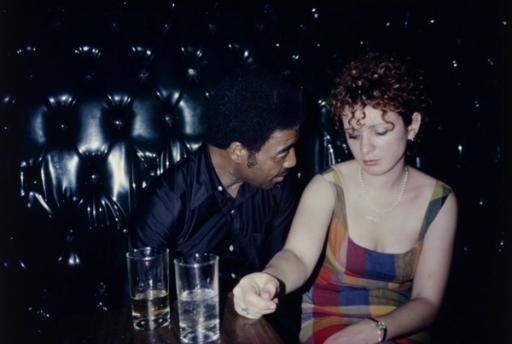
Nan Goldin
American, born 1953 22 works onlineNan Goldin’s photographs are like pages of a diary, sharing at once the intimacy of ordinary connections , the isolation of abuse , and the joyful abandon of being with friends.
Learn more →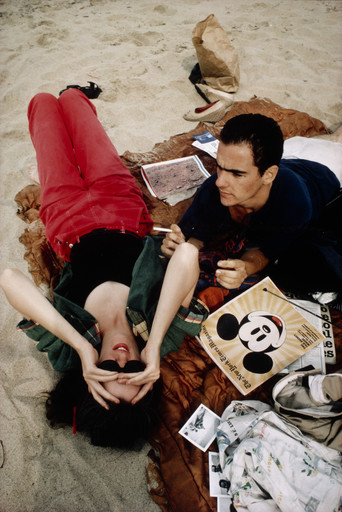
From MoMA Design Store


Installation views
We have identified this work in the following photos from our exhibition history.
Licensing
Artwork or archival images
If you would like to reproduce an image of a work of art in MoMA's collection, or an image of a MoMA publication or archival material (including installation views, checklists, and press releases), please contact Art Resource (publication in North America) or Scala Archives (publication in all other geographic locations).
Audio and film clips
MoMA licenses archival audio and select out of copyright film clips from our film collection. At this time, MoMA produced video cannot be licensed by MoMA/Scala. All requests to license archival audio or out of copyright film clips should be addressed to Scala Archives at [email protected]. Motion picture film stills cannot be licensed by MoMA/Scala. For access to motion picture film stills for research purposes, please contact the Film Study Center at [email protected]. For more information about film loans and our Circulating Film and Video Library, please visit Circulating Film and Video Library.
Text from a publication or the archives
If you would like to reproduce text from a MoMA publication, please email [email protected]. If you would like to publish text from MoMA's archival materials, please fill out this permission form and send to [email protected].
Feedback
This record is a work in progress. If you have additional information or spotted an error, please fill out this feedback form.