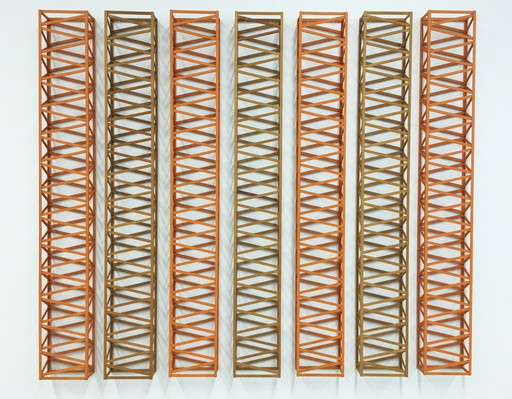
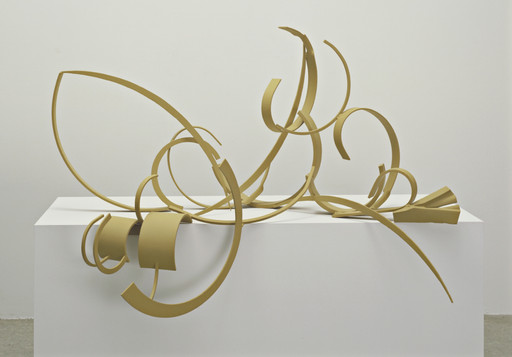
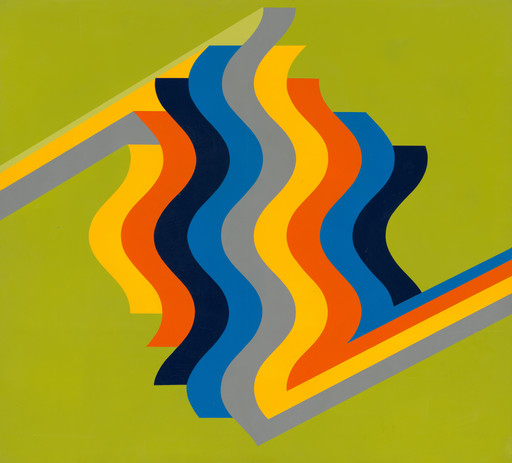
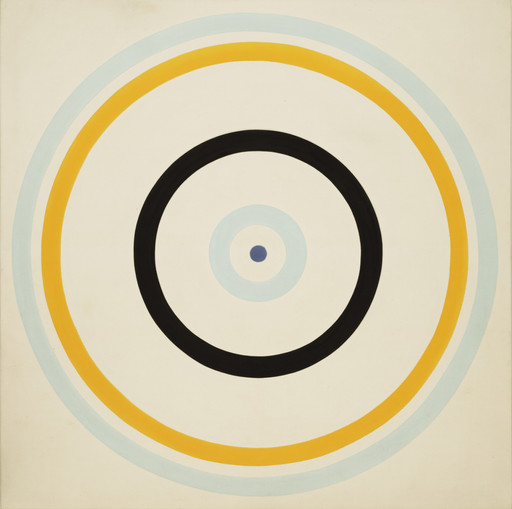
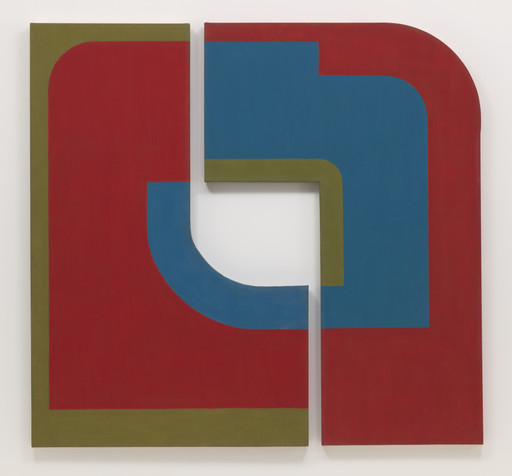
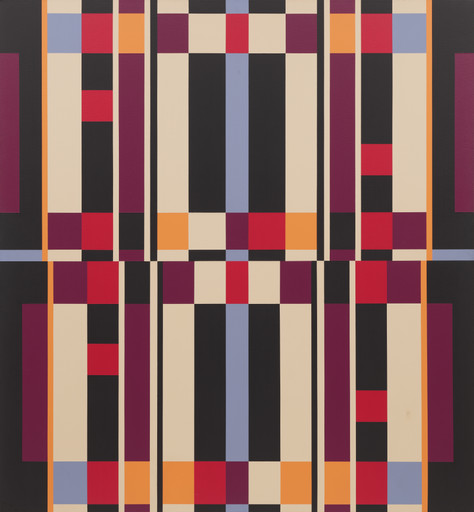
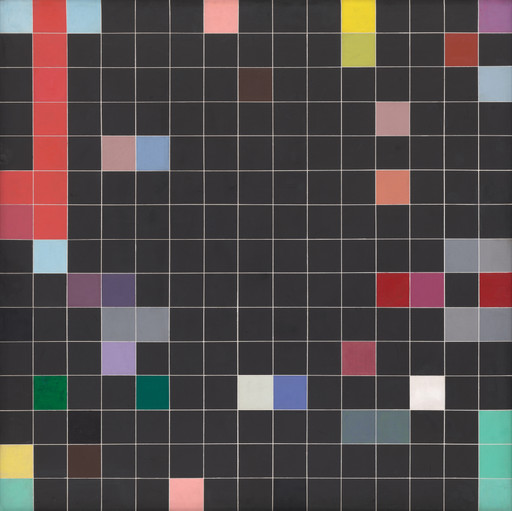
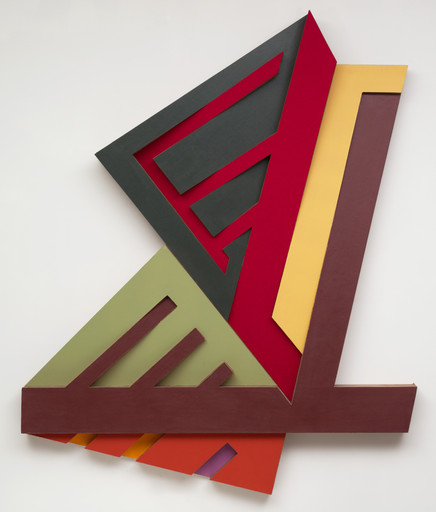
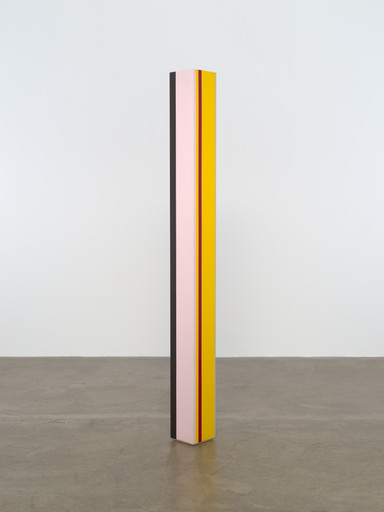
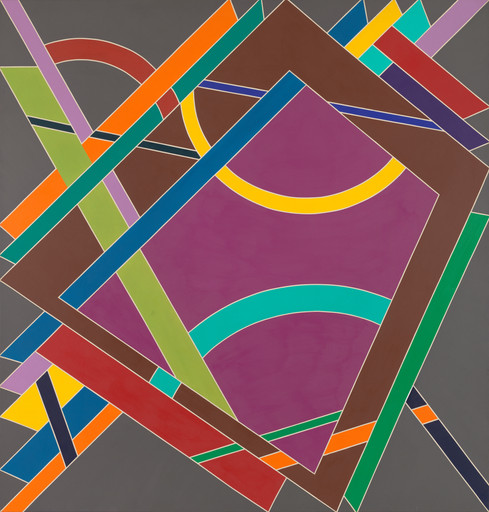
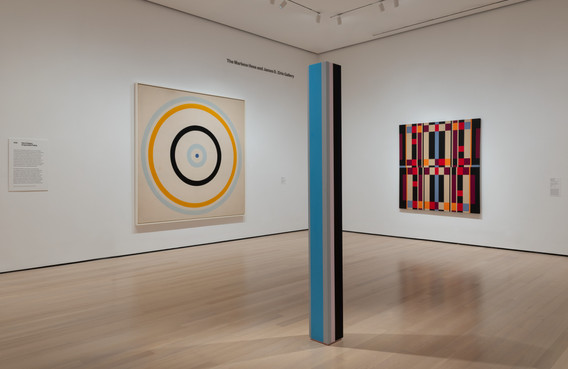
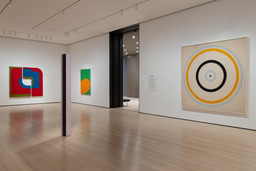
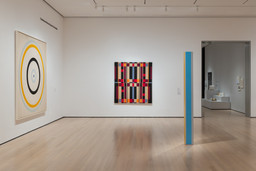
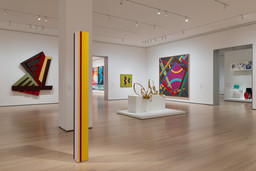
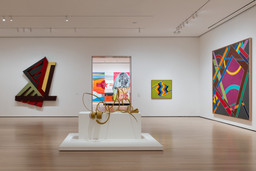
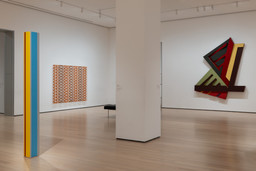
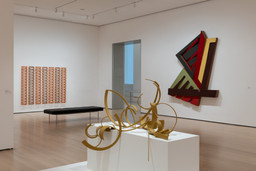
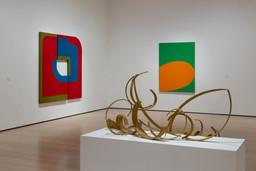
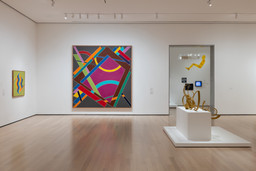
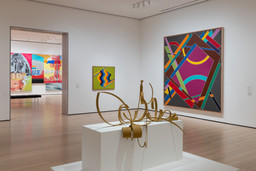
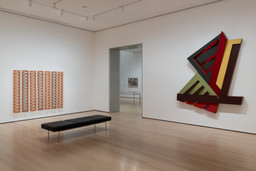
Sharp lines. Flat shapes. Vibrant colors. In the 1960s, artists paired these qualities in unexpected combinations to find new directions for abstraction. One source for this approach was Josef Albers, whose compositions of concentric squares exploring color theory informed younger artists like Kenneth Noland and Frank Stella. Noland and Stella, along with Ellsworth Kelly, came to be associated with hard-edge painting, a phrase coined to describe such work by American painters favoring sharply delineated geometries. In actuality, this tendency toward bright, bold planes was a global phenomenon.
As artists traveled to new cities and participated in exhibitions around the world, ideas about geometric abstraction expanded through personal connections or exposure to one another’s work. This gallery traces the effects of those international exchanges. Some, like Colombian artist Fanny Sanín, experimented formally with color and composition. Others, like Moroccan artist Mohamed Melehi and Pakistani and British artist Rasheed Araeen, saw abstraction not as a neutral language of shapes but as a vehicle for political and conceptual ideas.
Organized by Smooth Nzewi, The Steven and Lisa Tananbaum Curator, Department of Painting and Sculpture, with Erica diBenedetto, Curatorial Associate, Department of Painting and Sculpture, and Rachel Rosin, Curatorial Assistant, Department of Drawings and Prints and Department of Curatorial Affairs.