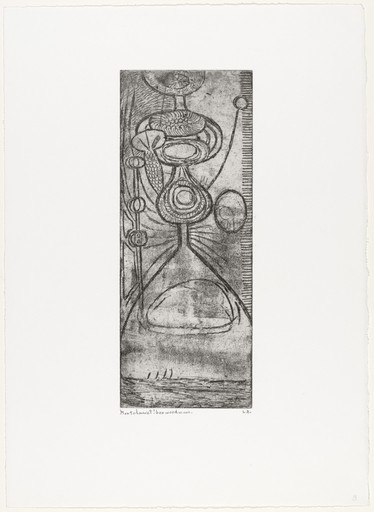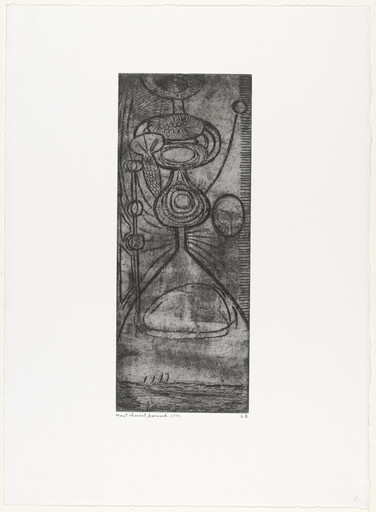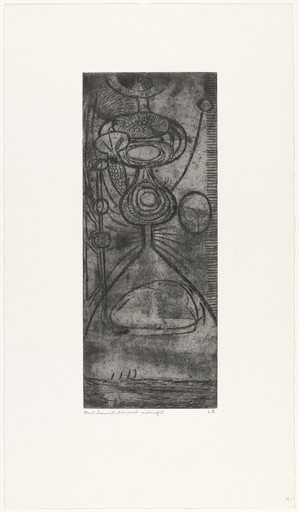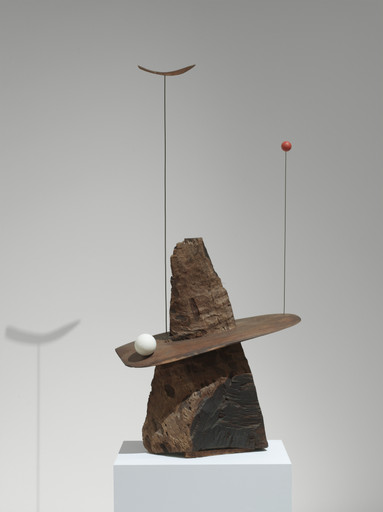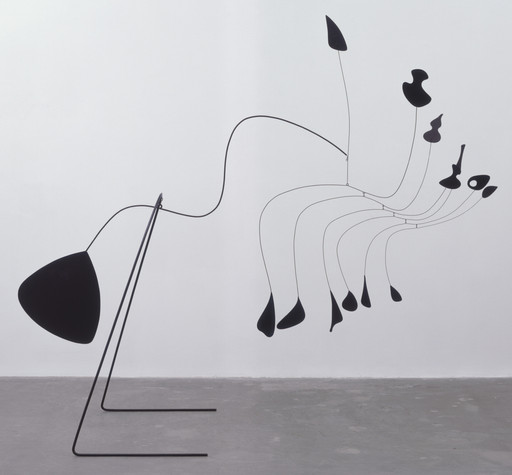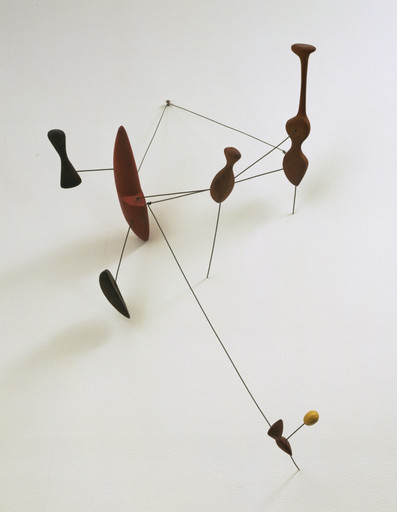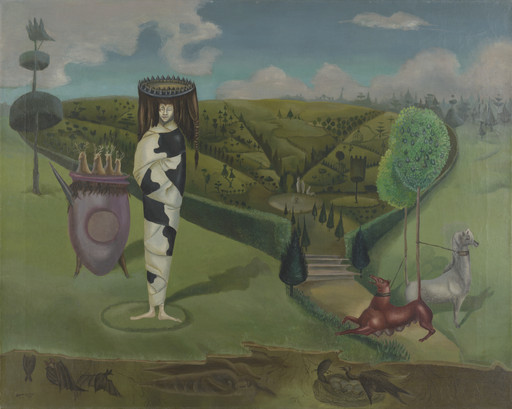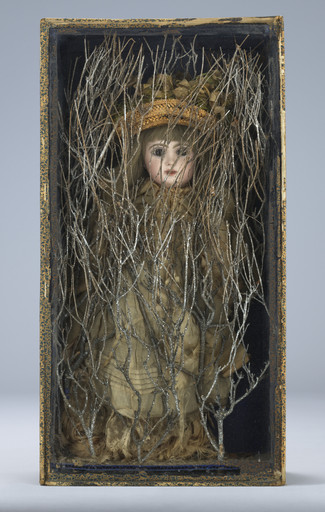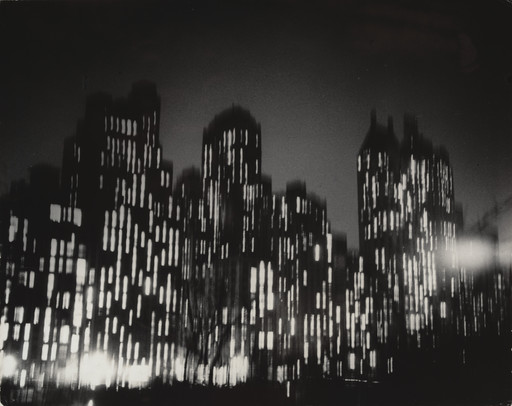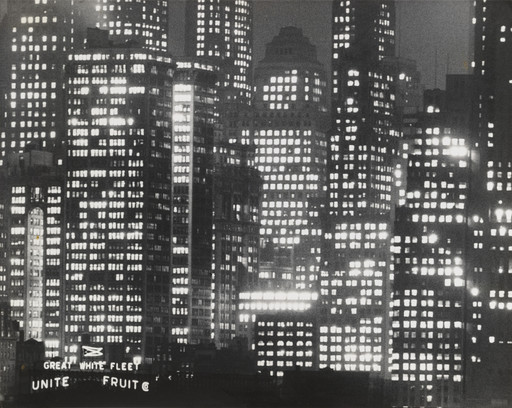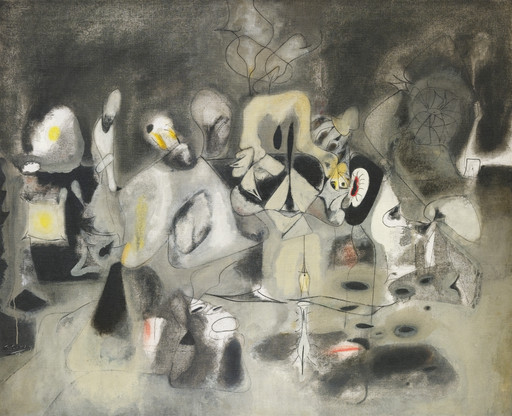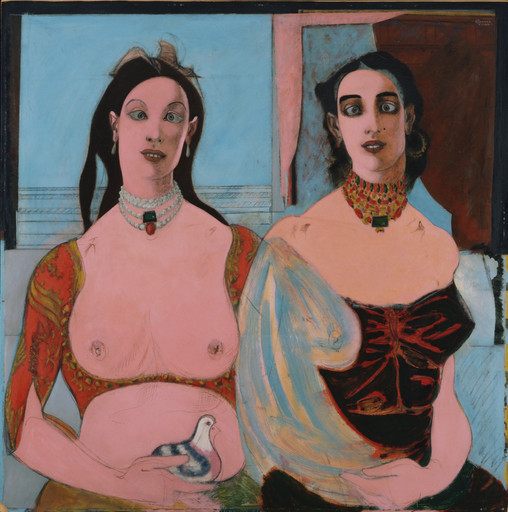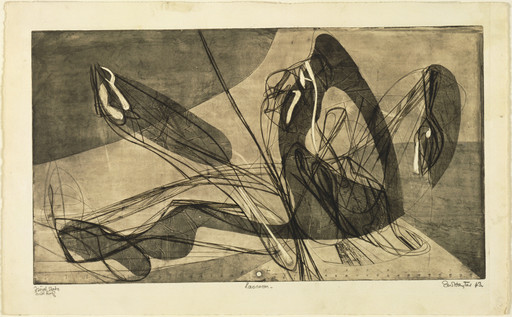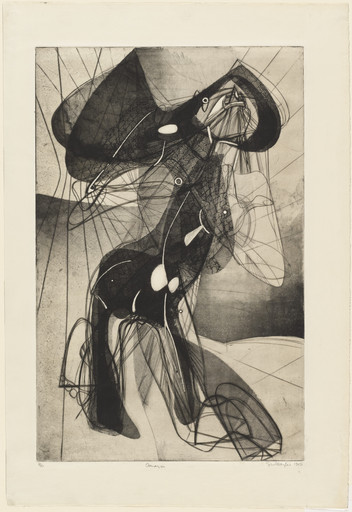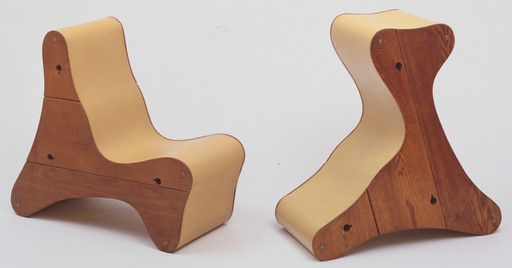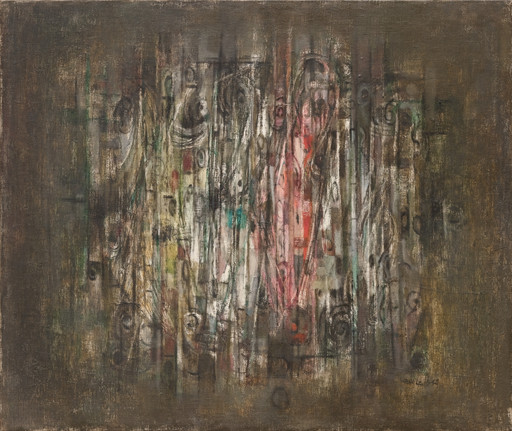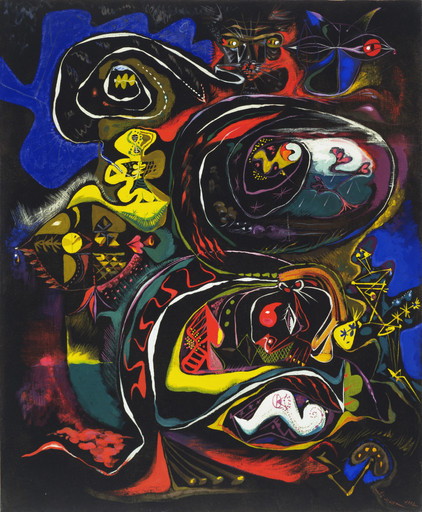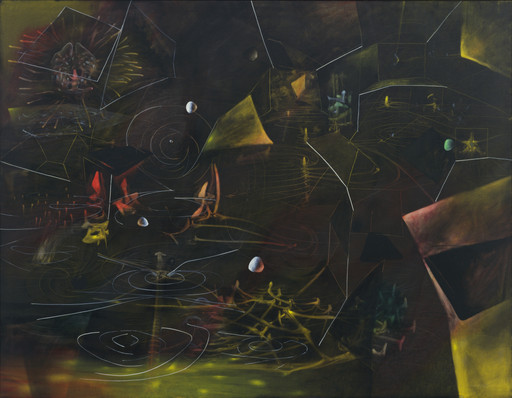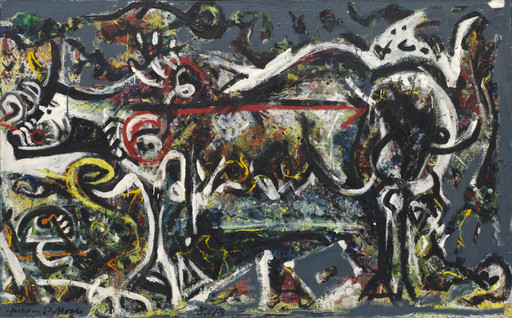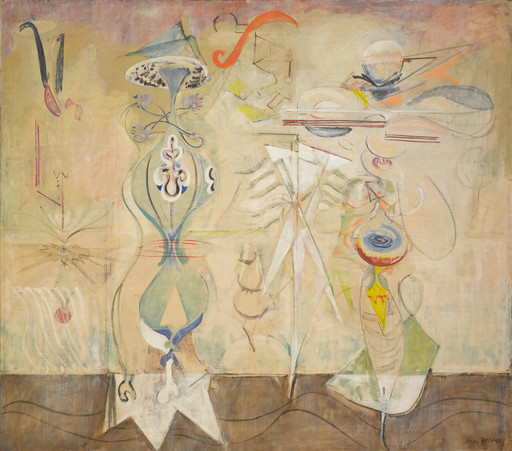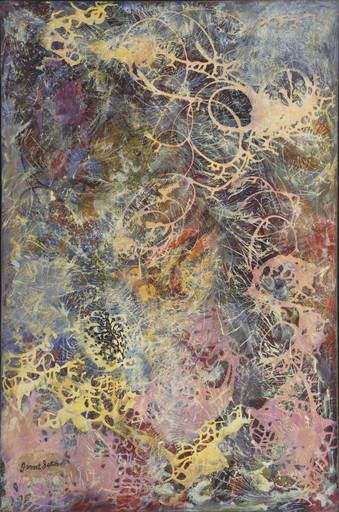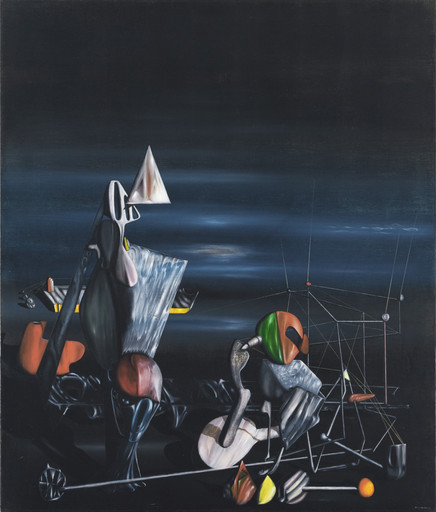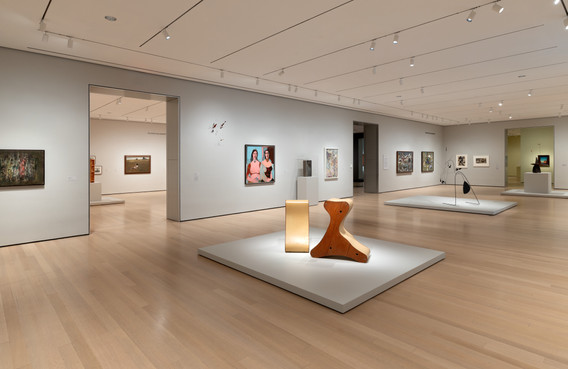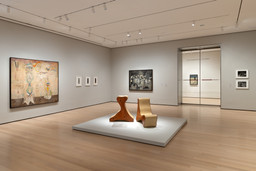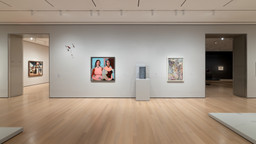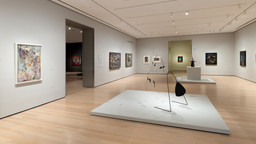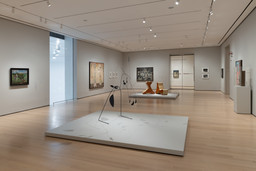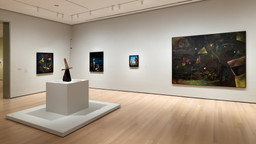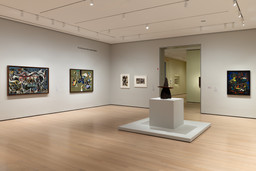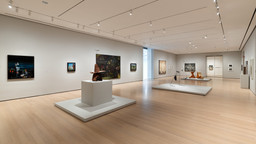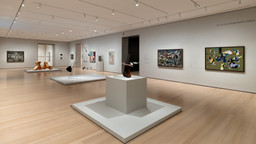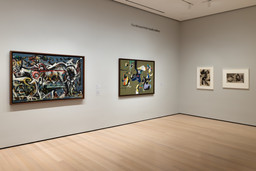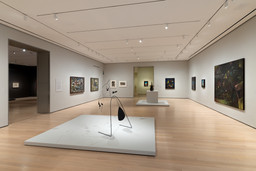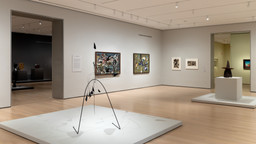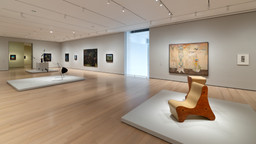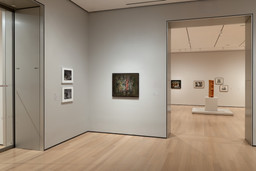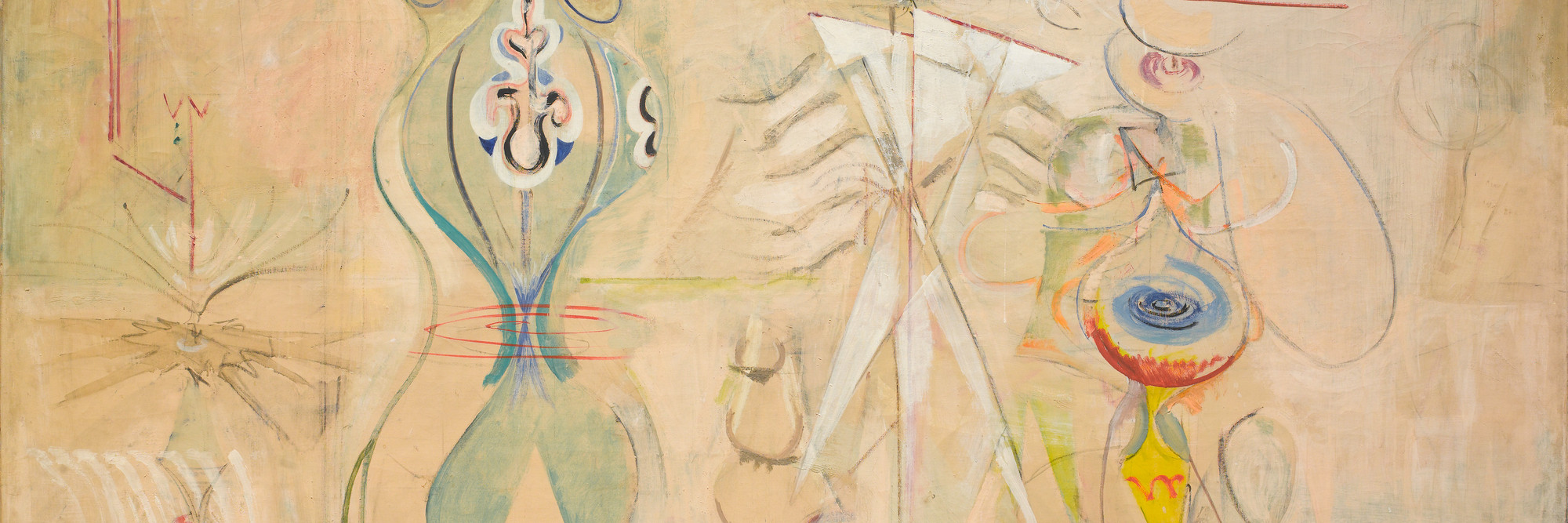
In the 1940s the New York City art world expanded with the arrival of European émigrés escaping World War II. American collector and dealer Peggy Guggenheim, who fled from her home in France, established a new gallery called Art of This Century, which, along with galleries such as Julien Levy and Pierre Matisse, became crucial sites of exchange for European artists and their American peers.
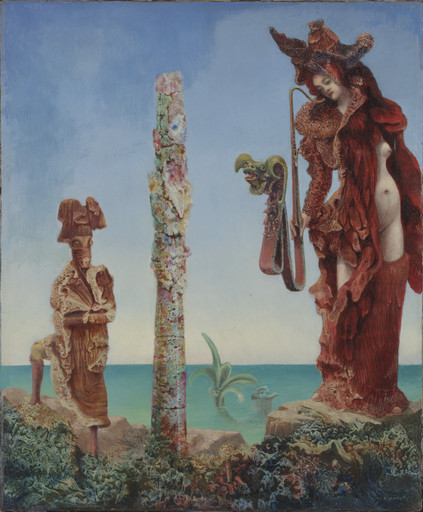
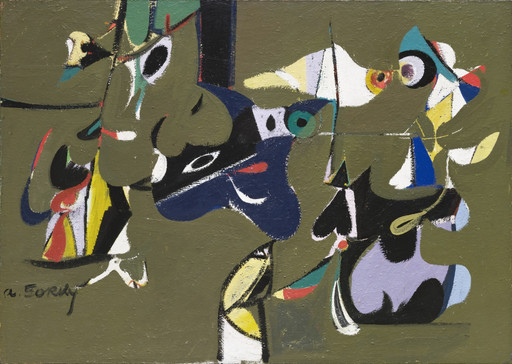
Surrealism was a touchstone for this international cohort, who sought inspiration in the fantastic, incorporating symbols and organic shapes in their work. For some, this mode of expression was a statement of creative freedom opposing the aesthetic mandates of fascist regimes in Europe. In a gallery exhibition catalogue from 1942, Guggenheim included an epigraph by historian Herbert Read: “We should be content with the fact that art is alive—more vital and experimental than at any time since the Renaissance.” Read’s words resonated with the young American artists from this group, whose innovations would come to be known as Abstract Expressionism.
Organized by Cara Manes, Associate Curator, Department of Painting & Sculpture with Rachel Remick, Curatorial Assistant, Department of Painting & Sculpture and Curatorial Affairs