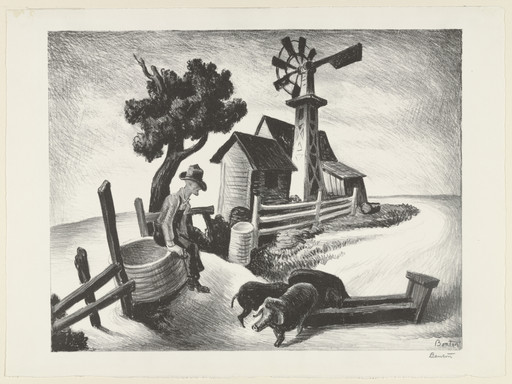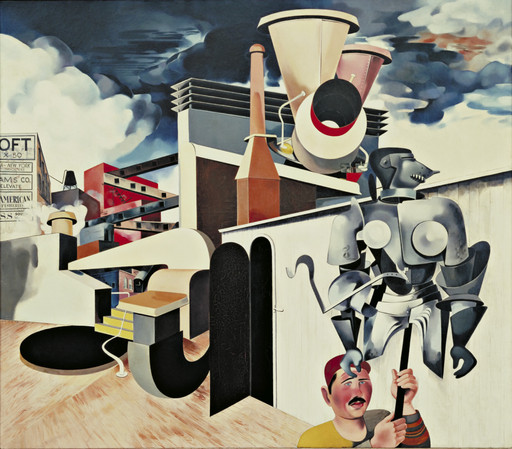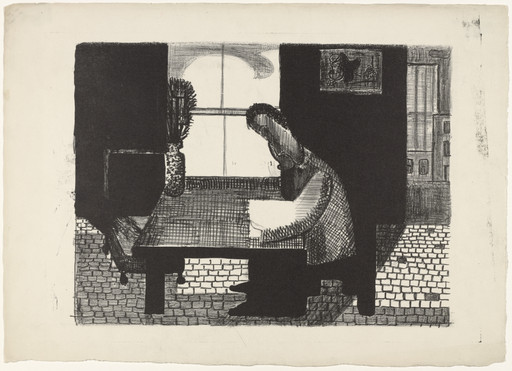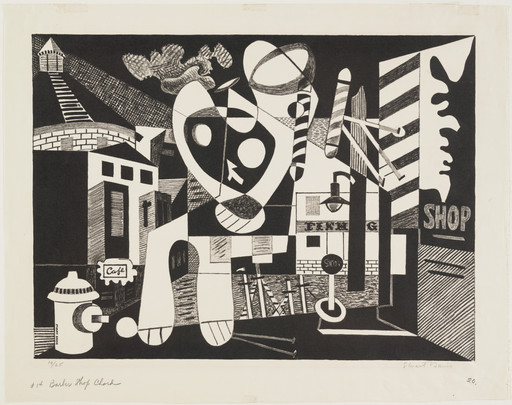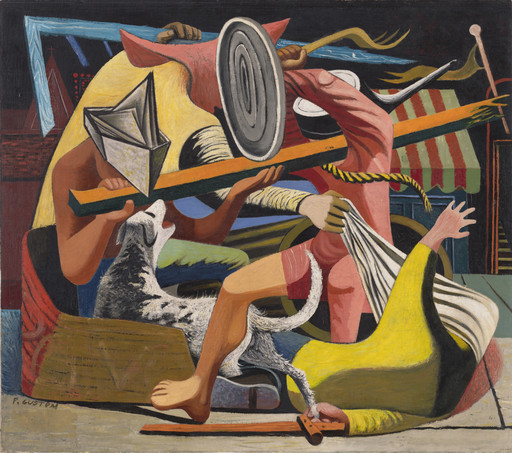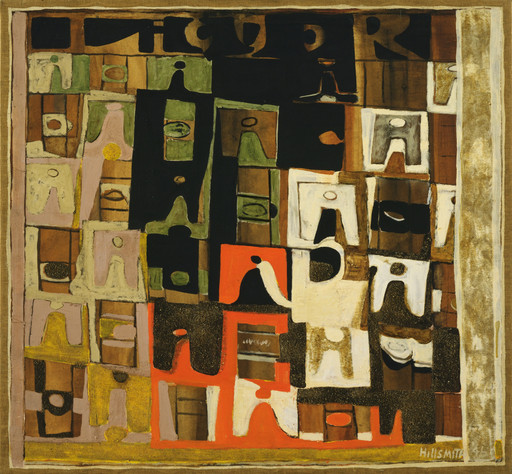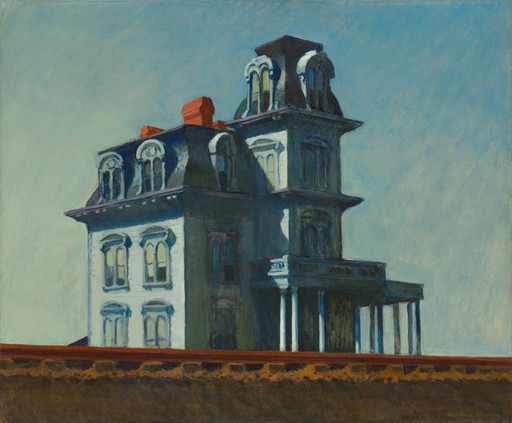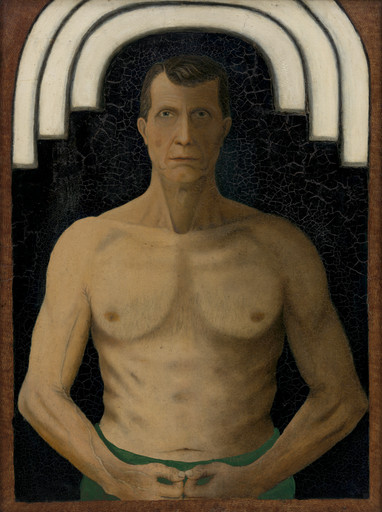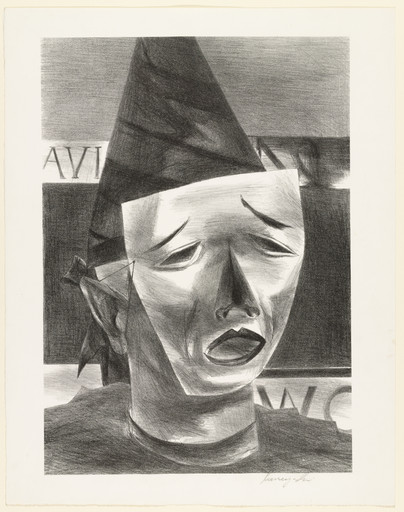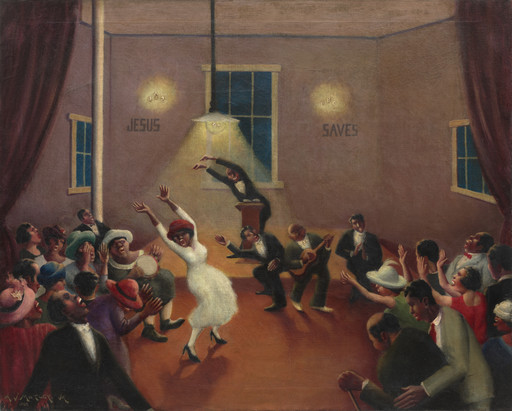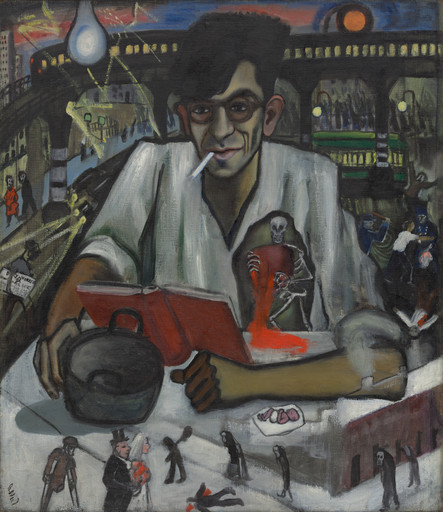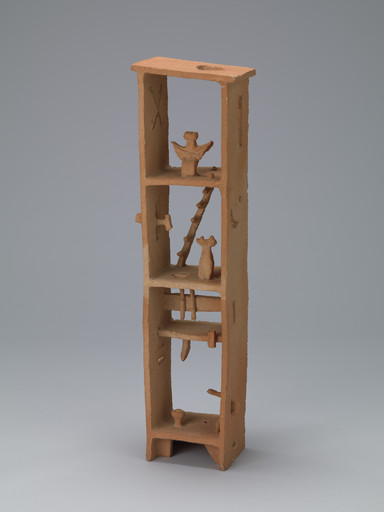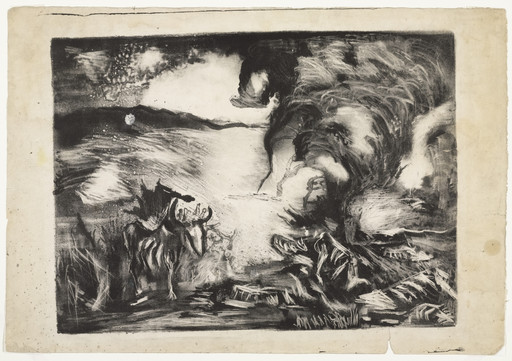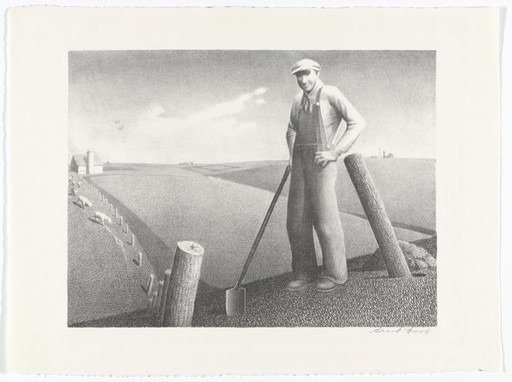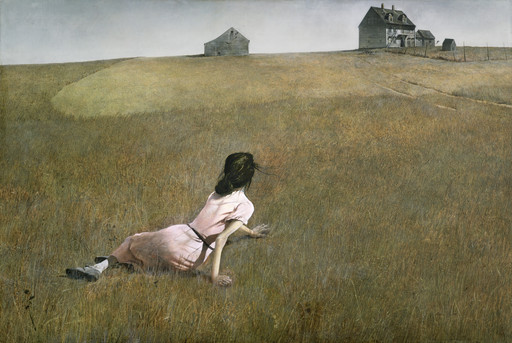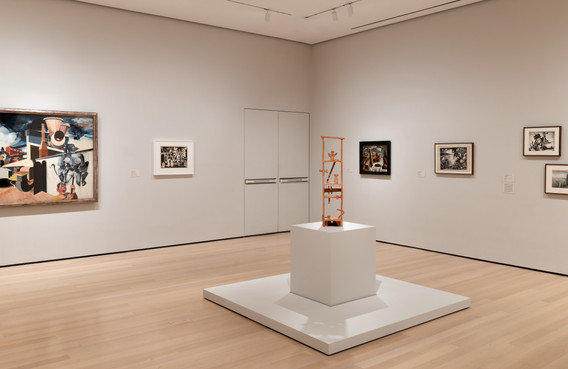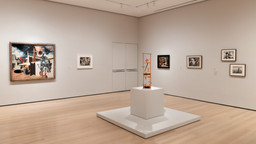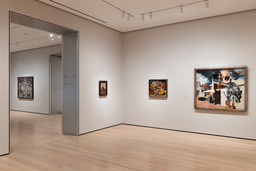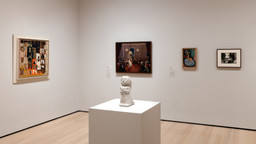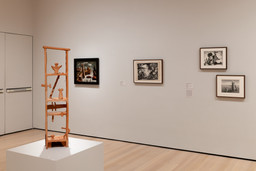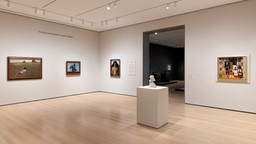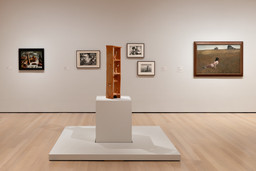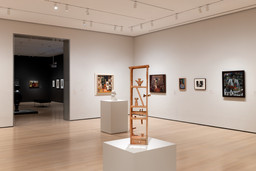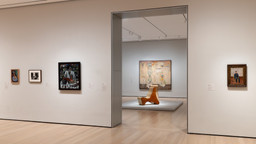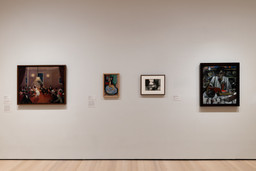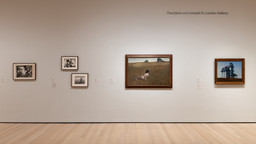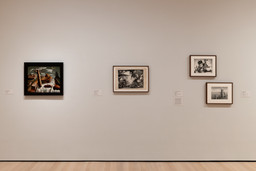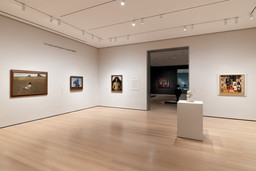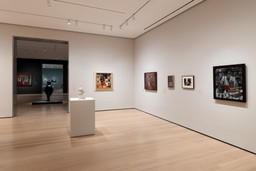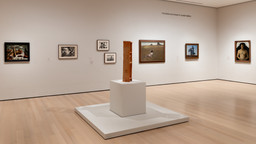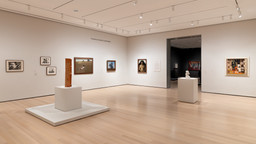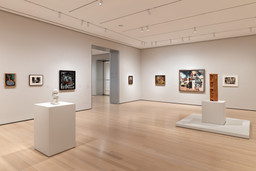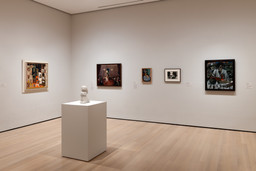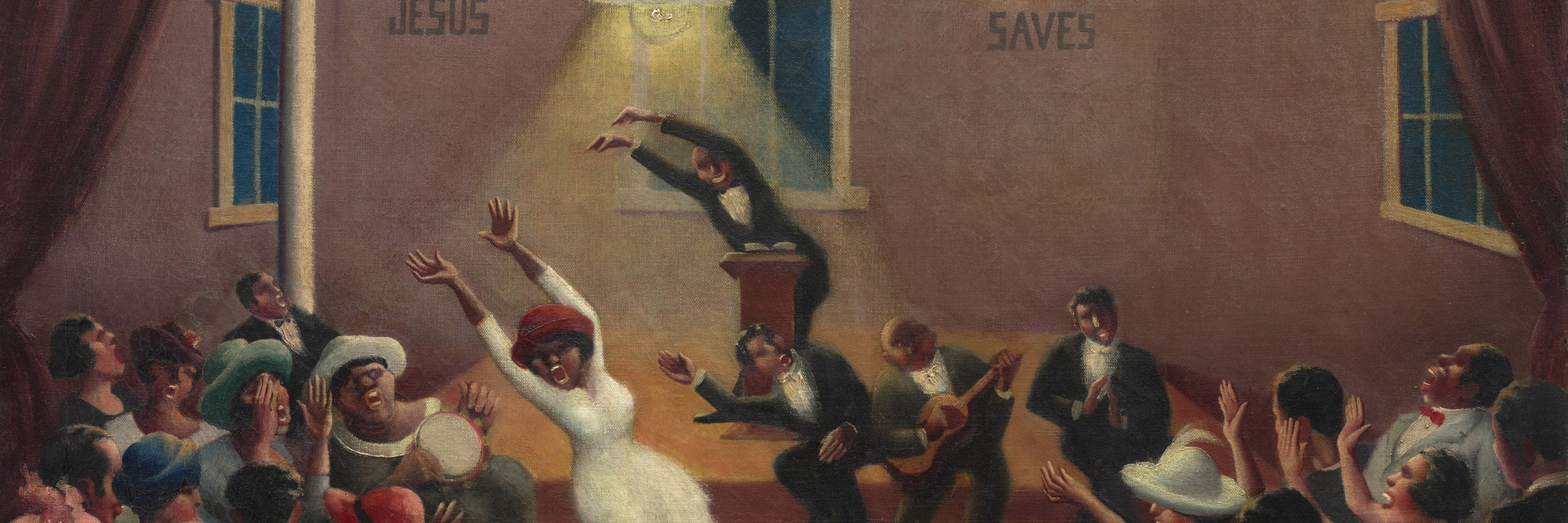
From the Great Depression through World War II, the United States experienced a period of turbulence and transformation. Informed by shifting social and economic dynamics at home and abroad, artists developed unique approaches to narrative art in diverse styles and mediums. In New York a new generation of artists trained under their forebears in workshops and schools such as the Art Students League, and showed their work together in local galleries and museums. Regional styles and subject matter flourished in cities like Chicago and Pittsburgh, as well as outside urban centers, bolstered by university art departments and government programs like the Works Progress Administration.
Across the country, self-taught artists exhibited alongside those with formal training. Some created depictions of themselves or those around them, while others drew from history and myth to reflect their lived realities. United by social, professional, and pedagogic connections, the artists represented in this gallery offer a vivid historical record of the era.
Organized by Lydia Mullin, Manager, Collection Galleries, with Rachel Remick, Curatorial Assistant, Department of Painting and Sculpture and Department of Curatorial Affairs.