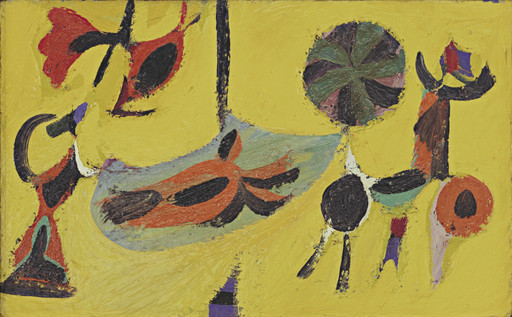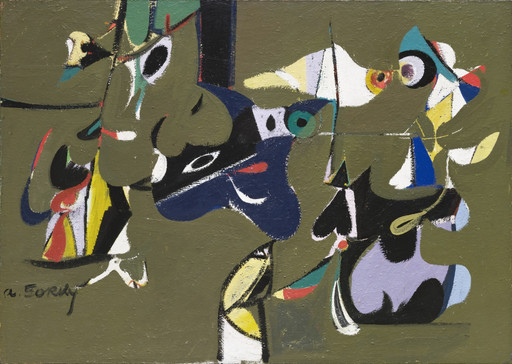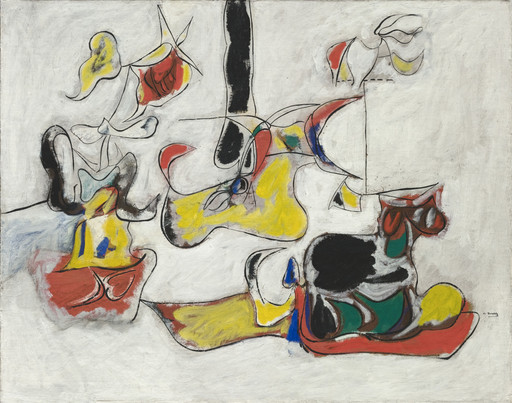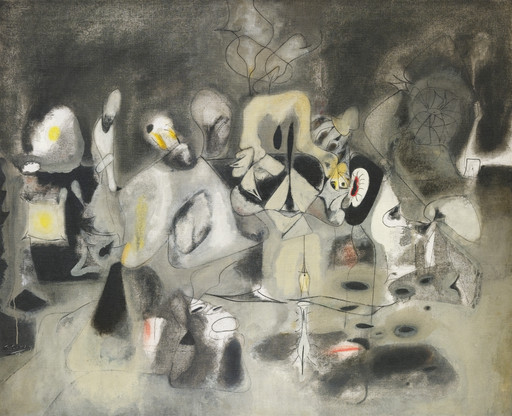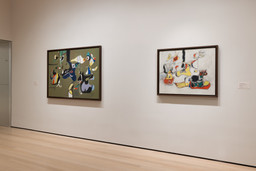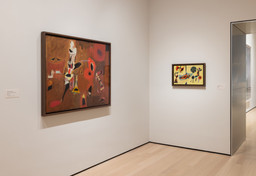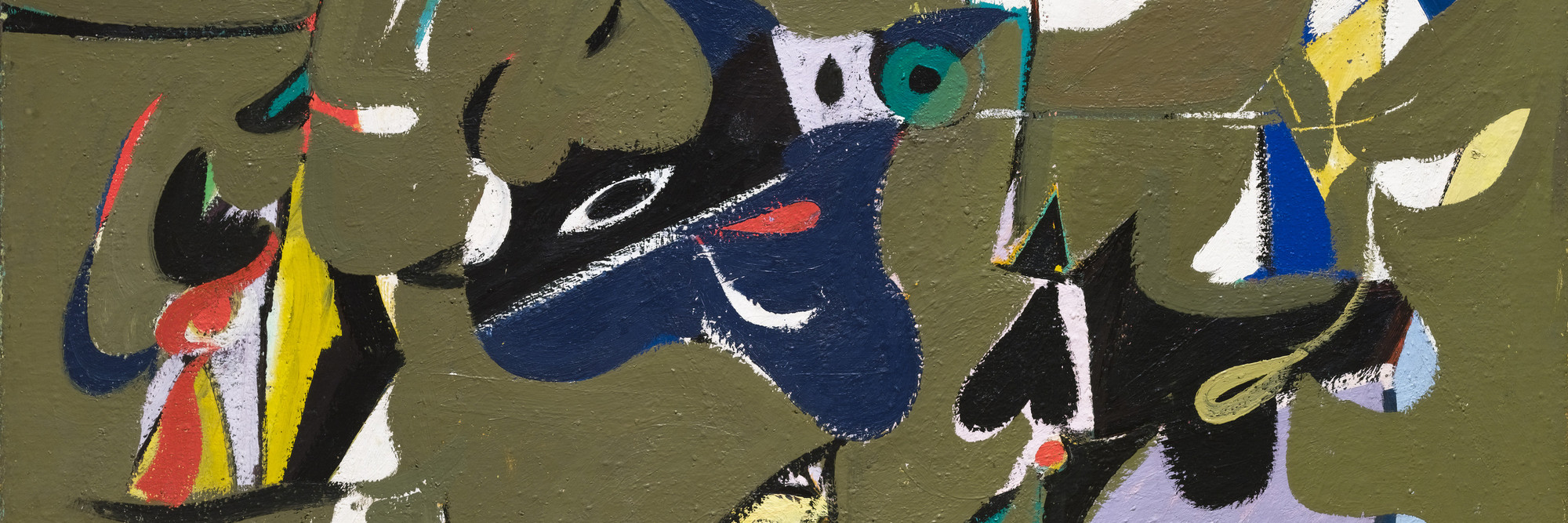
Born in a village in the Ottoman Empire (present-day Turkey), Arshile Gorky (born Vostanik Manoug Adoian) fled the Armenian Genocide— a campaign of deportations and mass killings perpetrated by the Young Turk government during World War I— as a teenager. He arrived in New York City in 1924, where many of the artists who would become his peers were also refugees, or the children of refugees. Art critic Harold Rosenberg, an early champion of Gorky, credited this milieu as “the originators of America’s first identifiable style in art,” what he described as “the new American painting.” “Without the sharpened New World consciousness of the stranger,” he wrote, “contemporary American art is inconceivable.” Gorky and others mixed “uneasiness about the past . . . with a radical sense of possibility.”
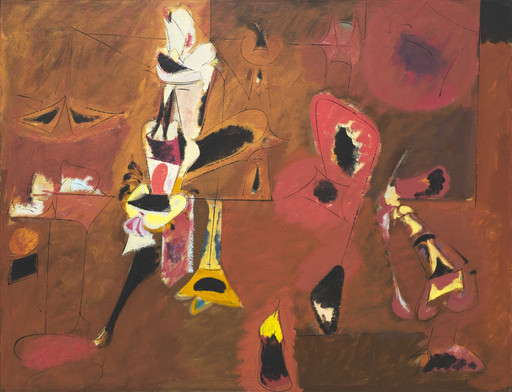
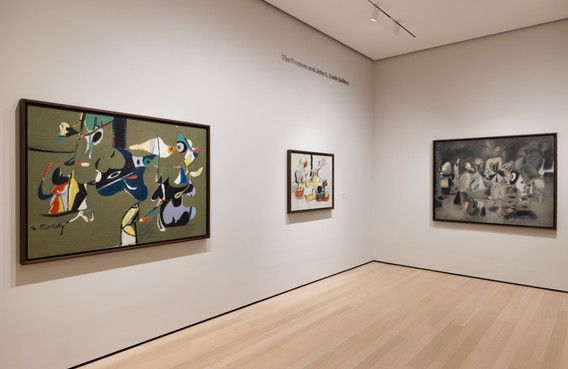
Gorky’s erotically charged abstract paintings— whose imagery and titles draw on childhood memories and natural landscapes— all share a concentrated intensity that mirrors the drama of his brief career and tumultuous life, ended by suicide in 1948.
Organized by Ann Temkin, The Marie-Josée and Henry Kravis Chief Curator of Painting and Sculpture, with Rachel Remick, Curatorial Assistant, Department of Painting and Sculpture.