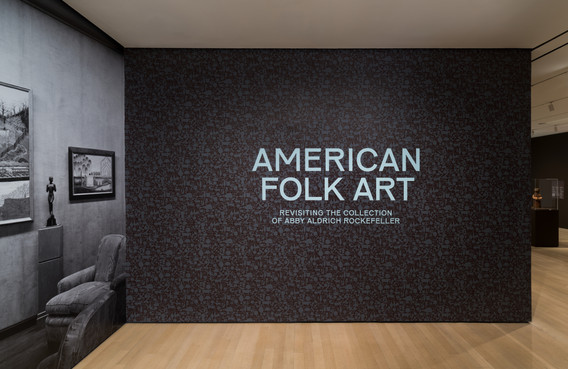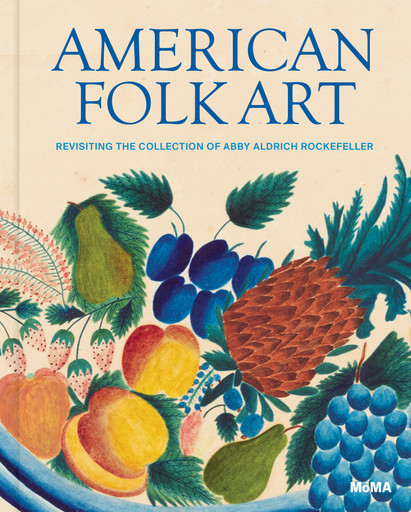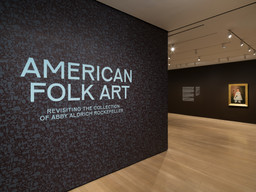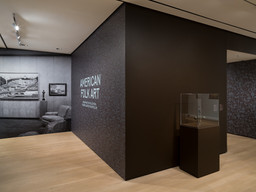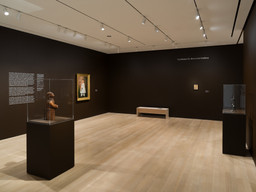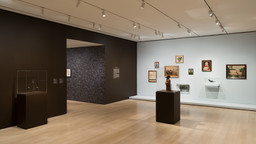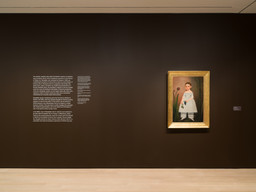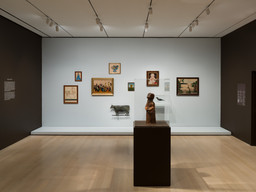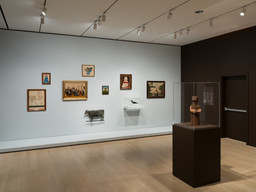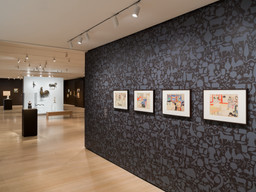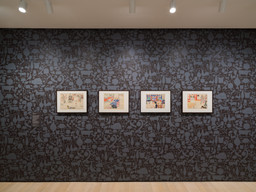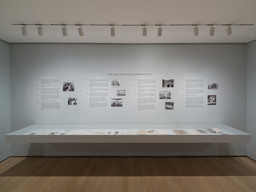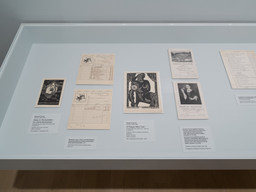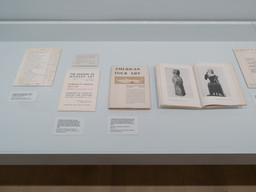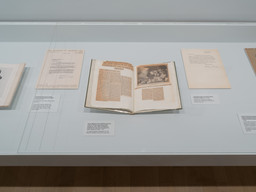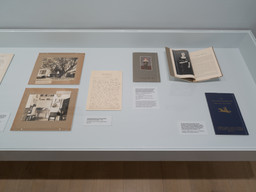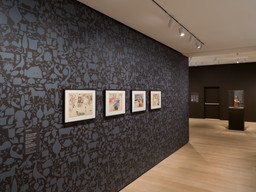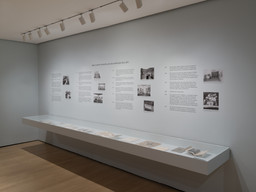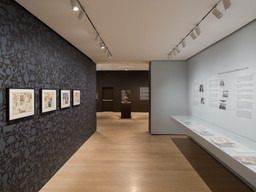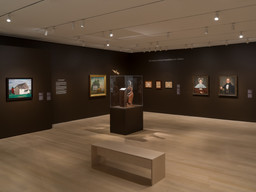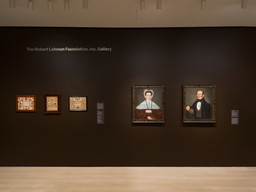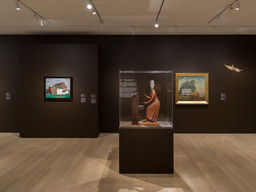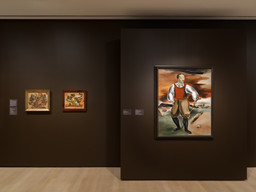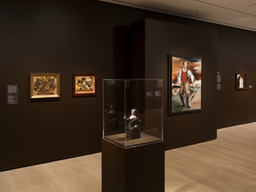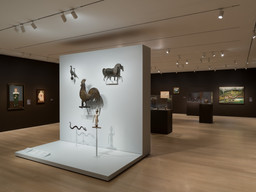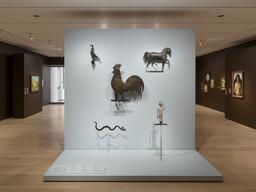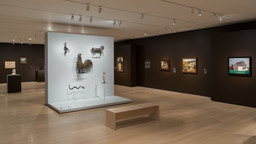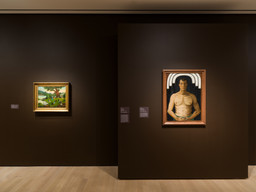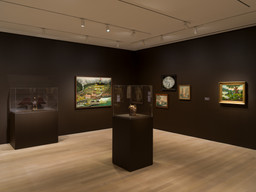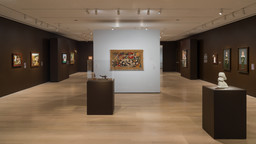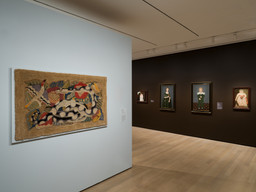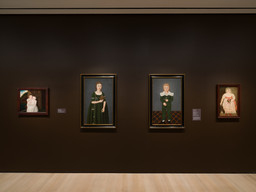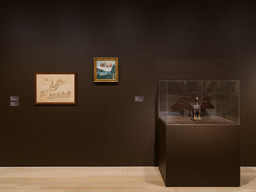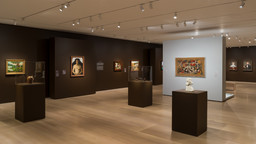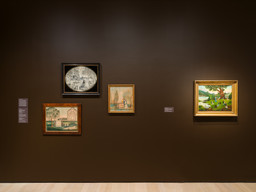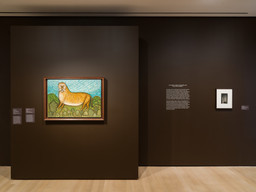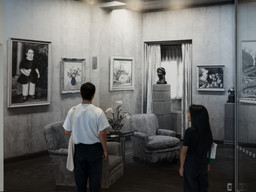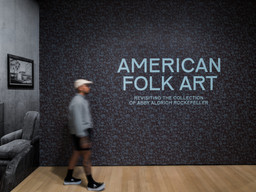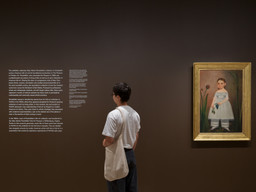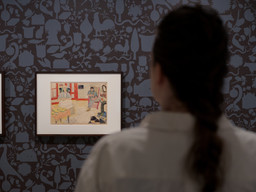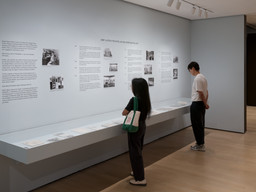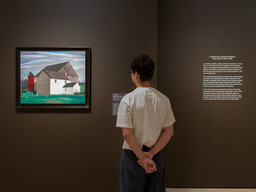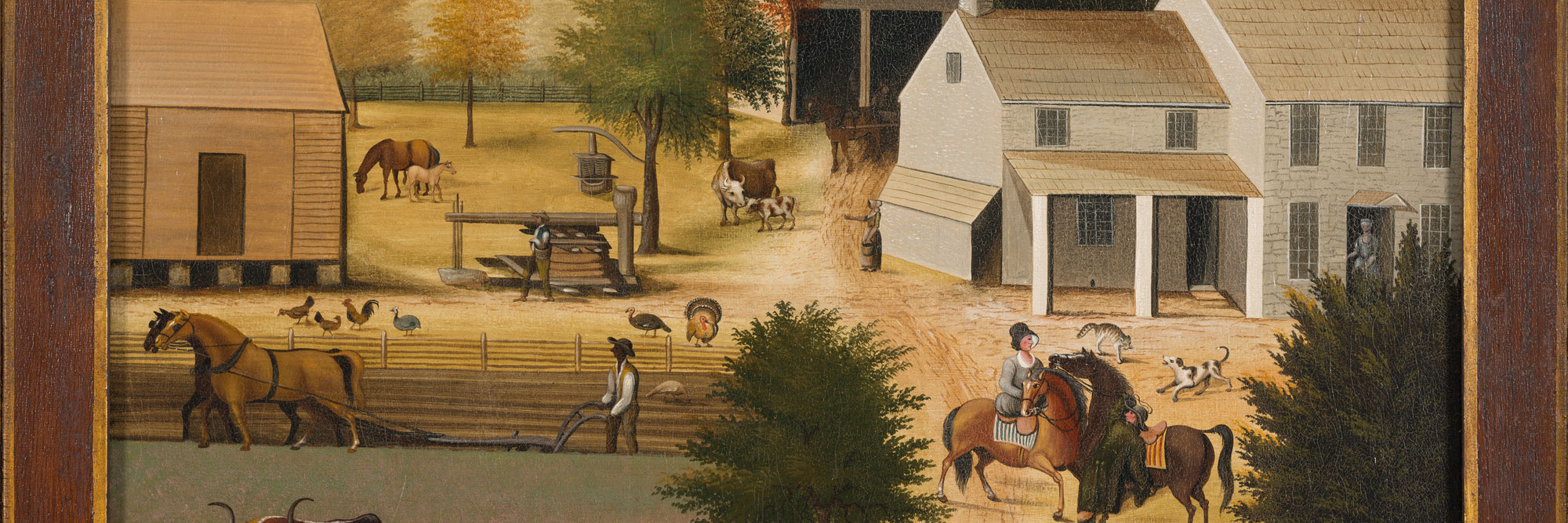
A champion of the avant-garde and a cofounder of MoMA, Abby Aldrich Rockefeller played a pivotal role in recognizing folk art as integral to the artistic traditions of the United States and to a modern and inclusive art history. Her collection of 19th-century artworks featured objects both functional and visually expressive, from painted portraits and stenciled still lifes to weathervanes and wooden toys. Produced by professional artists and craftspeople, students, and self-taught makers from across the nation’s Northeast, these works share roots in preindustrial workmanship, regional tradition, and community.
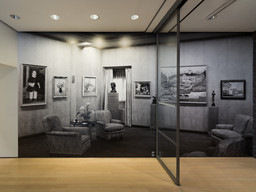
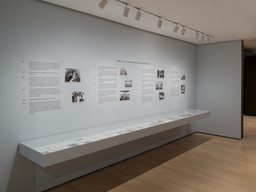
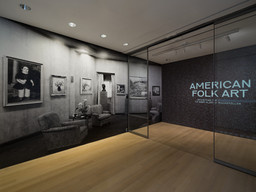
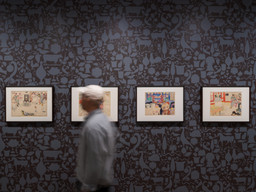
Rockefeller perceived a connection between the objects she collected and the art of her time, and understood how folk art spoke to questions of cultural production at a moment when American modernism was still taking shape. She loaned and donated many key pieces to MoMA in the 1930s and ’40s, where they appeared alongside the Museum’s growing collection of work by living artists. Those artworks were later transferred to the Abby Aldrich Rockefeller Folk Art Museum in Williamsburg, Virginia. On the occasion of the country’s 250th anniversary, nearly 50 extraordinary examples are returning to MoMA for the first time in over 70 years. The exhibition, which places them alongside works by 20th-century American artists, revisits a historic moment when folk art became a vital source of inspiration for a generation of artists, collectors, and curators.
Organized by Starr Figura, Senior Curator, Department of Drawings and Prints, and Lydia Mullin, Manager, Collection Galleries, Department of Curatorial Affairs, with Rachel Rosin, Curatorial Assistant, Department of Drawings and Prints and Department of Curatorial Affairs; and with the collaboration of The Colonial Williamsburg Foundation.