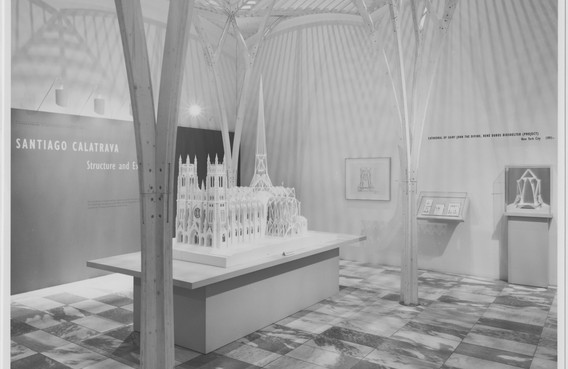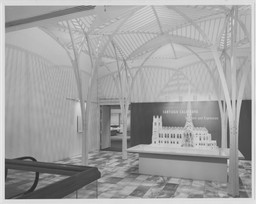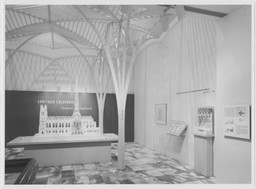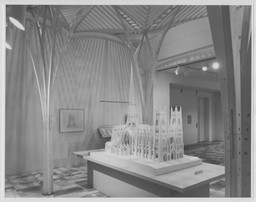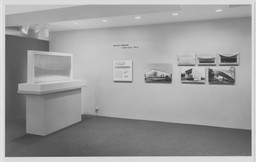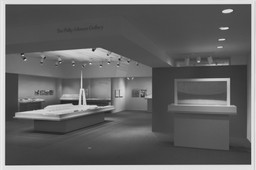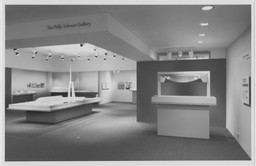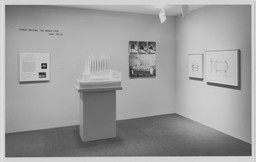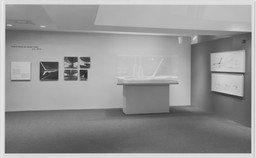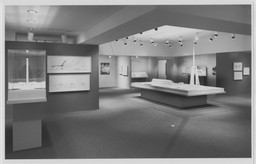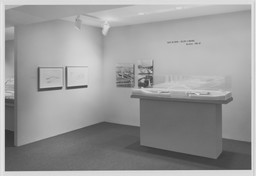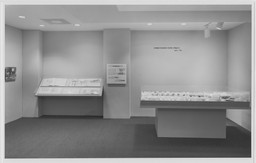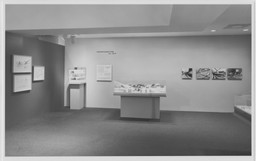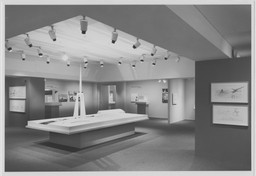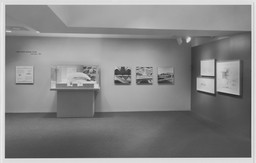
An exhibition of the work of Spanish architect and engineer Santiago Calatrava inaugurates The Museum of Modern Art’s Thresholds series, which is devoted to thematic explorations of contemporary issues in architecture and design. Santiago Calatrava: Structure and Expression focuses on themes of transformation and movement in nine projects designed or built during the past decade.
The exhibition reveals the influence of Calatrava’s dual training in architecture and engineering on his work, which is distinguished by its expressive use of technology and inventive form. Matilda McQuaid writes, “At a time of increasing specialization in architecture, Calatrava combines the disciplines of architecture and engineering with his own creative vision. It is a vision that has the potential not only to rejuvenate the built environment, but ultimately the very spirit of building itself.”
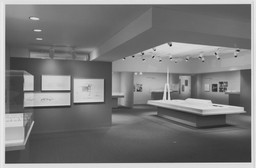
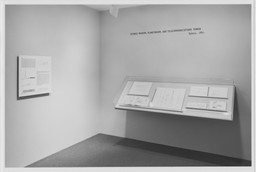
Santiago Calatrava: Structure and Expression is arranged by project and includes sixteen sketchbooks, approximately twenty photo panels, and eleven models. In addition, special installations are located in The Abby Aldrich Rockefeller Sculpture Garden, at the entrance of the exhibition, and in the Edward John Noble Education Center. Together, the models and sketchbooks demonstrate the design process through which Calatrava achieves the unusual organic hybrids characterizing his work.
In working out the design and the technical requirements for his projects, Calatrava makes numerous sketches. In these, he slowly transforms images from nature—trees, animals, the human body, for example—into bridges, buildings, and other structures. His designs often recall the skeletons, wings, and bones of complex animals. Ms. McQuaid writes, “Calatrava’s work can captivate, communicate, and inspire through a visual process. We sense a familiarity with it that is often definable yet is not attributable to a single source. One imagines elements of his bridges and railroad stations in a natural history museum as easily as in their urban context.”
The first project in the exhibition, Ernsting’s Warehouse (Coesfeld, Germany, 1983–85), exemplifies Calatrava’s interest in the plastic nature of architecture. A mechanized model demonstrates how Calatrava designs a door and wall as continuous aspects of the same element. When closed, the doors resemble the facade of the building; when open, they transform into a scalloped canopy.
Other projects included in the exhibition are the Stadelhofen Railway Station (Zurich, 1983–90), in which concrete and steel recall flesh and bone; the Alamillo Bridge and Cartuga Viaduct (Seville, 1987–92), in which static structural elements evoke a sense of movement; and the Kuwait Pavilion (1992 World’s Fair, Seville), in which moving components of the roof symbolize palm fronds moving in the wind. A fourteen-foot model for the Science Museum, Planetarium, and Telecommunications Tower (Valencia, 1991), located in the center of the exhibition space, demonstrates Calatrava’s continuing exploration of organic and anatomical relationships.
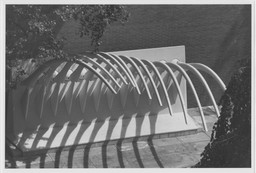
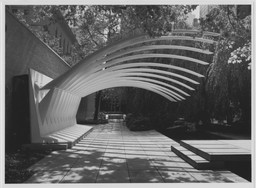
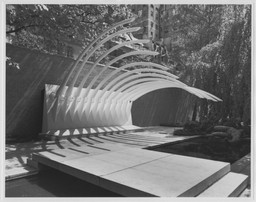
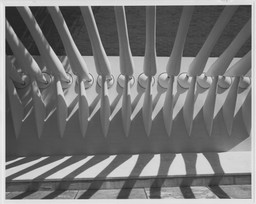
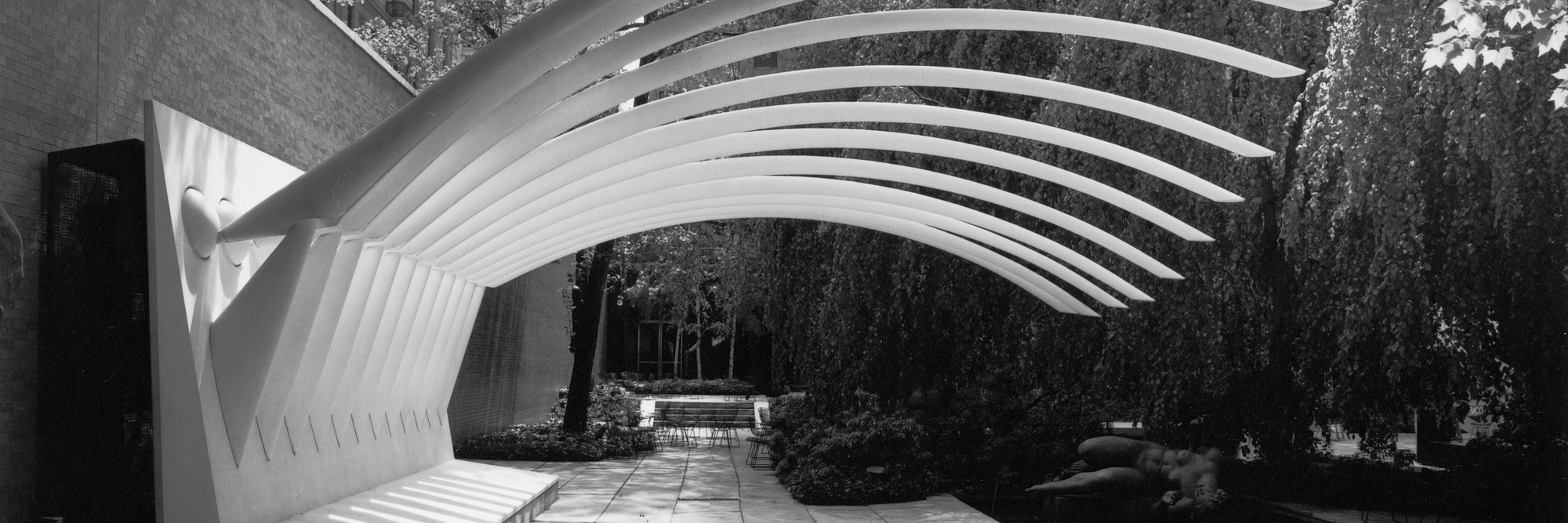
The three installations in the exhibition demonstrate Calatrava’s interest in the visual movement of natural objects, the sculptural quality of reinforced concrete, and the kinetic components of architecture. The entry to the exhibition consists of an installation landscaped with four fifteen-foot wooden tree-like forms. Shadows are cast on the floor by light falling through the tracery of their squared-off, latticework tops. The Sculpture Garden installation, A Machine for Making Shadows, is a mechanized concrete sculpture with twelve twenty-six-foot-long tentacles hovering ten feet above ground. Despite their material and weight, they flutter and sway in wave-like motions.
The final installation, in the Education Center, consists of a continuously playing video and a display of materials exploring Calatrava’s model-making process.
Santiago Calatrava was born in 1951 near Valencia. He obtained his degree in architecture from Escuela Technica Superior de Arquitectura de Valencia and a doctorate of technical science from the Eidgenosische Tecniche Hochschule (ETH), Zurich. He has been practicing for ten years and maintains offices in Zurich and Paris.
Organized by Matilda McQuaid, assistant curator, Department of Architecture and Design.