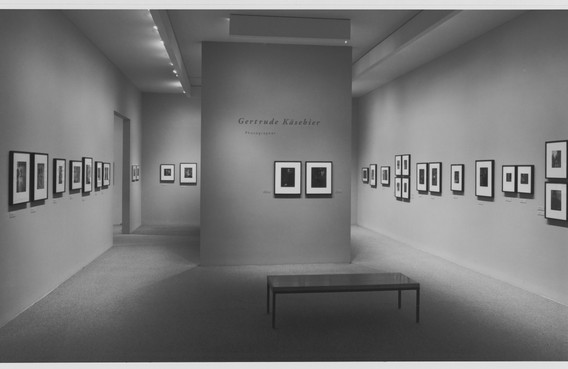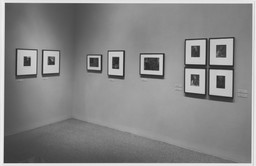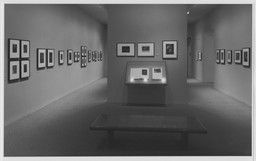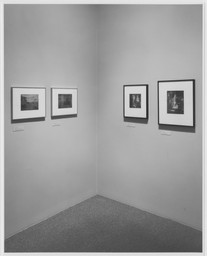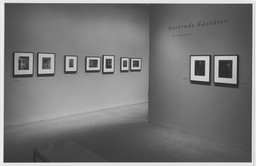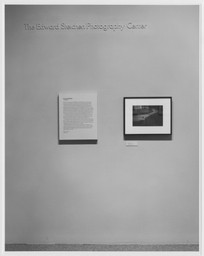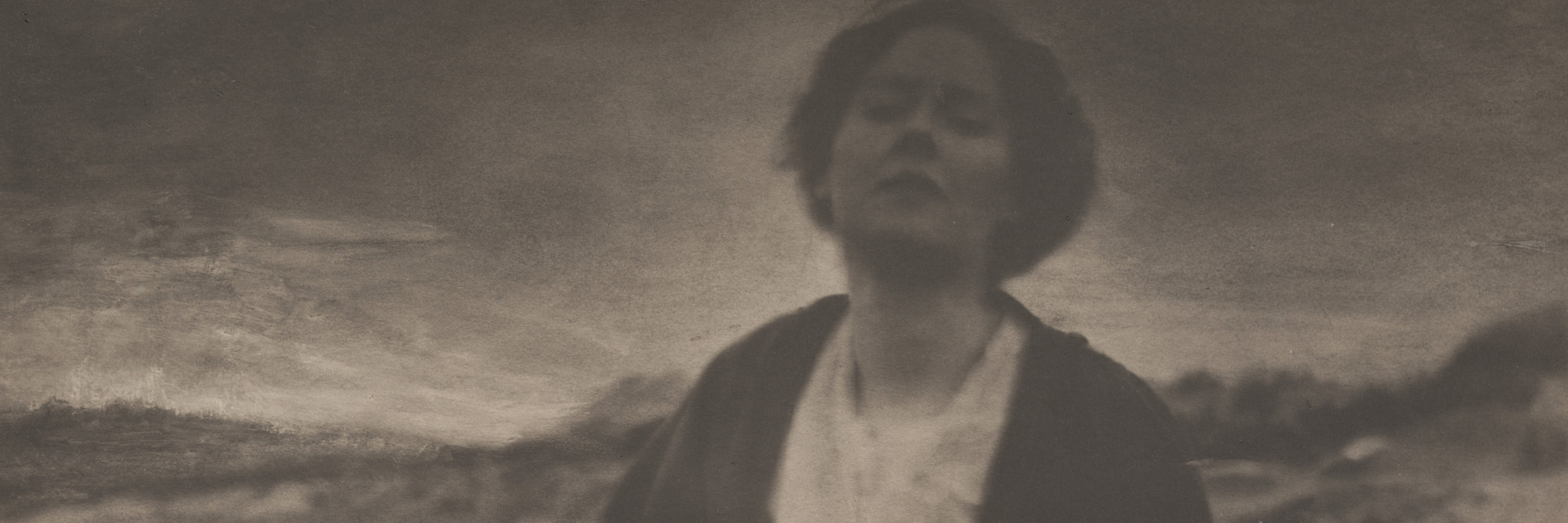
Gertrude Käsebier, Photographer comprises approximately forty-five prints, drawn largely from the Museum’s collection, of the work of photographer Gertrude Käsebier (1852–1934), a leading American photographer at the turn of the century.
In 1898 Käsebier established a portrait studio on Fifth Avenue in New York, successfully entering a profession dominated by men. She soon met Alfred Stieglitz and Edward Steichen and with them helped to found the Photo-Secession in 1902. Käsebier was a prominent member of the group, which sought fine-art status for photography. Stieglitz exhibited her work at his prestigious gallery at 291 Fifth Avenue and featured it in the first and tenth issues of the influential journal Camera Work, in 1903 and 1905. Käsebier broke with Steiglitz in 1912, with the result that her latest work is not well known.
Käsebier’s active photographic career spanned less than two decades, from the late 1890s to the mid-1910s, but the scope of her work is wide, ranging from portraiture and landscape to genre and allegory. Noted for her unadorned portraits of proper New Yorkers, she also befriended and photographed Native Americans in Buffalo Bill’s traveling show. Other remarkable portraits depict fellow photographers and artists, including Stieglitz and Steichen, Adolf de Meyer, Robert Henri, and Auguste Rodin.
Käsebier’s domestic genre scenes and ambitious allegorical compositions also contributed to her reputation as one of the outstanding photographers of her day. Many of the allegories treat themes of motherhood and family. Some, such as The Manger and Blessed Art Thou Among Women (both 1899), are essays in tenderness and affection. Others, notably The Heritage of Motherhood (1904) and Yoked and Muzzled (1915), take a darker view of women’s roles.
Käsebier was born Gertrude Stanton in what is now Des Moines, Iowa, and grew up near Denver, Colorado. She moved to New York in her teens but began her artistic career only after she had married and raised three children. After studying portrait painting at Pratt Institute in Brooklyn and at art schools in France, she turned to photography in the 1890s. The Museum of Modern Art owes its rich collection of her work largely to the generosity of her daughter, Hermine M. Turner, and her granddaughter, Mina Turner.
Organized by guest curator Barbara L. Michaels.