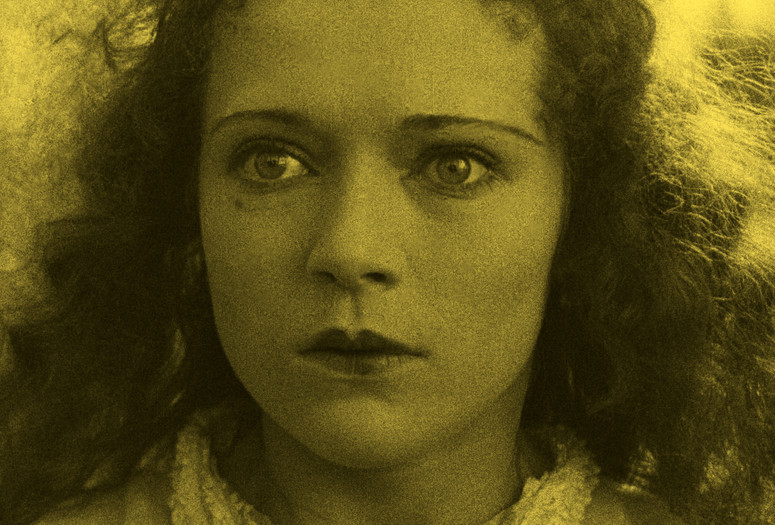
Rien que les heures. 1926. France. Written and directed by Alberto Cavalcanti. With Blanche Bernis, Nina Chousvalowa, Philippe Hériat, Clifford McLaglen. North American premiere. Silent. 48 min.
With its lush and brooding atmosphere, the Brazilian-born Alberto Cavalcanti’s Rien que les heures heralded a new film genre, the city symphony, and did for Paris what Paul Strand and Charles Sheeler’s Manahatta did in 1921 for New York: burnish the romance of the new metropolis in our collective subconscious, tracing in a melodic arc from dawn to dusk to dawn the intricate choreographies of the man in the crowd and machines in concert with nature; the rhythms of rain and regulated time; the abstract geometries of pattern and movement and shadow. Throughout, Cavalcanti experiments in dazzling ways with montage, double exposure, and slow motion while also inserting sly Marxist critiques of material want and greed.
4K digital restoration by Les Films du Panthéon, with the support of the CNC – Centre national du cinéma et de l’image animée and the Cinémathèque française, in collaboration with Les Films du Jeudi, EYE Filmmuseum and the BFI National Archive; courtesy Les Films du Jeudi.
Brumes d’automne (Autumn Mists). 1929. France. Written and directed by Dimitri Kirsanoff. With Nadia Sibirskaïa. North American premiere. With original score by Paul Devred. 12 min.
One of the great avant-gardists of French cinema, Dimitri Kirsanoff was born, as historian Lenny Borger notes, “Markus David Kaplan in a Jewish Lithuanian community in Tartu, Estonia, in 1899. In 1919, his father was assassinated by the Bolsheviks. He emigrated to France the following year and adopted the name Dimitri Kirsanoff, in homage to a character in Turgenev’s novel Fathers and Sons. He studied music with Pablo Casals and played cello in several Paris cinema orchestras, where his contemporary and friend Jean Grémillon accompanied him on violin.” Autumn Mists, which like Menilmontant stars Kirsanoff’s wife Nadia Sibirskaïa (née Geneviève Lebas, a fresh-faced, petite Bretonne), is the interior portrait of a woman facing the end of a love affair. Cinémathèque française founder Henri Langlois observed, “There is nothing more beautiful than when, saddened, she slowly walks along the muddy path, melancholic and tender.”
4K digital restoration by Lobster Films and the Cinémathèque française with the support of the CNC; courtesy Lobster Films.
Menilmontant. 1926. France. Written and directed by Dimitri Kirsanoff. With Nadia Sibirskaïa, Yolande Beaulieu, Guy Belmont. North American premiere. Silent. 46 min.
“We have just discovered a new Lillian Gish!” Jean Tedesco, the director of the Théâtre du Vieux-Colombier, proclaimed upon discovering Nadia Sibirskaïa in Ménilmontant (a film he premiered to great success in February 1926 on an intriguing bill with Charlie Chaplin’s The Pilgrim). Sibirskaïa’s husband, Dimitri Kirsanoff, eschewing intertitles in favor of the musical language of “absolute cinema,” makes a poetic realist film avant la lettre, a seedy Parisian tale in which two orphans are brutally exploited by a pimp.
4K digital restoration by Lobster Films and the Cinémathèque française with the support of the CNC; courtesy Lobster Films.
Program 106 min.