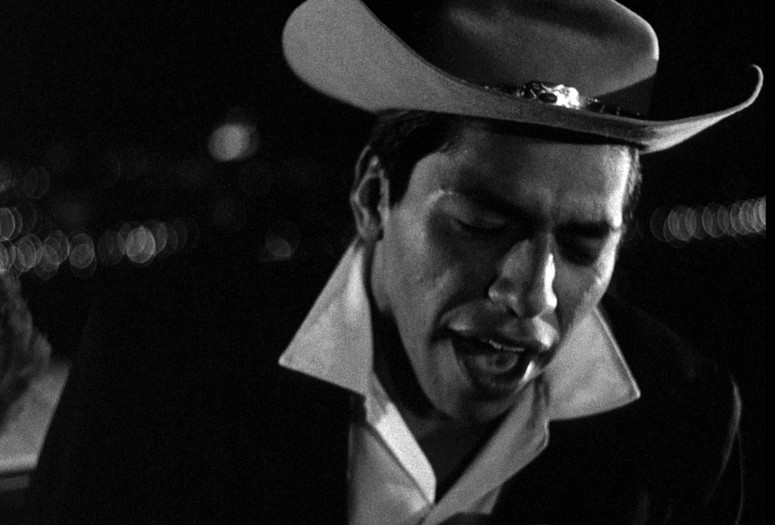
This was a country of immigrants long before the founding of the United States 250 years ago, and it was home to Native Americans and Indigenous peoples for thousands of years prior to the arrival of war, oppression, and coerced cultural assimilation under European colonization. This program showcases the effects of that colonization on these peoples’ land and identities. In Do Indians Shave?, Indigenous filmmaker Chris Spotted Eagle takes to the streets of Manhattan to interview locals about their views on Native Americans and their place in the US’s national identity. Hopi Indians Dance for Theodore Roosevelt explores the power dynamics of US history through historic footage of the president observing a Native ritual during a journey through the southwestern US, while The Last of the Line, a landmark film in early US cinema with real Lakota Natives in key roles, expresses, in the words of Martin Scorsese, "the tragedy of the Native experience [and] the destruction of the very fabric of the culture of the Indigenous people". In Kent MacKenzie’s docufiction The Exiles, a group of young Native Americans enjoys Los Angeles’s nightlife after leaving their reservations and migrating to urban centers during the Relocation Era, when 200,000 Native Americans migrated to cities in a moment of fundamental change to their communities.
Do Indians Shave?. 1972. Directed by Chris Spotted Eagle. DCP. 10 min.
Hopi Indians Dance for Theodore Roosevelt at [Walpi, Ariz.]. 1913. USA. DCP courtesy Library of Congress. Silent. 4 min.
The Last of the Line. 1914. USA. Directed by Thomas H. Ince, Jay Hunt. Screenplay by Ince, C. Gardner Sullivan. With Joe Goodboy, Sessue Hayakawa, Tsuru Aoki, Stanely Bigham, Gladys Brockwell. 35mm. Silent. 20 min.
The Exiles. 1961. USA. Written and directed by Kent MacKenzie. With Yvonne Williams, Homer Nish, Tommy Reynolds, Rico Rodriguez, Clifford Ray Sam, Clydean Parker, Mary Donahue. DCP. 72 min.
Program approx. 106 min.