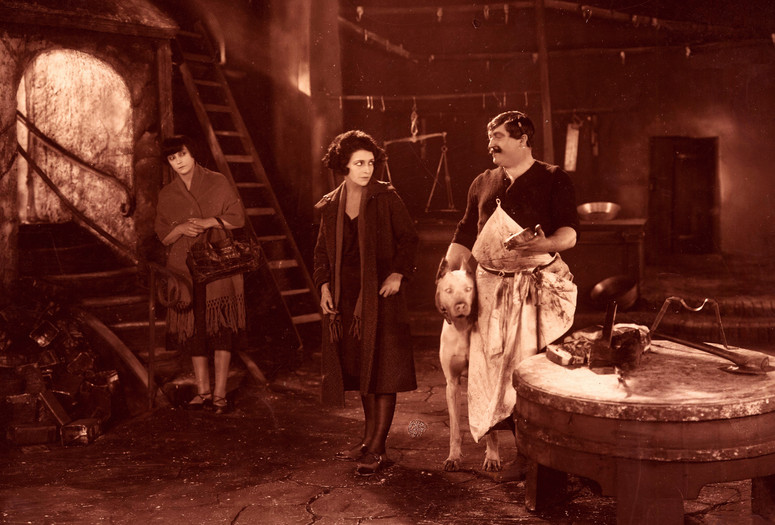
Die freudlose Gasse (The Joyless Street). 1925. Germany. Directed by G.W. Pabst. Screenplay by Willy Haas, based on the novel by Hugo Bettauer. With Greta Garbo, Asta Nielsen, Jaro Fürth, Loni Nest, Max Kohlhase. Silent; with recorded score by Sabrina Zimmerman and Mark Pogolski. US restoration premiere. Silent; with recorded score by Sabrina Zimmerman and Mark Pogolski. 155 min.
The most complete version of G. W. Pabst’s The Joyless Street ever reconstructed, the Munich Filmmuseum’s new digital restoration of this Weimar masterpiece premieres in To Save and Project in a special co-presentation with the Neue Galerie, New York. Pabst and screenwriter Willy Haas use a sensational novel by Hugo Bettauer to create a panorama of Viennese society during the time of inflation that interweaves the stories of five women from different social classes. (Bettauer, also the author of the prescient 1922 novel City without Jews, was murdered by a Nazi party member during the shooting of The Joyless Street.) The all-star cast unites actors from different countries. Beside famous silent film stars like Asta Nielsen and Werner Krauss we see a young Greta Garbo on her way to Hollywood and exiled Russian actors who fled the Bolshevik Revolution. The Joyless Street was never a lost film, yet all extant copies are mere fragments, sometimes drastically changed and mutilated due to censorship cuts and rearrangements of scenes that aimed toward defusing the film’s daring story of poverty, prostitution, financial speculation, and the ramifications and finesse of power. Unfortunately, the surviving script of the film is so extensive that Pabst kept deviating from it, eliminating, combining, or rearranging many scenes. Thus, it is as unreliable as the film’s foreign versions, which all fall short of the film’s documented original release length. Unless other primary sources or the first German censorship records come to light, this is the definitive experience of The Joyless Street, thanks to vastly improved image quality with beautiful tinting and toning effects, and a newly revised score by Sabrina Zimmermann and Mark Pogolski. It is the result of 40 years of research and painstaking reconstruction work, started by Enno Patalas in the 1980s and continued by Jan-Christopher Horak in the 1990s and Stefan Drössler since the 2000s.
Digitally restored version produced in 2025 by the Munich Filmmuseum; funded by the Sunrise Foundation for Education and the Arts.