Celebrating two extraordinarily vital artists—Márta Mészáros, now 94, and Cecilia Bartolomé, now 84—this program of early films is both brashly feminist and dazzling in its artistic invention. In the 1960s and ’70s, the great Hungarian writer-director Mészáros (Adoption, the Diary films), living behind the Iron Curtain, and Bartolomé (¡Vamonos, Bárbara!), living under Franco’s authoritarian rule in Spain, helped pave the way for other women to seek freedom at home and work while confronting the social and political issues of their time. They did so with tremendous wit and courage in the face of relentless sexism and censorship.
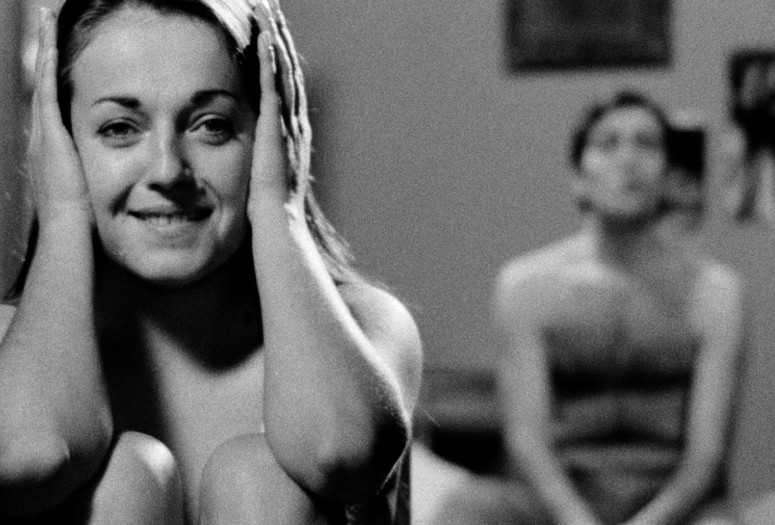
Margarita y el lobo (Margarita and the Wolf). 1969. Spain. Directed by Cecilia Bartolomé. Screenplay by Bartolomé, based on the novel Les stances à Sophie by Christiane Rochefort. With Julia Peña, José Antonio Amor, Ernesto Martín, Paloma Guzmán. North American restoration premiere. DCP. In Spanish; English subtitles. 45 min.
One of only three women to graduate from film school in Madrid, an incubator of the New Spanish Cinema, Cecilia Bartolomé burst onto the scene with this take-no-prisoners assault on marriage, the family, the Catholic church, and the Francoist government—and immediately found herself censored and blacklisted for making divorce seem so appealing to women. (One astonished critic noted, “Making a film like this in the 1960s seems almost like a terrorist act to me.”) Propelled by rebellious humor and an infectious soundtrack, this is the portrait of a fiercely independent woman who is punished by her family and the court for ditching her belittling husband, a theme that would resurface in ¡Vamonos, Bárbara! (1978), Bartolomé’s Spanish-language reimagining of Martin Scorsese’s Alice Doesn’t Live Here Anymore.
4K digital restoration by the Filmoteca Española from the 35mm acetate image and sound negatives in its archive.
The following films are all from Hungary. Written and directed by Márta Mészáros. North American premieres. In Hungarian; English subtitles.
Bóbita (Topknot). 1965. With Zoltán Zeitler, István Avar, Judit Meszléry. 21 min.
Neglected by his unhappily divorced parents, a young boy skips school and wanders the streets of Budapest, where he finds moments of beauty, excitement, and solitude.
Mészáros László emlékére (In Memoriam László Mészáros). 1969. 14 min.
“A tribute from a daughter to her father. László Mészáros, a man from humble origins, was a promising sculptor in 1930s Hungary. As a dedicated socialist, he migrated with his family to the USSR in 1935. Three years later, he was arrested on false charges, throwing his destiny into dispute. When Márta Mészáros’ mother died giving birth, she found herself alone in the world, and far from home” (Olaf Möller).
A Lőrinci fonóban (In the Lőrinc Spinnery). 1972. With Anna Földi, Erzsébet Mikó, Járási Jánosné. 16 min.
In a film that recalls Lewis Hine’s 1900s photography of the working class and Frederick Wiseman’s documentary portraits of manual labor, Mészáros observes and gives voice to the women who work tirelessly at the spinning machines in a textile mill, the drudgeries of factory life that would be a throughline of so many of her films, from Don’t Cry, Pretty Girls! (1970) to Nine Months (1976).
4K digital restorations by the National Film Institute of Hungary from the original 35mm image negatives and positive prints.
Program approx. 96 min.