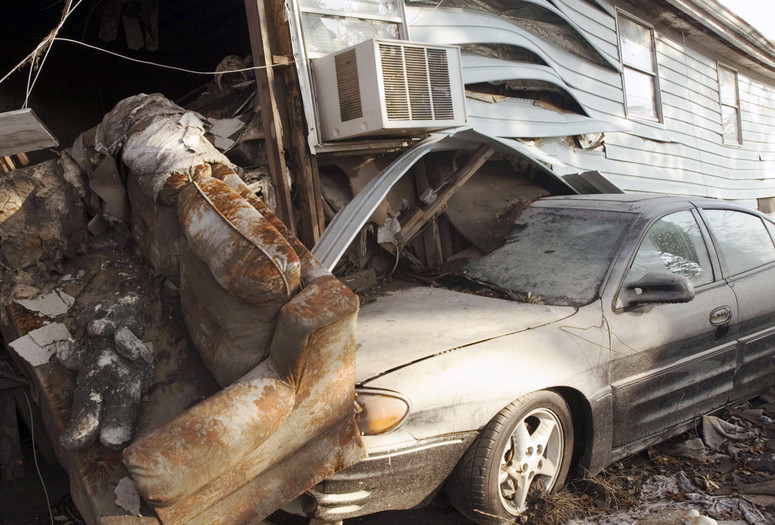
When the Levees Broke: A Requiem in Four Acts. 2006. USA. Directed by Spike Lee. DCP. 255 min.
One of the essential American films of the 21st century, Spike Lee’s When the Levees Broke is an epic, wide-ranging post mortem of Hurricane Katrina. Journalists, engineers, local politicians, celebrities, and survivors and refugees across racial and class lines give a tense, collective, often contradictory, and sometimes slyly face-saving history of the disaster in its immediate aftermath. (Filming of Levees began only three months after the storm.) Survivors are filmed in front of the wreckage of their now-unrecognizable homes. Politicians see post-game analyses of their decisions thrown into stark relief with footage from their actions at the time. What unfurls is very much the age-old story—with which New Orleans is all too familiar—of racial and class disparity, greed and negligence, and PR disasters befalling the entire political establishment, local and beyond.
The result is a film that seems to see Katrina from every side at once. The film reaches backward to antecedent disasters, like Hurricane Betsy and the 1927 flood, to understand the long history of distrust between the Gulf’s poor and minority residents and the local political system. It studies the present tense of the disaster, compiling a procedural play-by-play of major episodes in the disaster as experienced by its refugees and survivors, from the audible first cracks of the levees to the long, miserable days of heat and displacement that followed. And it reaches forward as well, presaging our current battles with FEMA defunding, accelerating natural disasters, racial and economic disparity, and civic distrust.