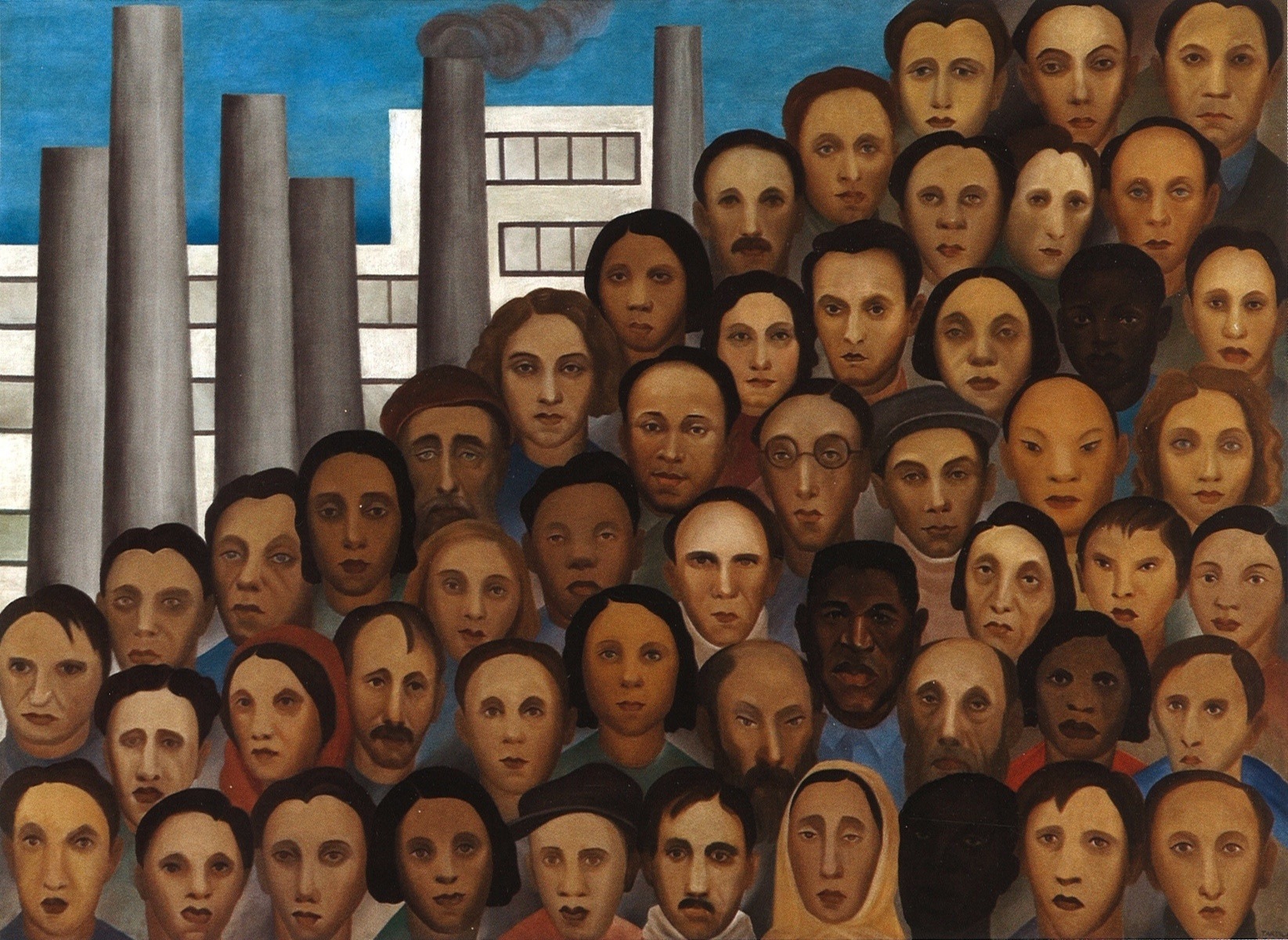
Curator, Luis Perez-Oramas: The largest painting Tarsila ever made, titled Workers (Operarios), from 1933, marks a radical change in her work when she abandoned the formal exercise of modern art in order to become a politically, socially committed artist. She would marry Osorio César, an important Marxist intellectual, and would embrace social activism from then on.
Artist, Tarsila do Amaral (narrator): My most important painting is Operarios. I drew my inspiration from Sao Paolo itself, from industrial society. I did everything based on photographs and on the visual memory of certain people I knew.
Curator, Luis Perez-Oramas: The racial diversity depicted in this work truly stands as a representation of modern Brazilian society, a mestizo, racially mixed society. Behind these workers, smokestacks and buildings represent Sao Paolo’s increasingly industrialized landscape.
Not until the 1960s was her country ready to accept the way Tarsila integrated all of these elements of Brazilian culture to produce a distinctly Brazilian artistic identity. At that time, a new generation of artists discovered both Anthropophagy and the power of Tarsila’s art.