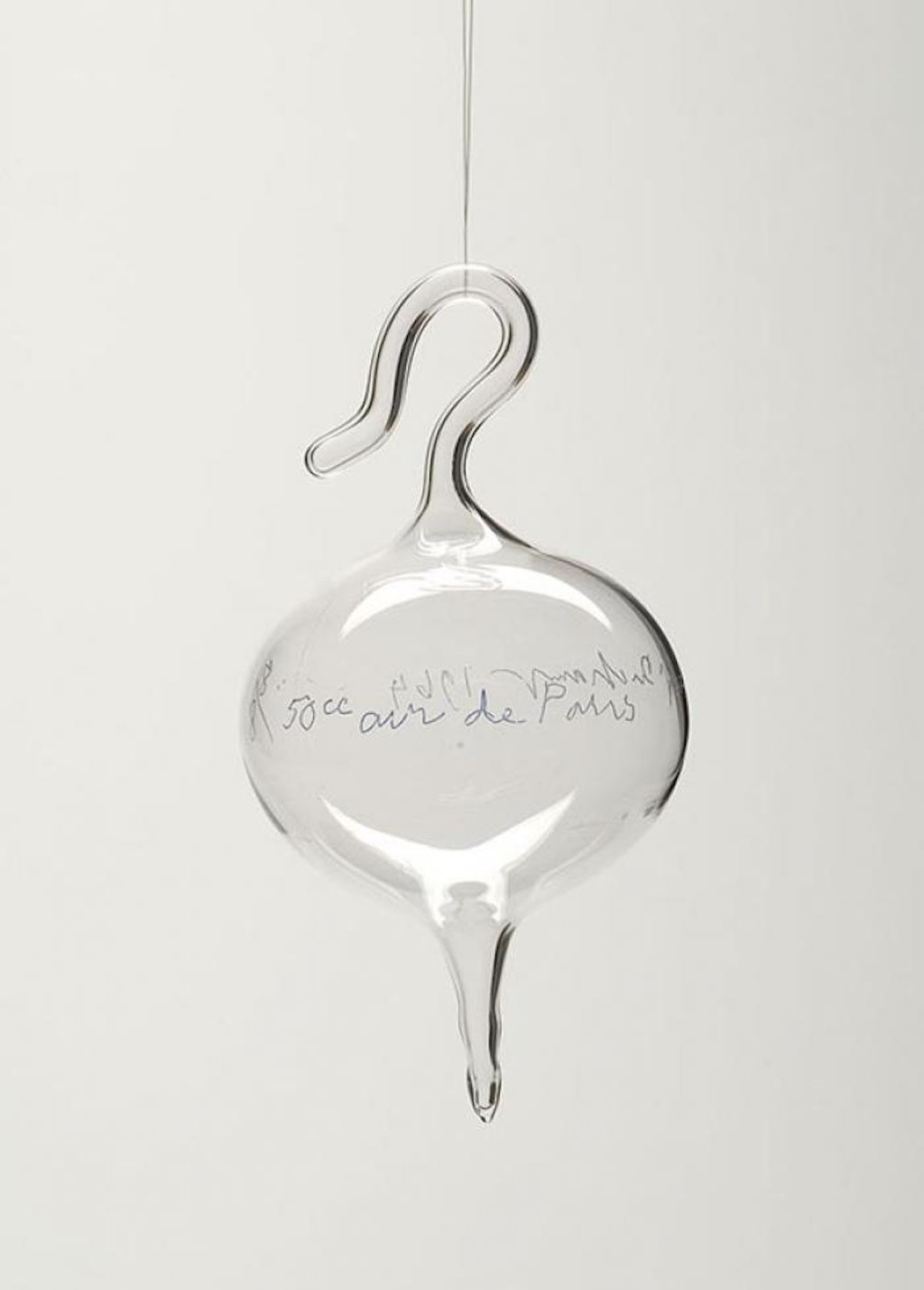
Curator, Michelle Kuo: Duchamp made a career out of replicating himself. When you get to the 1950s and 1960s, many of Duchamp’s readymades had been lost or even discarded. People thought, “Well, this is a piece of junk. Why should I keep this around?” So then, as new generations became interested in his work, he began authorizing replicas of those quote-unquote “original” readymades.
Curator, Ann Temkin: In 1964, an art dealer named Arturo Schwarz decided that he wanted to do not individual replicas of the readymades, but editions of them, meaning you would make, for example, a urinal in an edition of eight.
Schwarz worked with these craftsmen using the measurements of the original readymades so that their artisans could very precisely remake, in a handmade way, these things that had been initially store-bought. So these overthrew the whole meaning of the word readymade, because they were fabricated.
Artist, Wade Guyton: I do think that each generation take from Duchamp what seems meaningful in the moment. It’s more interesting to think about what it means to be looking at a shovel that is a replica of a replica of another shovel that was bought a hundred years ago. And I don’t know the answer, but I think it feels very pertinent while we are struggling with trying to understand what is real or not real with the dawn of artificial intelligence.