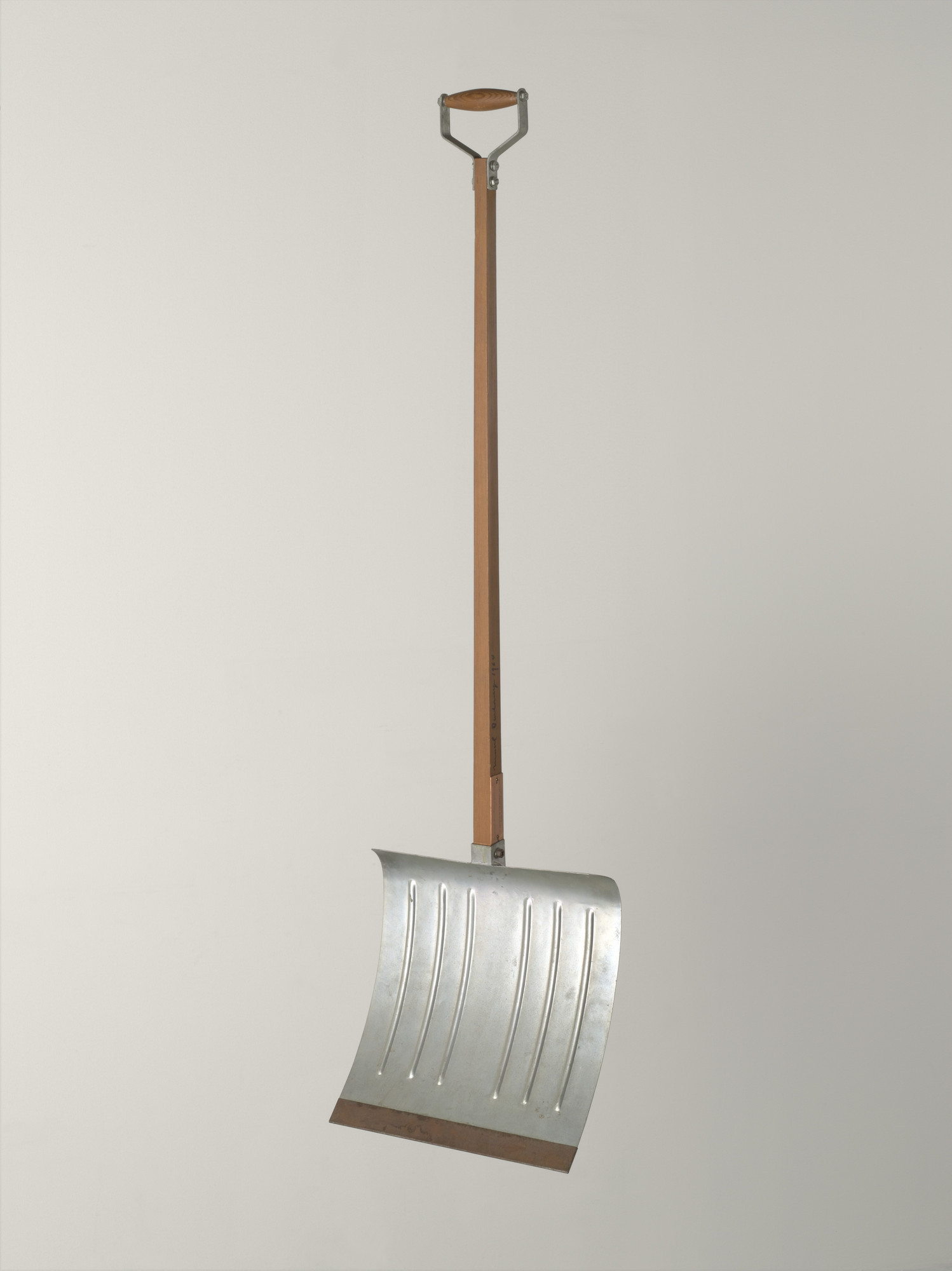
Curator, Ann Temkin: In 1915, in New York, Duchamp bought a snow shovel at a hardware store, which was a very different kind of snow shovel, apparently, than French snow shovels. He brings it back to his studio and hangs it from the ceiling. And he calls it: In Advance of the Broken Arm.
Artist, Liz Deschenes: The fact that you could use this now, I find fascinating. I think about its use, and I think he wants you to, or else he wouldn’t have titled it like that. That’s part of the humor as well. It’s artwork, and it’s the thing itself at the same time. This could function in a snowstorm, and it can function in the museum. Using things in ways that are not prescribed—I think it’s defiant.
Ann Temkin: Most of Duchamp’s readymades from the 19-teens were lost. He wasn’t thinking of these as precious items that were about to change the history of art.
In the 1940s, there was a feeling that they wanted to show those readymades again. A few individuals started requesting that he remake—“make” in quotation marks—his readymades. And the very first time that happened was in 1945. He bought another snow shovel. And that’s what we’re looking at here.
This gallery is filled with replicas of something from 30 years earlier, they’re what we now think of as the original Bicycle Wheel, the original snow shovel, the original Fountain, but it’s very thrilling now, a hundred years later, to even have something that’s standing in for his really classic readymades.