Creative Technologist, John Watkinson: I’m John Watkinson, one half of Larva Labs.
Creative Technologist, Matt Hall: And I’m Matt Hall, the other half of Larva Labs.
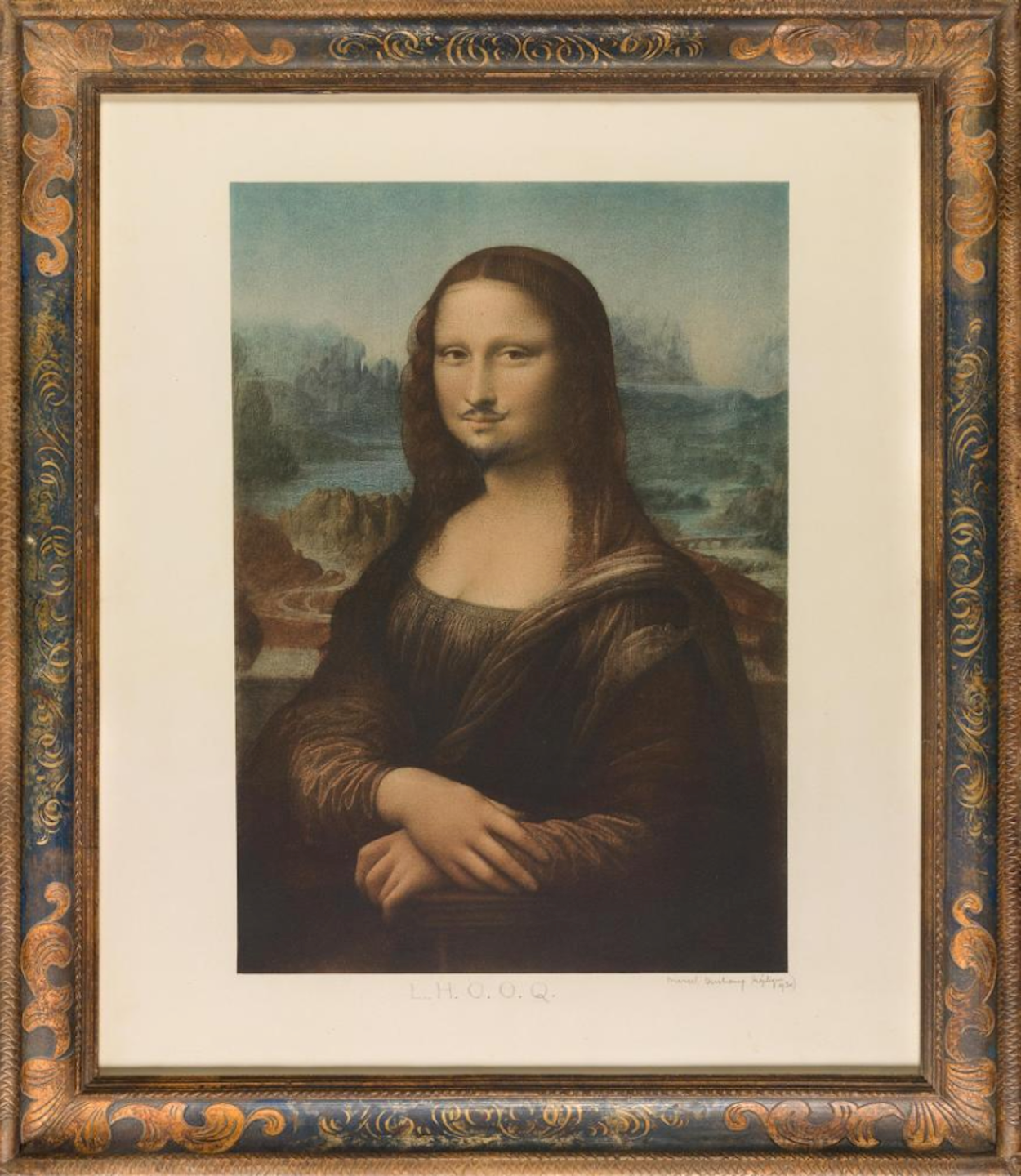
John Watkinson: So this image of the Mona Lisa with a mustache and a goatee, I think resonates with us because it’s still sort of the default way to subvert an image. Anyone who lives in New York, there’s some subway ad, and someone’s taken a Sharpie and put a mustache on it.
Matt Hall: It just seems like he was frustrated with the structures and the people who were holding sway over what could be shown or was important or wasn’t. And this was sort of a way to say, “I reject that,” and let’s make room for something new potentially.
Curator, Michelle Kuo: Duchamp recognized that we were entering into a society where, because of mass reproduction, because of new systems of circulation and communication, suddenly meaning becomes something that’s detached from its author or its original circumstances of making.
John Watkinson: That idea feels very relevant today. This is a kind of an early form of a meme, where you take an image, and it starts to take on its own meaning, or the subversion of it takes on a meaning.
Matt Hall: I think perhaps if we think about this as a meme, memes need a way to propagate themselves. There’s interesting new things that can be done when images can be replicated.
John Watkinson: He was working at a time when the role of an artist was changing rapidly. The fact that he started with a postcard on this and that, even back then, this was becoming like a readily replicable image, we sort of have that for almost everything now.