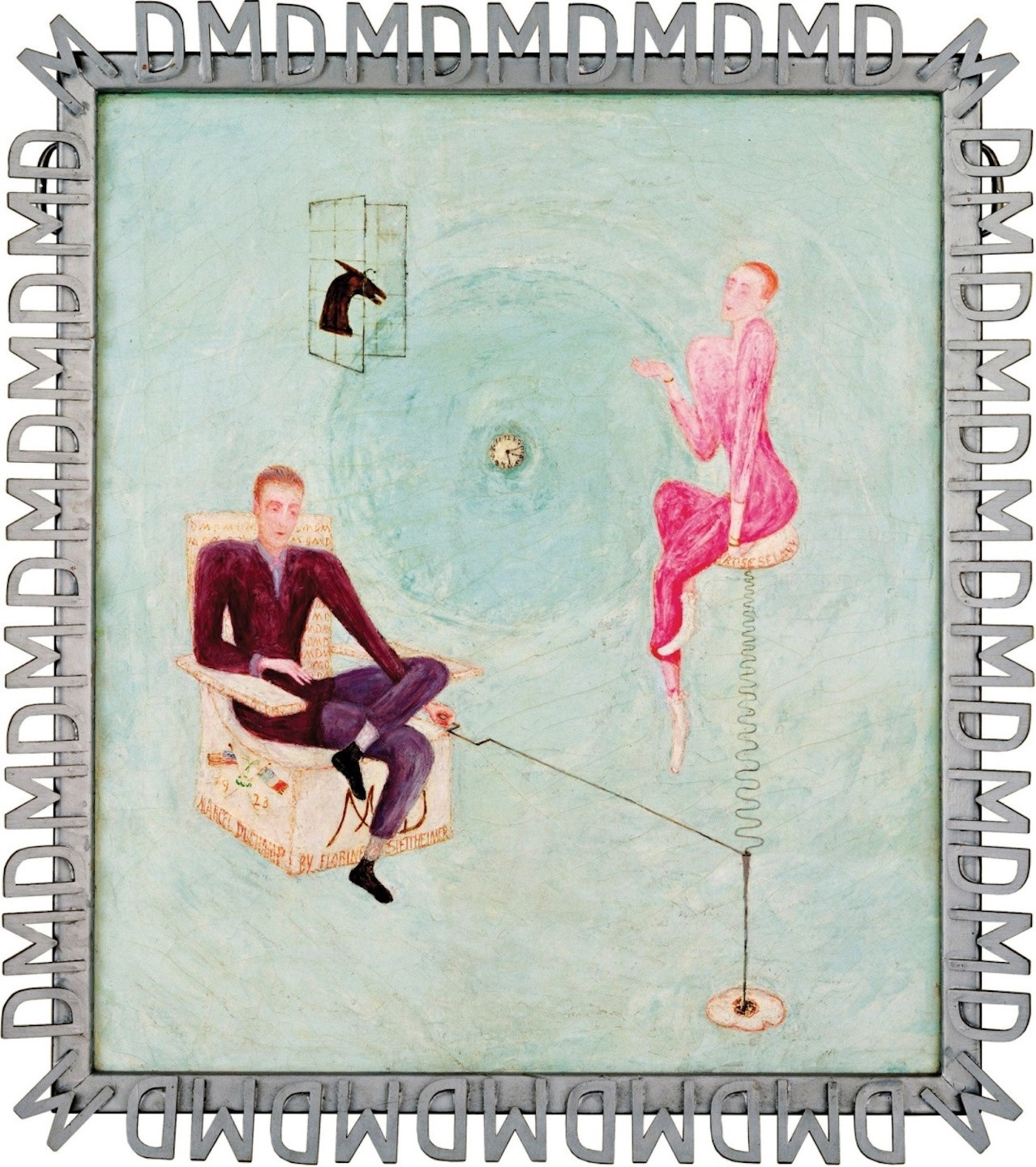
Curator, Michelle Kuo: Duchamp came up with all these aliases and alter egos, including the female persona of Rrose Sélavy.
Artist, Jacqueline Humphries: When you pronounce this name, R-R-O-S-E, in French, it’s R-Rose, which is like “eros”. Then you have Sélavy, which is c’est la vie, “this is life.”
Michelle Kuo: Here, the American artist Florine Stettheimer is picturing this scene with a gender-bending Duchamp. And I think this is just a fantastic tribute to the ways in which Marcel Duchamp and Rrose Sélavy were these constantly transforming fragments of a whole self. So the idea of Rrose as a kind of performance by Duchamp, but that Duchamp being Duchamp is already a kind of performance—that, I think, is really evoked in this painting.
Jacqueline Humphries: Artistic personas as a device can act like a mask but also a foil. It’s a way to adopt a pretend identity and to playact through that identity. I think he was more interested in getting out of himself, getting over himself, than in self-expression. He cordons off this part of himself and says, oh, it’s this part of myself that is authoring this work.
Michelle Kuo: And Rrose is actually the author of many of the works in this exhibition, not Marcel Duchamp.