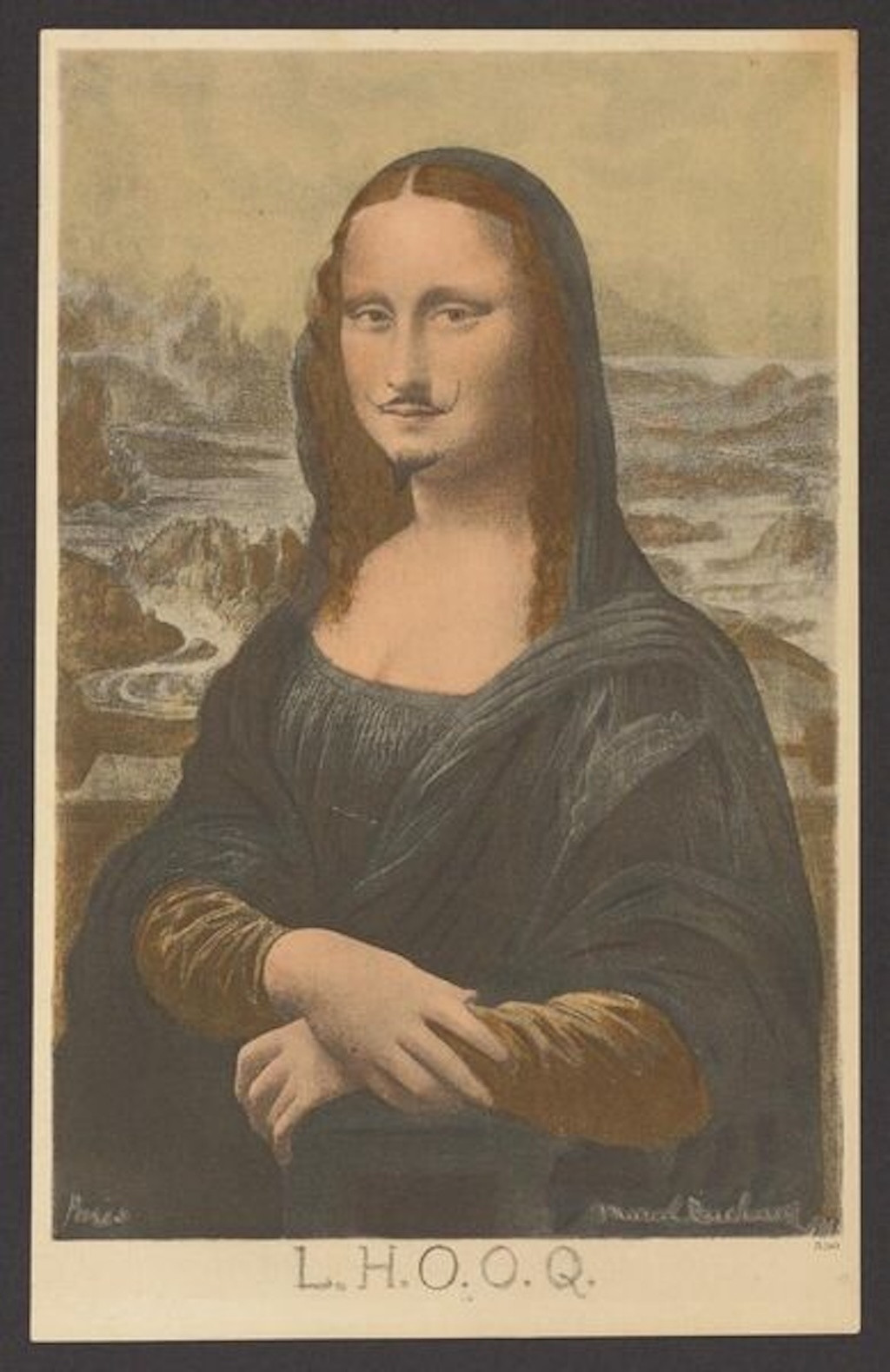
Curator, Michelle Kuo: In 1919, Duchamp takes a reproduction of the Mona Lisa and draws a mustache and goatee on it, and then at the bottom writes: “L.H.O.O.Q.,” in French pronunciation, and that forms an obscene French sentence that is translated to something like, “She’s hot in the ass.”
So this is obviously the most juvenile thumbing of the nose at what is literally an icon of Western civilization. And I think that humor and irreverence and rebellion just still remains so resonant.
Filmmaker, John Waters: Duchamp did every single thing first, so I think he probably is the greatest contemporary artist.
I’m John Waters. I’m a film director and writer.
I love work that initially makes you angry. Humor is political, so if you can get anybody to laugh at something that they’re shocked by, they’ll stop and at least listen to what you’re trying to make them see. I think we have to be able to make fun of whatever rules we live by in whatever art form we’re talking about.
Curator, Ann Temkin: For Duchamp, the humor is using the artwork in some way of opening the viewer’s eye to certain truths about contemporary society or unstated assumptions we all make, and poking at it.
Michelle Kuo: For anyone who’s ever thought: how could we ever be subversive or rebellious within the world that we live in, Duchamp showed a way.