Artist, Liz Deschenes: I think he’s pointing out how arbitrary our measurement systems are.
My name is Liz Deschenes. I’m a visual artist.
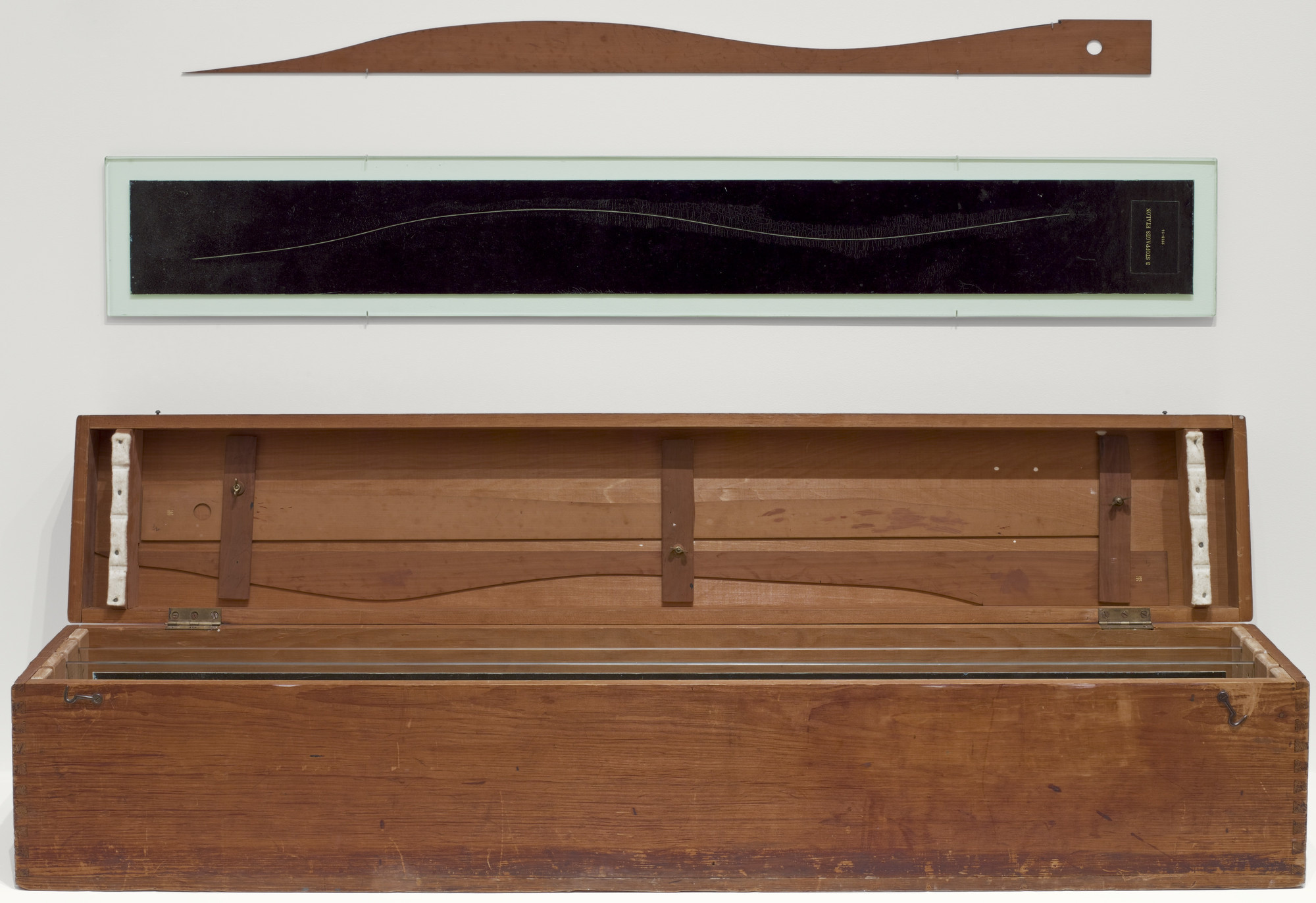
There’s many things that Duchamp was addressing in this work, and one of them is standardization. How do we come up with a measurement? The measurement he was navigating here is the meter.
Curator, Michelle Kuo: He drops three meter-long pieces of string on the ground, and then he traces the shape in which they landed.
Ann Temkin: And then, he carved these wooden forms that mimic the shape of the three threads in order to use them as rulers in making future works of art.
Michelle Kuo: It’s basically saying, I’m gonna take a standard—the meter—and let gravity do its thing and let chance act upon that system.
Liz Deschenes: It allows for an experimentation, and it allows for potentially new invention. The work becomes a sort of archive of chance, Something that measures chance, as opposed to something that measures space.
There’s always a subversive element to Duchamp’s work, that he’s not gonna accept any of this on face value. I think in Duchamp’s work and life, there’s a refusal. I think the refusal is actually a really political stance.