Curator, Ann Temkin: After that rejection of the Nude Descending a Staircase, Duchamp had a deep self-examination. And one of the things that is taking him away from painting is this inspiration of the machine as a means of expression.
Curator, Michelle Kuo: He is essentially going to turn from painting toward something much more like mechanical drawing or engineering diagrams.
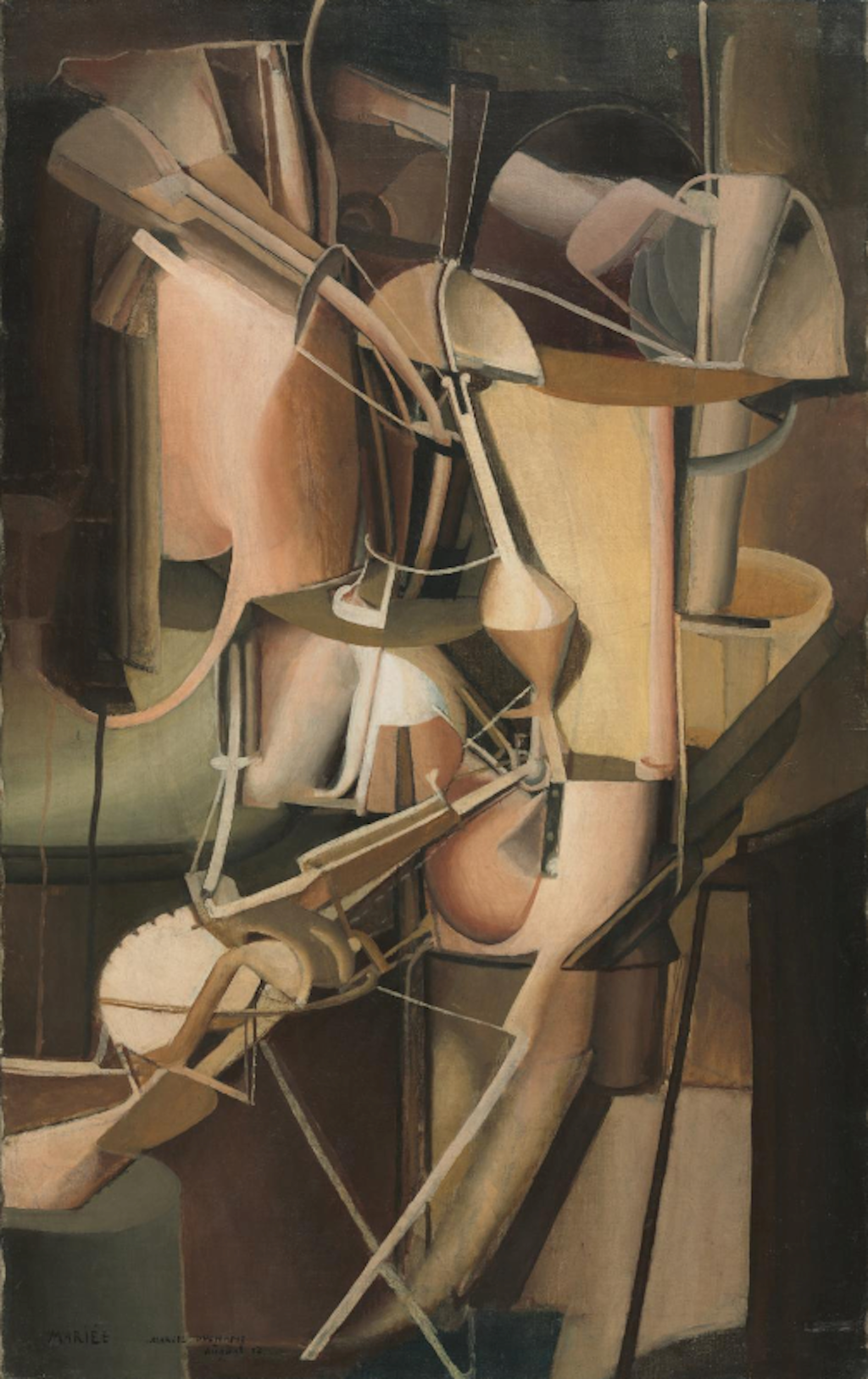
Ann Temkin: And that’s what we’re looking at here, with Bride.
You can look at this and be forgiven for not saying, “Oh yeah, that’s a human body.” [Chuckles] There’s this anatomical creature there, but it also feels like it’s part of some machine or engine.
Michelle Kuo: He was really interested in this idea that, especially in the 20th century, the very human emotions of desire and love are held in tandem with machines. He predicted how machines would come to infuse our daily lives and even our most bodily of desires.
Ann Temkin: Bride is a study for The Large Glass—this project that’s basically a nine-foot-tall window on which you have this complicated story of the bachelors trying to reach the bride. This gallery is filled with the paintings and drawings and sculptures that were studies for it. And you will see a replica of The Large Glass in a later gallery in the exhibition.