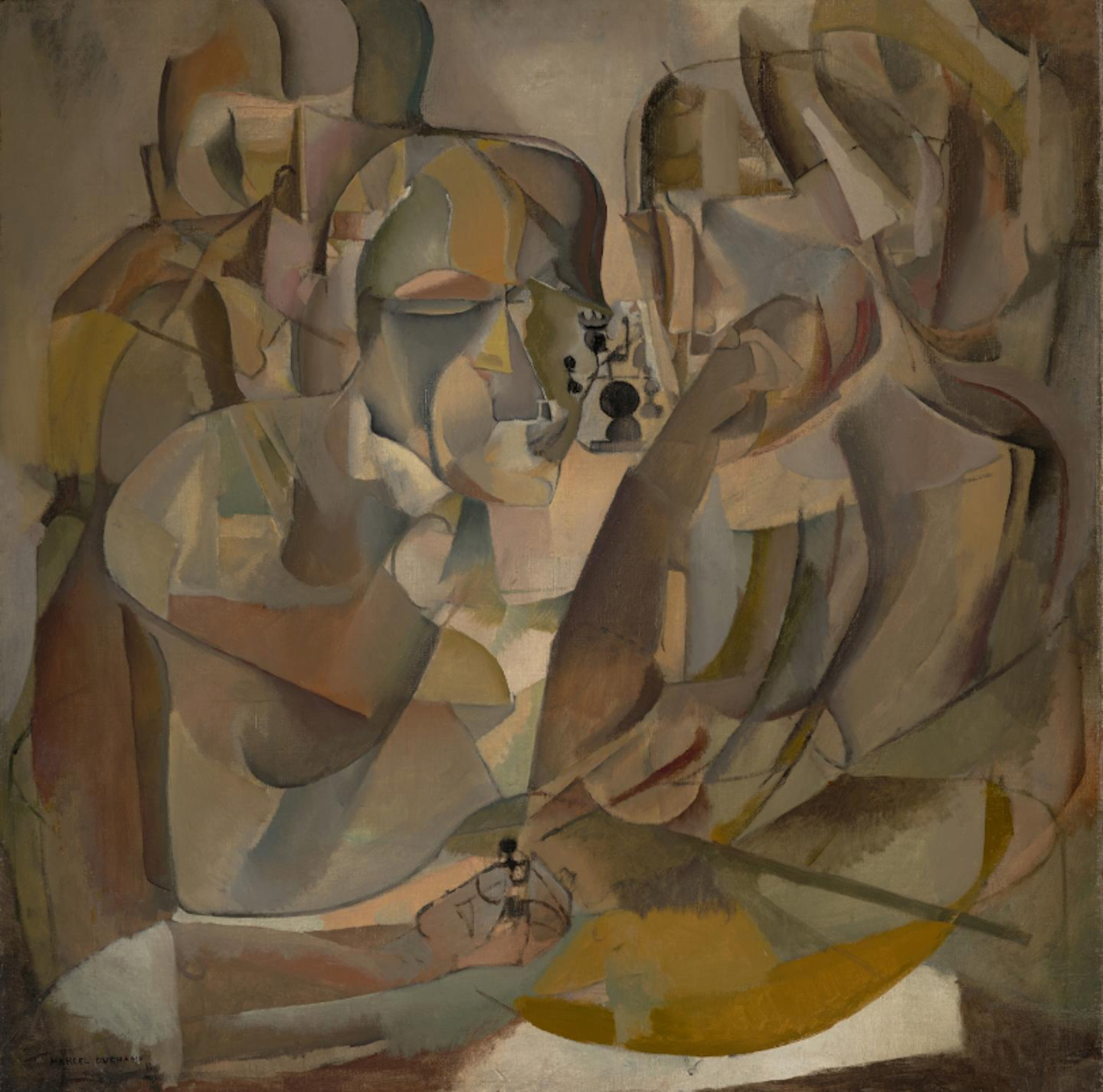
Curator, Ann Temkin: Chess was another family occupation. Duchamp learned it from his two big brothers.
Artist, Marcel Duchamp: I took it very seriously and enjoyed it because I found some common points between chess and painting—at least, it was another facet of the same kind of intellectual expression.
Curator, Michelle Kuo: This work is an extraordinary example of Duchamp entering into Cubism, an artistic movement where artists started breaking with the realistic picturing of nature or the world around us. There are, at the same time, somewhat recognizable images of faces, even someone resting their chin on their hand in thought, and some chess pieces floating around. I think there’s this idea that he could depict not only physical movement, but the movement of the mind. And that demanded a new language of form.
Ann Temkin: I think the way that chess connects with art has to do with his desire to shift art from being something in the realm of craft and into the realm of idea. He did once make a remark that not all artists are good chess players, but all chess players essentially are artists.
Archival audio from: A Conversation with Marcel Duchamp: from NBC’s Wisdom Series, 1956. New York, N.Y.: Films Media Group, [2010], ©1956.