Artist, Marcel Duchamp: Can we try to define art? Everybody has tried, and every century there’s a new definition of art, meaning that there’s no one essential that is good for all centuries.
Curator, Ann Temkin: I’m Ann Temkin.
Curator, Michelle Kuo: I am Michelle Kuo.
Ann Temkin: We’re the curators of the Marcel Duchamp exhibition.
Michelle Kuo: To me, Marcel Duchamp represents a complete change in the 20th century of how we conceive of culture, of art, and even human expression.
Ann Temkin: Duchamp’s giant move was to give up the idea that if you were an artist, you used your hands, you put paint on a brush, you put a brush to the canvas.
Michelle Kuo: He invented the type of work that he called a Readymade. Readymade means the work of art can be something that is already made, and actually, what you’re doing as an artist is to select.
Ann Temkin: He said an artist matters because they have a good idea.
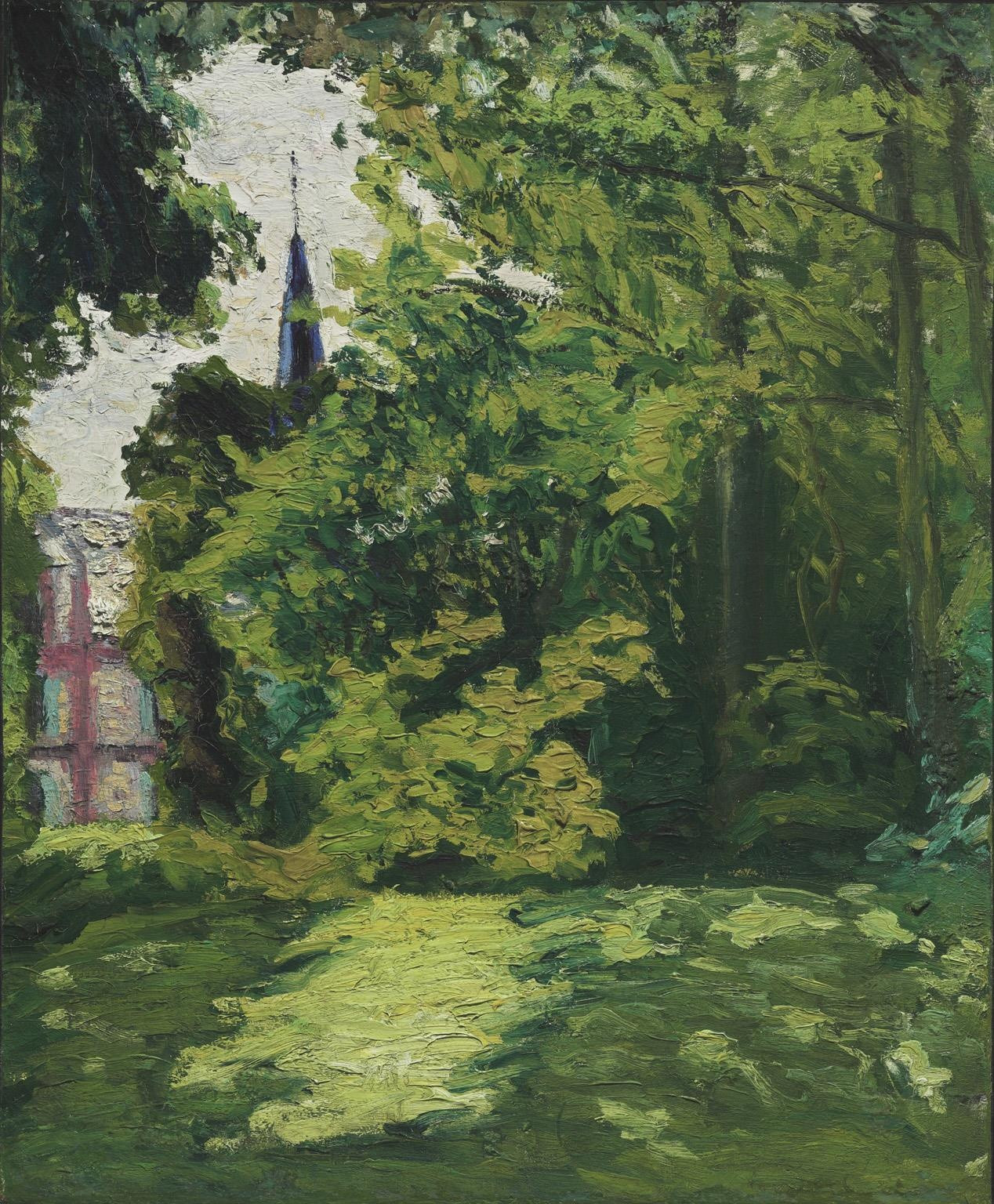
But before he developed these radical ideas about art, he started out somewhat traditionally. The two paintings with which we begin the exhibition are actually works that he made when he was 15 years old. He grew up in Normandy, in a family of artists, and what you see here is the landscape surrounding the family home. He was copying what was known as great painting at that point.
Archival audio from: Richard Hamilton and Marcel Duchamp. Art, anti-art: Marcel Duchamp speaks, 1959 October. Colette Roberts Papers and Interviews with Artists, 1918-1971. Archives of American Art, Smithsonian Institution.