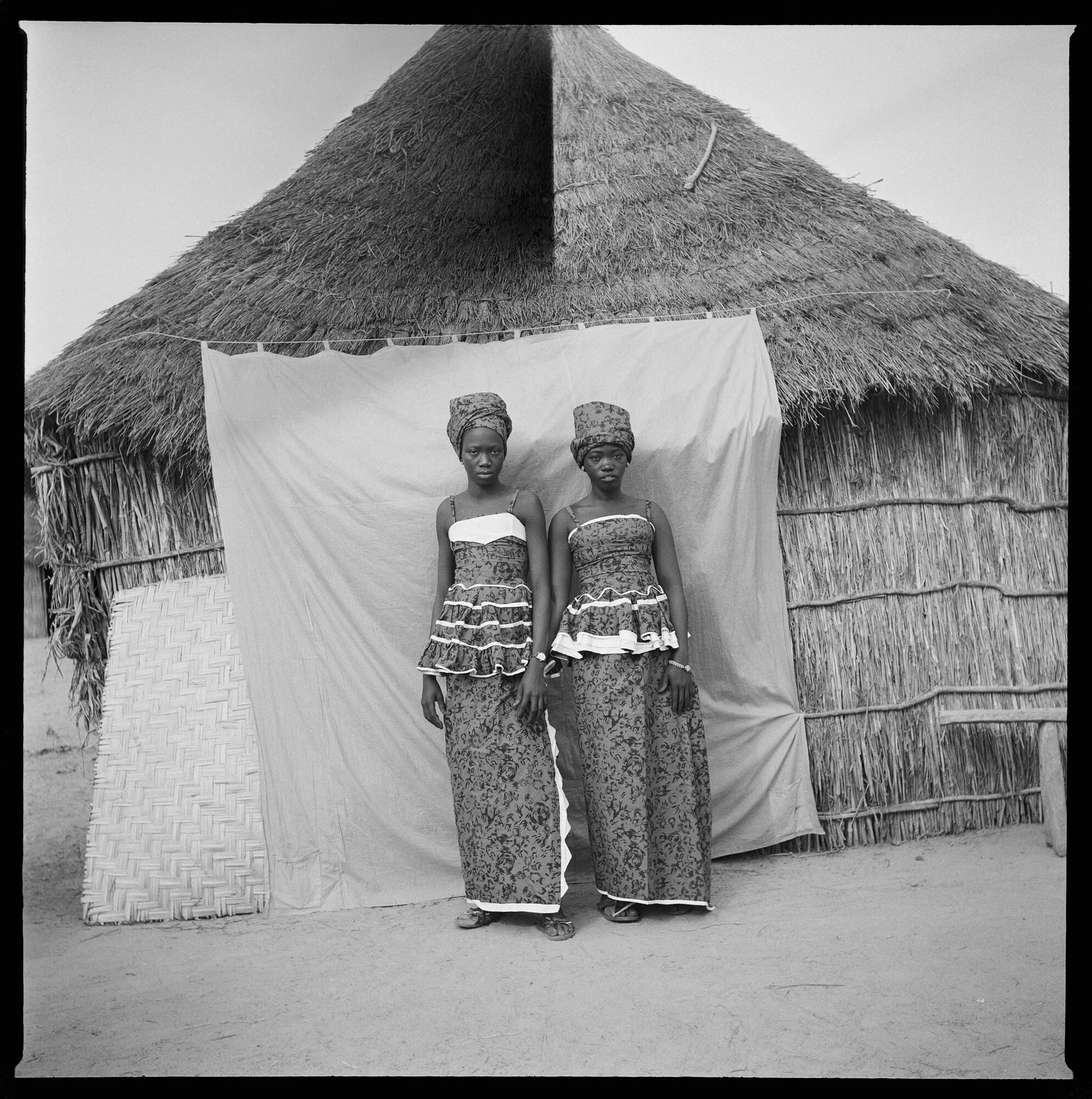
Historian, Giulia Paoletti: Getting a portrait done was a serious business, because this single portrait would circulate and stand for this person.
My name is Giulia Paoletti, and I am a researcher on photography and modern art in Africa.
In 1959, Oumar Ka met a photographer who gave him a camera, so he learned by himself. Photography in Senegal was extremely popular. Dozens and dozens of studios existed. But he started going from village to village taking portraits, and then he would go home, develop the negatives, and return the following week with the prints. So, you meet his sitters by their own home, in towns, sometimes in this open landscape. And that is a major distinction from other photographers who worked in a studio.
In this photograph, we see two young women in matching outfits, posing for the camera against a white backdrop attached to this thatched-roof house. The landscape, the architecture, the sky—this is part of who they are and how they want to be perceived. They’re young, they’re serious, they’re confident.
As Senegal is shifting from a colonized place to an independent country, these are sitters that are making visible their experience of modernization, which looked very different from the experience if someone lived in the capital city. There is often this tendency to flatten what is African modernity, and instead i’’s important to show the variety of experiences and subjects at the time.