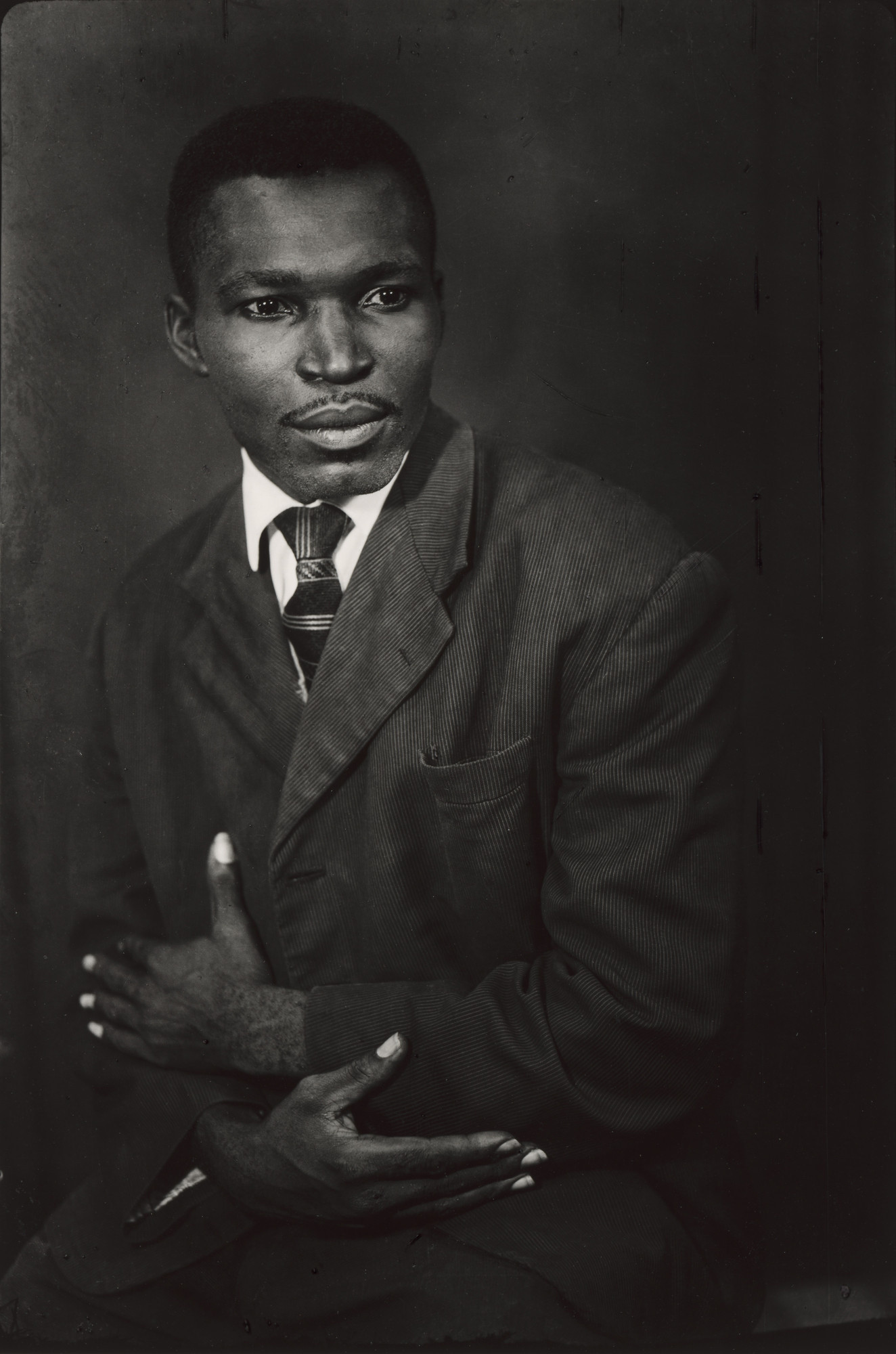
Historian, Sandrine Colard: Depara’s images, when you look at them, you see mostly people partying at nighttime or in his studio. So you don’t directly see people articulating a political discourse, but their bodies are.
My name is Sandrine Colard, and I’m a historian of African art and photography.
Jean Depara was living in Léopoldville, which will become Kinshasa. It was the capital of the Belgian Congo, seen as a very modern city for Africa at that time.
This is a portrait of a Black man in a suit and tie. The way the arms of this man are folded upon themselves—he’s touching himself in a delicate way. Under a colonial system, Black men are seen as a workforce. Your body is to be put into service of colonial power, and so the very fact of dressing up, this delicate relationship to his own body—for pleasure, enjoyment, beauty—is just something that’s radically opposing the construction of Black masculinity in the colonial Congo.
The fact that it’s also entitled Jazzeur makes a connection with music. Jazz is a diasporic language throughout the world, and a musician is definitely not someone who is enlisted into the colonial economy. All of that together, I would say, is really a sort of different portrait being constructed for Congolese masculinity at that time.