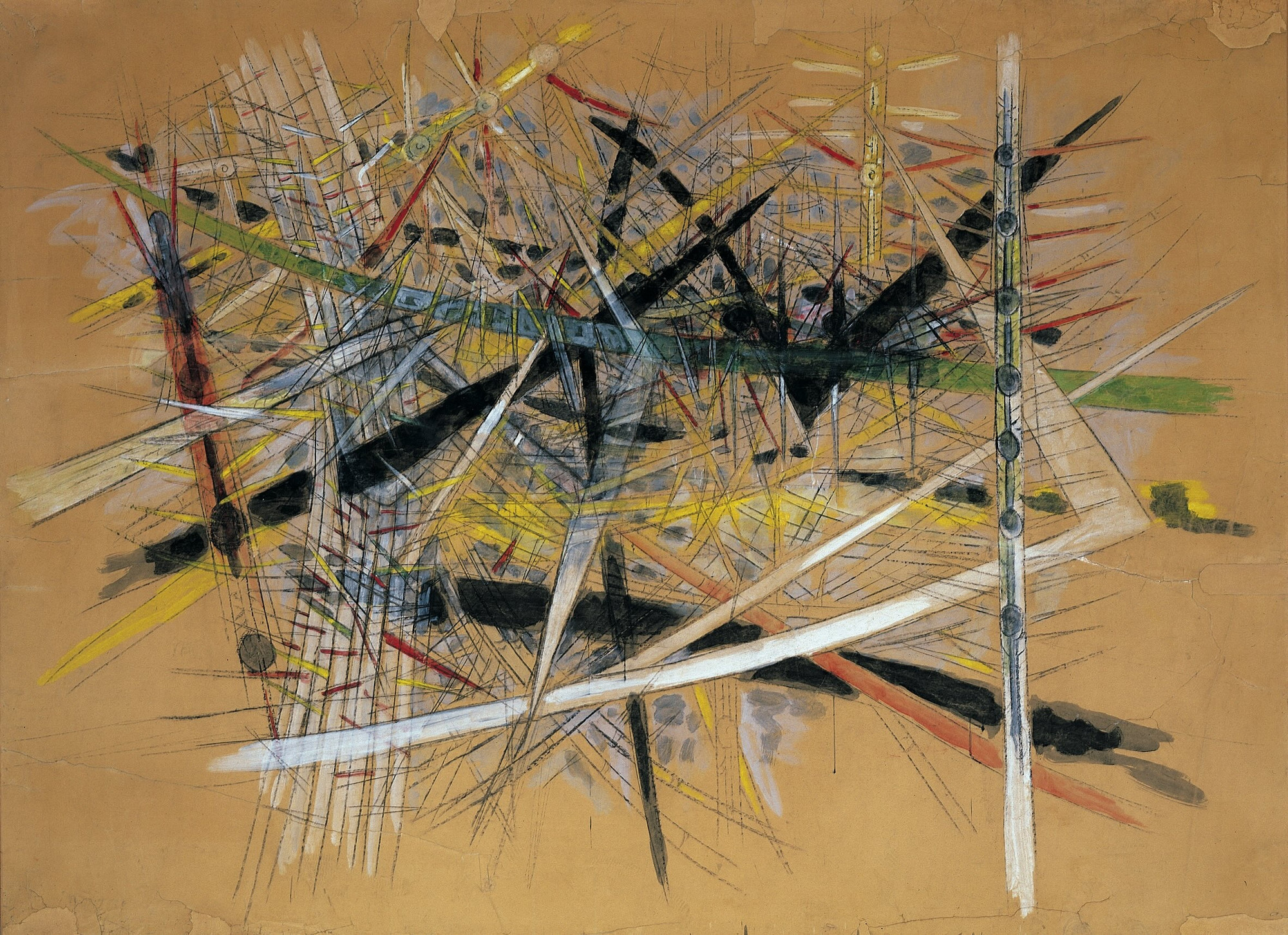
Narrator, Marlin Ramos: In 1958, Lam began exploring abstraction, creating a series of dense compositions that came to be known as his “brousse” paintings. In English, the word brousse translates to “bush.”
Ecologist, Leo R. Douglas.
Ecologist, Leo R. Douglas: I think he calls them his “bush paintings” because they embody a certain level of chaos that he's asking us to think about within the context of the colonial experience. They were inspired by the Cuban manigua, a word used to describe a thicket of tangled bushes, vines, and low-growing plants. This type of habitat is actually a product of colonialism itself. The landscape was destroyed and is reestablishing itself.
But the bush was a revolutionary space, a liberatory space. If you got into the bush, there was a possibility that you could hide there because it is dense. It's impenetrable.
Historian, Ada Ferrer: In Cuba, after the Spanish try to conquer it and colonize it, Indigenous people escape into these spaces in the woods, in the mountains. And then when African slavery begins, you get the same thing. It's a kind of freedom-seeking that was attached to this landscape.
Marlin Ramos: These spaces of escape were also used by revolutionary fighters seeking to overthrow the Cuban dictator Fulgencio Batista in the 1950s.
Ada Ferrer: Fidel Castro was fighting in the Cuban Mountains as Wifredo Lam was creating these works. And then Castro comes to power in January 1959. At that point, really, no one knows what's going to happen. Most Cubans were ecstatic that Batista had been defeated. I think that was definitely true among intellectuals and artists like Lam, who saw 1959 as a moment of possibility, where something new and meaningful could be achieved.