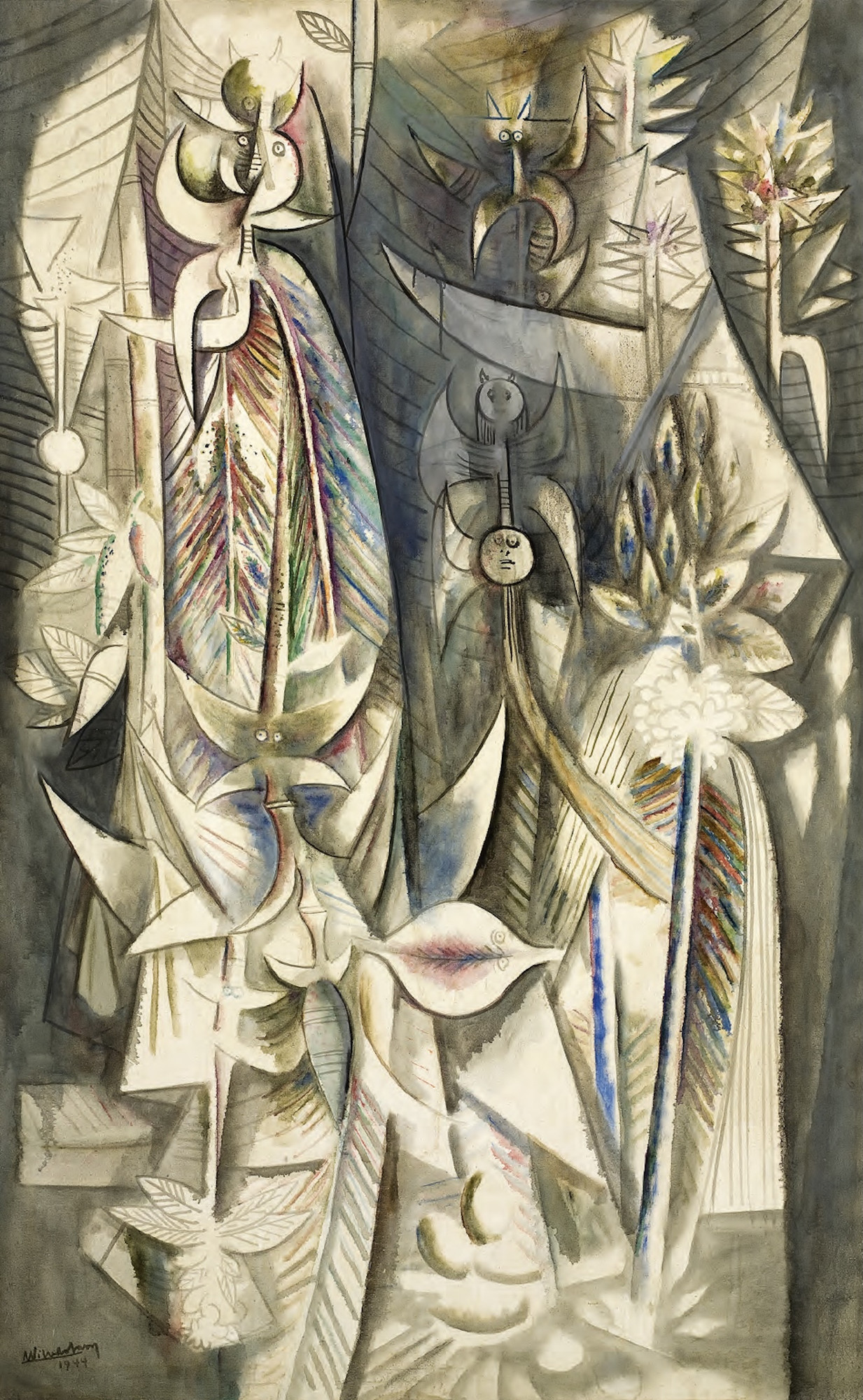
Artist, María Magdalena Campos Pons: This piece is full of symbols that I adore. These are birds, feathers, horses, horns, lips. All these plants have the pattern of heliconia. It's a vine in the family of the bird of paradise. It's everywhere in the Caribbean.
Narrator, Marlin Ramos: The French title of this work translates to “Island Walker,” and it evokes the image of someone who wanders from place to place. In many ways, this is an image that corresponds to Lam himself.
Historian, Ada Ferrer: Exile was obviously a major force in Wifredo Lam's own work. What I sense is that maybe Cuba wasn't enough for him, that to reach his full potential, he needed to leave. So he went to Spain, later he went to France, he went to Haiti. But at the same time, I think it was also a foundational place for him. So he returned to it and he did great work in Cuba, but he needed the connections to other people from other places.
María Magdalena Campos Pons: I say exile is never voluntary. When you uproot yourself, there is longing, incredible new things that revealed to self, both of the place that you arrive and the place that you left. Lam went with everything that he already knew and found ways to let it grow, becoming a new sprout of ideas, possibilities, universes.
Marlin Ramos: Lam's travels also allowed his artistic style to flourish. After returning to Cuba in 1941, he started using more texture and playing with light and shadow in his paintings.
María Magdalena Campos Pons: There is an incredible delicacy and ethereality in the treatment of the surface. He used almost like a watery material first and then oily material, and when he inserts lines, they are so defined, so secure. He's the master of that.