Narrator, Marlin Ramos: Lam moved to Spain in 1923. Here’s the artist’s son, Eskil Lam.
The Artist’s Son, Eskil Lam: He meets his wife, Eva Piriz, and they have a child together. And unfortunately, in 1931, there was an epidemic of tuberculosis, and both got swept away by that, and he felt extremely guilty for not having been able to get the proper care that he couldn't afford.
Marlin Ramos: During this time, Lam witnessed the beginnings of the Spanish Civil War. It broke out in 1936, after the right-wing General Francisco Franco attempted a military coup against the democratically elected government.
Eskil Lam: His political consciousness came to be at that moment. He felt very strongly about fighting against what he perceived as forces of darkness, which were the very repressive regimes of fascism that Franco represented.
Marlin Ramos: Lam joined the army and worked in a munitions factory. But as Franco's forces advanced in 1938, Lam fled for Paris. He recalled:
Wifredo Lam (Voice Actor): “To leave Spain defeated was . . . for me such a deep pain. I left Eva and my son dead. I also left many brothers in struggle.”
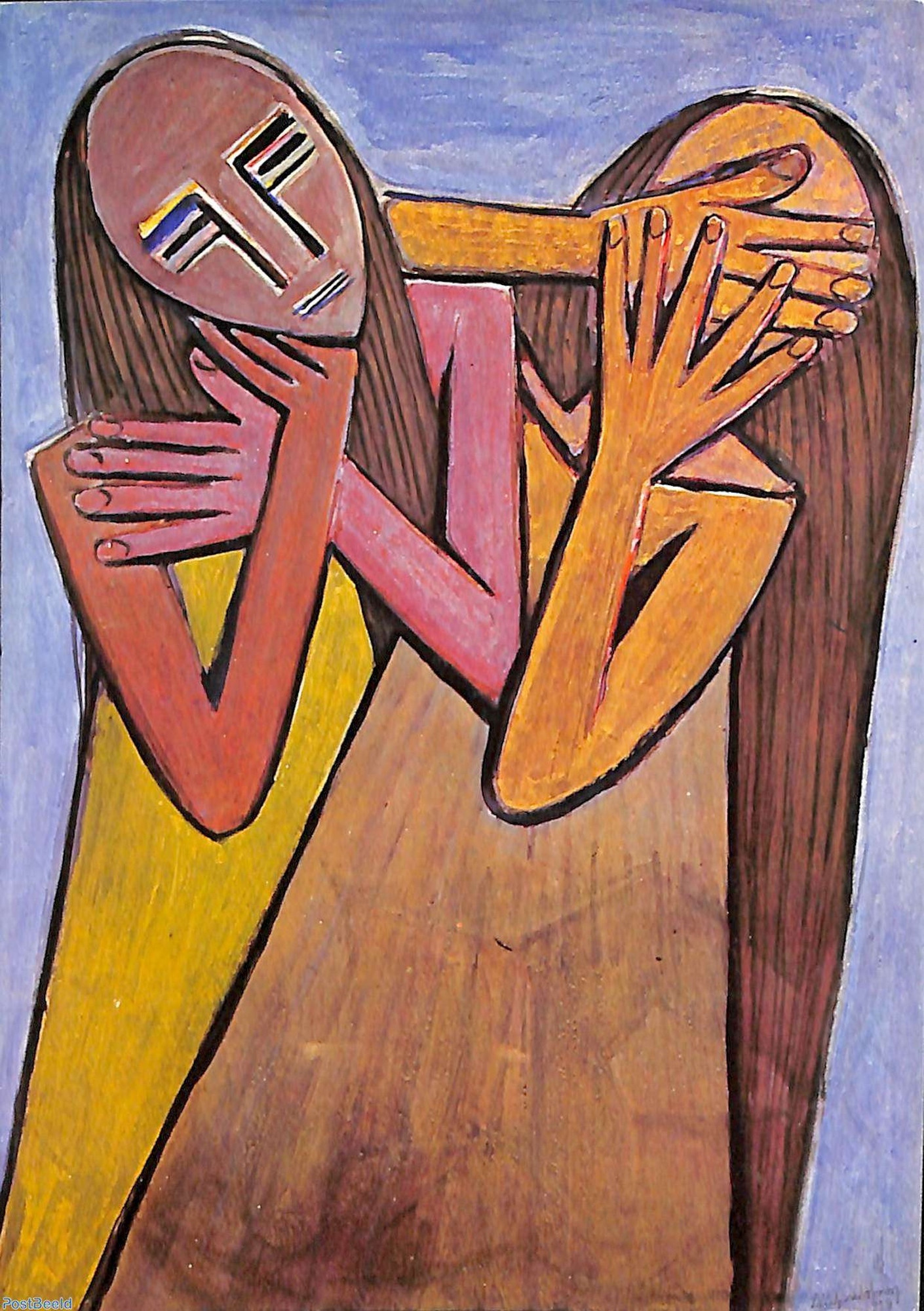
Marlin Ramos: Works like The Sorrow of Spain were made in this moment of loss and grief. Artist, Rashid Johnson:
Artist, Rashid Johnson: The painting includes two women covering their faces. The women are intertwined and collapsing on top of each other. There’s a sense of sorrow, frustration, fear. Lam digs into a sense of humanity and a sense of empathy, recognizing that the victims of war are not exclusively those who are physically impacted, but also those who are emotionally and psychologically impacted. It really starts to speak to how important and complicated it is to bear witness.