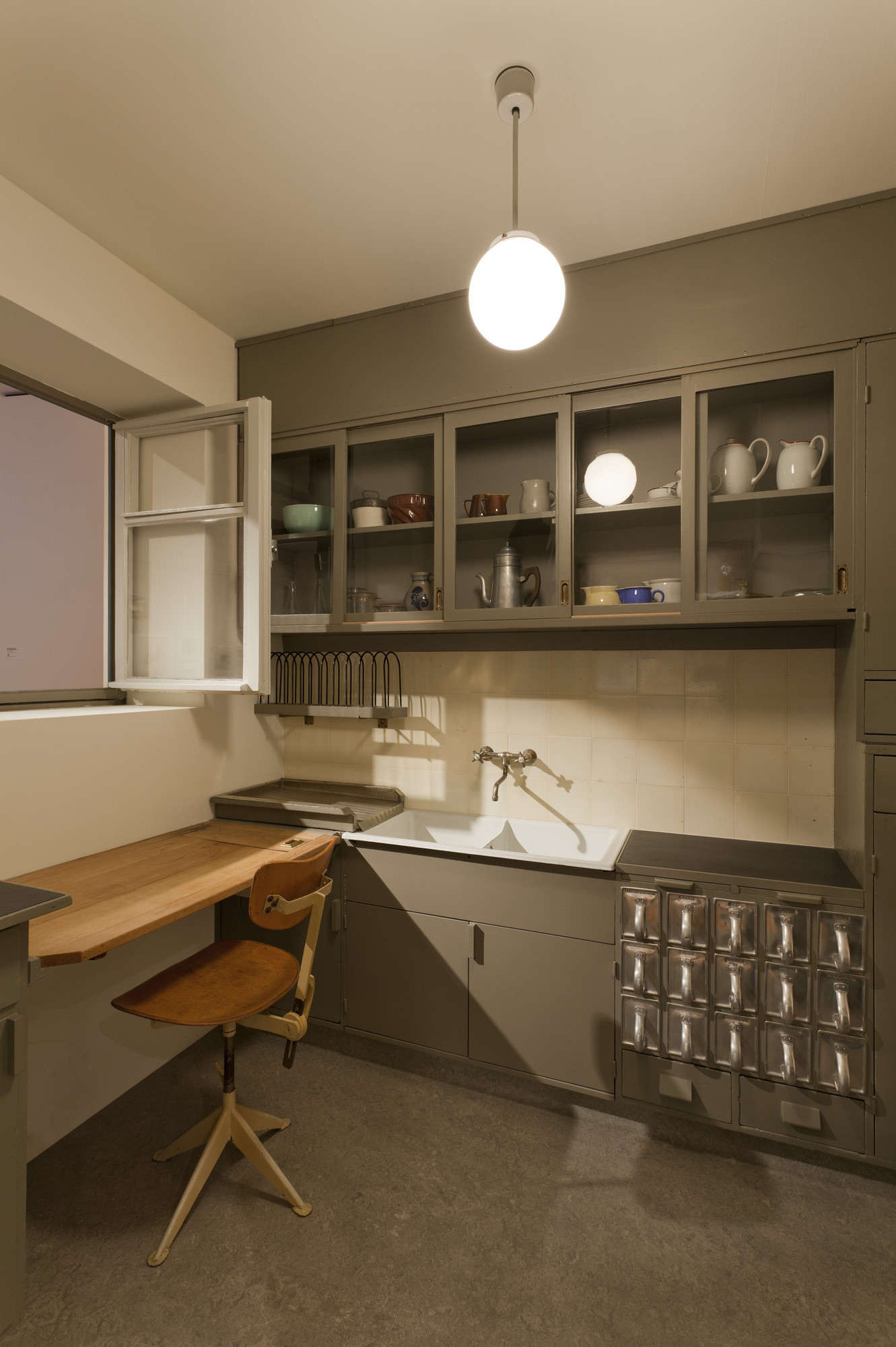
Curator, Juliet Kinchin: Here we see the Frankfurt kitchen, which was designed in 1926 by Grete Schütte-Lihotzy, part of a massive modernization program in the city of Frankfurt.
Curator, Andrew Gardner: Germany, after World War I, was undergoing a housing shortage. The chief city architect for Frankfurt developed a plan for 15 new housing estates. Schütte-Lihotzky was the only woman who was part of the architectural team, and she was tapped to design the kitchen. She looked for ways to make women’s life and labor easier.
Juliet Kinchin: To optimize efficiency, she fitted in all these very neat space-saving, labor-saving features, like the drop-down ironing board, which rests on the sink or is clipped against the wall. She was using industrially-produced features like these fantastic pullout aluminum pouring bins for storing goods like lentils or rice. The floor is covered in linoleum—warm underfoot, easy to clean, hard-wearing, cheap.
Andrew Gardner: And then right next to the stove, there’s this spice rack—this idea of this relationship between where the stove is located and where the ingredients are located, it was all about: how do we create a maximally efficient space for the modern housewife to work in?
The kitchen is a a space where I spent a lot of time as a child, and it’s also a place where my grandmother and my aunt went from cooking for their families and turning that into a profession to live independently of the strictures of male-dominated society.