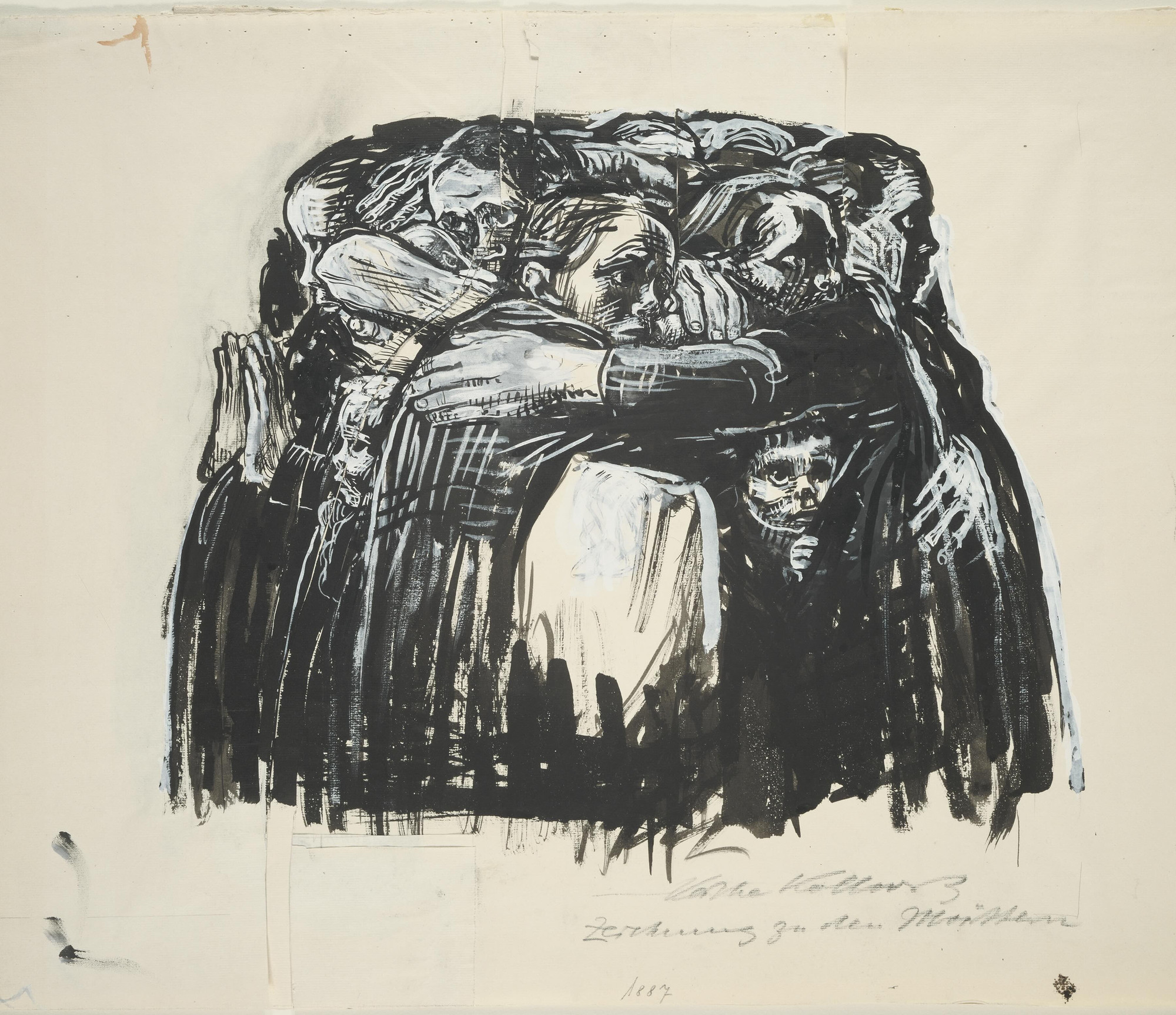
Curator, Starr Figura: World War I marked a turning point for Kollwitz. Part of her wanted to believe that the war was a worthy cause, but after her son died in that war, she became a pacifist.
German women were taught that losing a son was an honorable sacrifice for their country and that they should grieve quietly and privately. But Kollwitz completely turned that around with this final statement of resistance, this image of the mothers protecting their children, saying we are no longer going to sacrifice our children to the cause of war. She’s also giving an indication of just how many people are grieving because of the war.
Therapist, Emily Price: My name is Emily Price and I am a behavioral and somatic therapist.
We need to develop more rituals for recognizing grief, particularly in Western societies, we just haven’t made space for grief, and as a result, we move through it very quickly. It’s a lifelong process for most people.
Something that I really recommend is finding other people who’ve experienced it as well, because being able to talk to someone else who has experienced a loss is incredibly healing.
This image they’re there with each other, they’re keeping each other anchored. The hands, those big strong hands and arms holding each other and the little babies getting that protection within that bundle. Feeling the protection of the community is so powerful and this is it. This is what we have. When one of them just can't bear it, the other one can show up and be there for them.