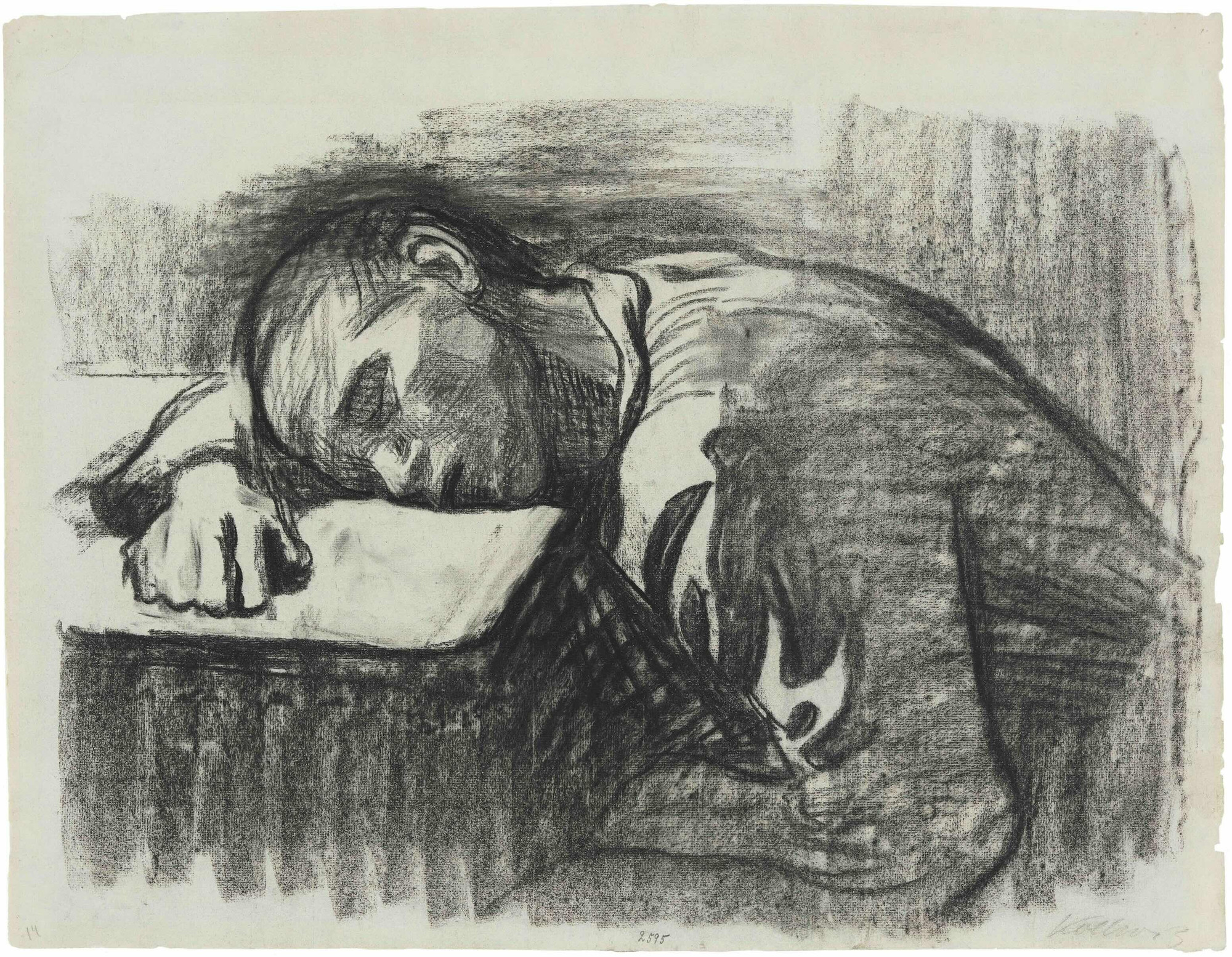
Curator, Starr Figura: Kollwitz lived in one of Berlin’s working-class neighborhoods. So every day she saw with her own eyes how poverty devastated people’s lives. The woman here is a home worker, which means she earned money for her family by doing textile work, sewing, weaving at home.
Writer, Sheila Heti: There’s just an impossibility in this picture. There’s no solution to the problem of not enough time—family responsibilities, work, earning a living, and women have not just children to look after but parents, often spouses.
I think a lot of men have depicted mothers as having a kind of earth-like strength and the mother is the source of giving. The mother doesn’t need. She responds to need. I think what’s so unique about Kollwitz’s depictions of mothers is that you feel like they also need help. I really love that about her depictions of motherhood.
Starr Figura: Kollwitz created a series of drawings depicting the hardships of working-class life, especially for women. They were published in a weekly magazine, which you can see in the vitrine below this picture. This publication would allow her to reach a wide audience, shedding light on what she called, quote, “the many silent and noisy tragedies of big city life.”
The other remarkable thing is how Kollwitz was starting to work with a much looser style of drawing, moving away from the detail-intensive etching that she had done just a couple of years earlier.