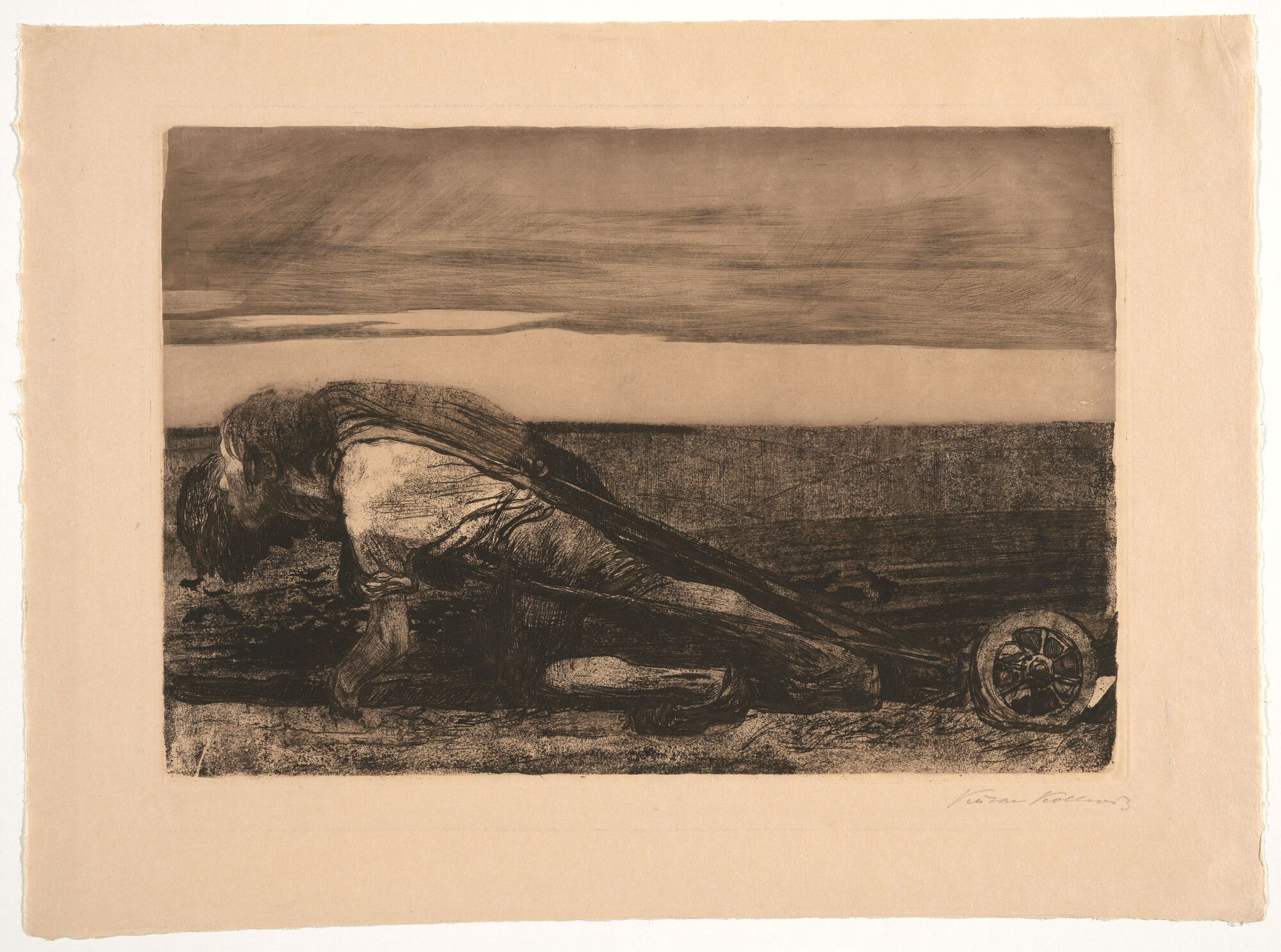
Printmaker, Rob Swainston: Käthe Kollwitz really nails it in terms of what printmaking has done historically, which is communicate and be a language for the people. She wanted to have her artistic practice, but also wanted to have an effect somehow, and she saw that printmaking was a way to do that because you could distribute it.
Curator, Starr Figura: The Peasants’ War was an uprising in 16th century Germany. These sort of overlords owned all the land and controlled all the labor of the peasants, who worked the land. At a certain point the peasants revolted.
Rob Swainston: These were people that were incredibly exploited. They don’t have guns. They’re not soldiers. They got ordinary farmer implements.
Starr Figura: Kollwitz herself and her viewers would’ve connected the class struggle of that era to the class struggle of their own time. Here you had a more agricultural society, but in her time it was the industrial workers who were suffering.
Rob Swainston: This period of rampant industrialization and the movement of people out of the rural peasant-oriented way of life to something more industrialized was very traumatic. We look at the history of progress as like one of airplanes and better ice cream, but there’s also people moving and family structures being destroyed.
Starr Figura: Her family were all socialists, a new political framework that came into being right around the time that she was born. It was a radical idea that you could have rights for workers. That’s one of the reasons why Kollwitz did this portfolio of prints—she was connecting to the history of class struggle.