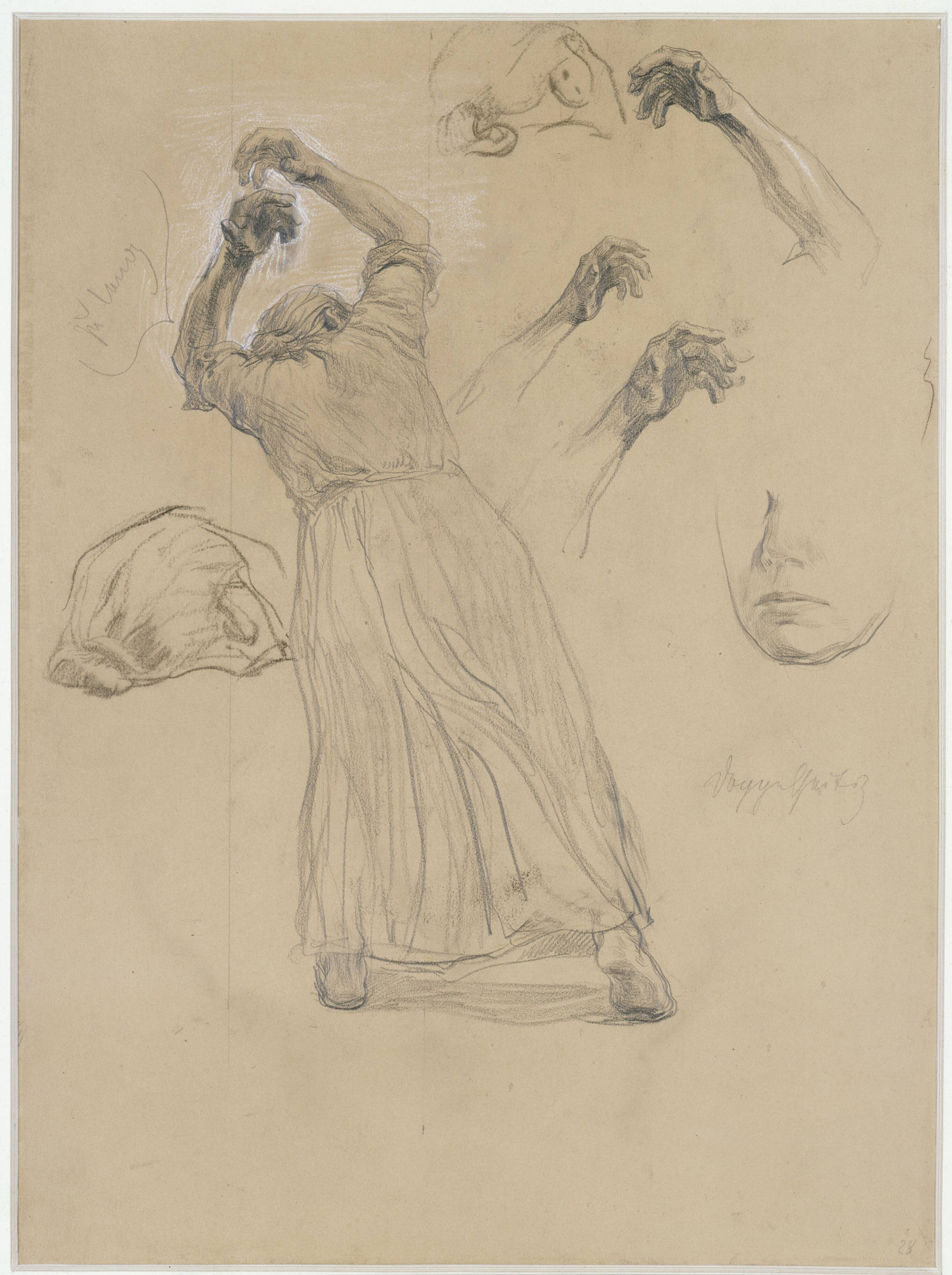
Curator, Starr Figura: Kollwitz was fascinated by revolutionary struggle and class struggle. She read a history of the Peasants’ War, which was a major uprising in the early 16th century. There was a historical figure, known as Black Anna, who led the revolt. Kollwitz completely identified with Black Anna. There’s one image of Black Anna leading the charge and her hands are raised.
She uses body language to convey emotion. Faces, of course, are important, but I think the most important thing are hands. The hands in her work are just so prominent. They’re often larger than they need to be. And they symbolize so many things, whether that's care, nurturing, or labor and hardship. It’s all there in the hands.
Printmaker, Rob Swainston: Hands are hard to draw. They’re complicated and choosing what’s important and what’s not important is difficult.
I’m sure Käthe Kollwitz was obsessed by this gesture of the hands and exactly what does it mean? I think she’s asserting that the hands are a kind of portrait. Those are great hands. They carry struggle. They carry work. This is not a soft-hand person. This is not like an aristocrat or a desk job. This is someone who’s actually working.