Beekeeper, Timothy Jackson: What's happening, everybody? My name is Timothy Paule Jackson, beekeeper, co-founder for Detroit Hives.
Beekeeper, Nicole Lindsey: I'm Nicole Lindsey. I am the co-founder as well for Detroit Hives.
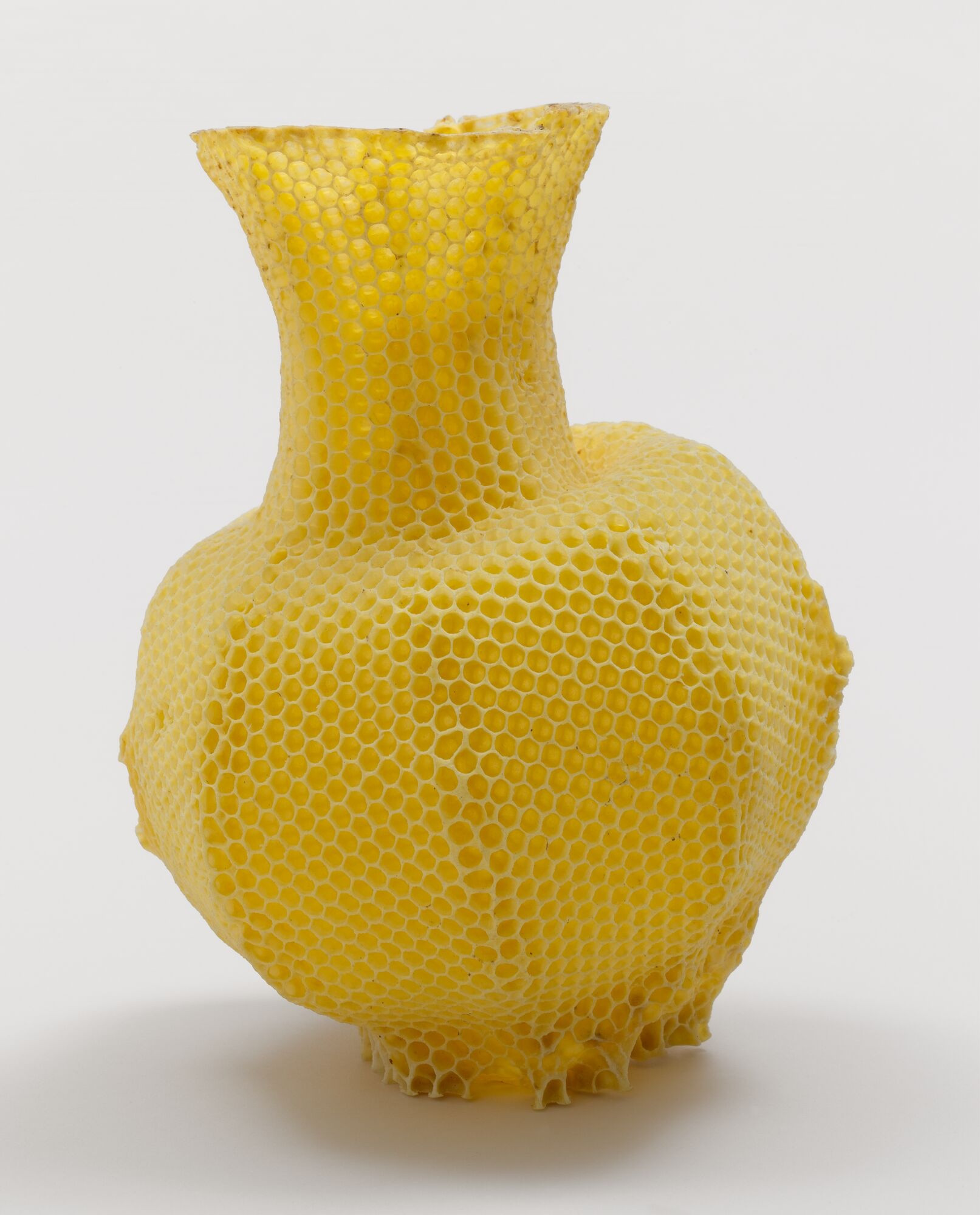
Timothy Jackson: You're looking at a work by Tomáš Libertíny called The Honeycomb Vase.
Nicole Lindsey: It is a collaboration between Libertíny and honeybees. Libertíny creates a 3D scaffold, which he places inside of a honeybee colony, and the bees start building out that structure that we know as a honeycomb on top of it.
Timothy Jackson: Once the bees finish, then the scaffold is removed and voila.
Nicole Lindsey: The Honeycomb Vase.
Timothy Jackson: The benefit of the sculptures being made out of beeswax is that it's a natural resource.
Nicole Lindsey: How beeswax is created is that bees secrete it from their lower abdomen. They'll connect together, it's called festooning, and they will melt down that wax that's coming out of their abdomen and start building out that structure that we know as a honeycomb. But in order for them to produce that wax, they have to have to make sure that they're eating nectar and pollen.
Timothy Jackson: Pollinators are beneficial insects, like bees, that can transport seed from one flower to the next. If something were to happen with our bees, we wouldn't have any of the fresh fruits or vegetables or nuts in our grocery store.
Nicole Lindsey: The lack of habitat is a number one cause of decline in our bees. The artwork introduces people to these insects and why they're so important.
Timothy Jackson: Very similar to our work here at Detroit Hives. Our mission is to improve underserved communities for both people and pollinators by transforming vacant lots to bee farms.
Nicole Lindsey: We're creating this haven for them to exist, and we both coexist together. A healthy future for bees reflects a healthy future for humanity.